
Lieferung heute & morgen

Qualitätsgarantie

Willkommens-Angebote freischalten: KOSTENLOSE Lieferung | Bis zu 80 % RABATT | Kostenlose 30-Tage-JoyPlus-Testphase
App herunterladen
An LED night light should help you find your way at night without making the room unnecessarily bright. In practice, however, models can vary considerably in their sensors, light colour, power supply and installation. Families with children, homes with long hallways and gaming setups all have different requirements.
The Kelvin rating describes the colour of the light, not necessarily its brightness. 6500 Kelvin produces a cool, white light and is better suited to helping you find your way or to functional areas. For bedrooms, children’s rooms and night-time trips around the home, a warm white night light of around 2700 to 3000 Kelvin is often considered more subtle.
A common mistake is to focus only on the wattage. Lumens are a better guide to the actual brightness. A small night light usually needs considerably less light output than a living room ceiling light.
A night light with a motion sensor responds to movement. A night light with a dusk sensor, on the other hand, measures the ambient light level and switches on when it gets dark. These functions can be combined, but they don’t have to be.
A motion sensor is useful in a hallway if you want the light to come on only when someone walks through. In a child’s room, a dusk sensor may be more suitable if you want the light to stay on at a low brightness level when it’s dark. Also check the sensor’s range, detection angle and stated switching threshold in lux.
A rechargeable night light doesn’t need a permanent socket, but it does need to be charged regularly. Battery capacity, the charging port and whether the light can be used while charging are all important. A plug-in model doesn’t need recharging, but its position is restricted to the location of a socket.
When choosing a model, consider these three specifications separately:
A dimmable night light is particularly versatile if you want to use it as a night light during the day and at a lower brightness at night. RGB models offer extra colours, but they’re not automatically suitable for every bedroom. For focused reading or working, even white lighting is usually more practical than decorative LED ambient lighting.
A sensor light’s product description should give specific details wherever possible. According to the product information, the Aigostar model switches on when the light level falls below 20 lux and switches off again when there is enough light. A PIR sensor, on the other hand, detects movement within a particular area. The 2-pack of cabinet lights has a stated range of 3 to 5 metres.
Look out for possible false activations caused by pets, passing headlights or movement in adjacent areas. For babies and toddlers, position the night light so that cables, plugs and the light itself are out of reach.
Magnetic mounts, adhesive strips and plug-in models are handy in rented homes, as they usually don’t require drilling. If you’re using adhesive, the surface needs to be clean, dry and sturdy. In the kitchen, bathroom or cellar, the IP rating matters. A model with an IP20 rating is intended for dry indoor areas only.
The CE mark is a mandatory conformity marking, but it isn’t an independent assessment of quality. Also check the voltage, power supply, instructions and safety information. For products with a battery, the USB port, charging time and guidance on damaged or swollen batteries are important.
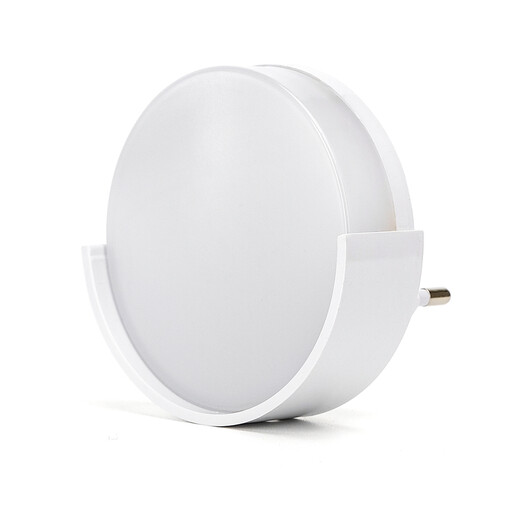
Why this product suits this profile: This plug-in model doesn’t need batteries or charging, making it suitable for hallways, children’s rooms and stairways in dry indoor areas.
The dusk sensor has a clearly stated switching threshold of below 20 lux, so its function isn’t simply described as ‘automatic’.
1 W power consumption, 40 lm, 220–240 V and a stated lifespan of 25,000 hours.
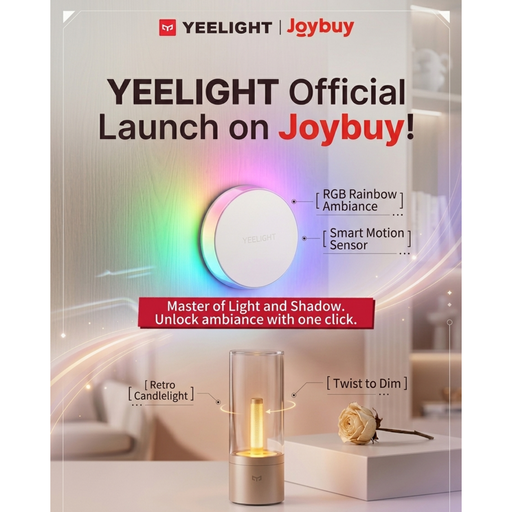
Why this product suits this profile: This battery-powered model combines RGB lighting, a motion sensor, magnetic mounting and USB-C charging for flexible use in living rooms, bedrooms or gaming rooms.
Magnetic mounting means there’s less need to drill. Before buying, it’s still worth checking battery life, charging cycles and where you want to position the sensor.
USB-C charging, magnetic mounting and 11 preset lighting effects, according to the product name.

Why this product suits this profile: Two lights with PIR sensors, rechargeable batteries and three colour temperatures are suited to kitchens, wardrobes, hallways or underneath shelves.
The specifications give the dimensions as 200 × 38 × 10 mm, a sensor range of 3 to 5 metres and a specific battery capacity of 800 mAh.
Three selectable colour temperatures, from warm white to cool white, USB charging and tool-free adhesive mounting.
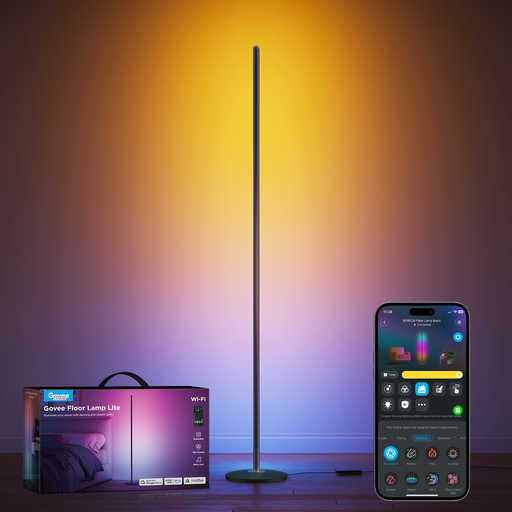
Why this product suits this profile: This smart LED floor lamp can be controlled using an app, Wi-Fi, Bluetooth, Alexa or Google Assistant, making it suitable for living rooms and gaming areas.
The control options and compatibility are clearly specified. Before ordering, check your Wi-Fi coverage, app requirements and available floor space.
16 million colours, 58 scene modes, dimming function and a stated light output of 1000 lm.
We’ve put together a complete, regularly updated list of products that meet these strict selection criteria and fully comply with the safety regulations in force in the EU.
Consumption depends on the wattage, how long it’s used for and how its sensor is set up. A model rated at 0,3 W would use 2,4 watt-hours a day if left on continuously. With sensor-controlled use, actual consumption may be lower if the light is only on occasionally. To calculate running costs, multiply the power in kilowatts by the hours of use and your electricity tariff.
It depends on where you’ll use it. A motion sensor is suited to hallways, stairways and cupboards where light is only needed when there’s movement. A dusk sensor is a good fit for plug-in night lights that you want to stay on automatically when it’s dark. In some rooms, a combination of both functions may be the most practical option.
The stated lifespan varies from model to model. The Aigostar plug-in light is rated for 25,000 hours, while other products may have different figures. For rechargeable models, battery ageing is also a factor. So check not only the LED lifespan, but also the charging port, battery capacity and whether the battery can be replaced.