
Lieferung heute & morgen

Qualitätsgarantie

Willkommens-Angebote freischalten: KOSTENLOSE Lieferung | Bis zu 80 % RABATT | Kostenlose 30-Tage-JoyPlus-Testphase
App herunterladen
An LED night light with motion sensor is designed to give you light automatically at night, without you having to fumble for a switch. In British homes, these are commonly used in hallways, staircases, bathrooms, children’s rooms, bedrooms, kitchens and wardrobes. The choice ranges from plug-in night lights to rechargeable LED lights with magnetic fixings.
However, not every model suits every location. A high lumen count alone doesn’t tell you much about the sensor, light distribution or installation. So before you buy, it’s worth checking for typical product pitfalls.
A PIR sensor reacts to movement and usually only switches the light on in the dark. A pure dusk sensor, on the other hand, detects ambient brightness but not movement. This means the night light can stay on permanently once a certain brightness level is dropped below.
For a hallway or staircase, a motion sensor night light is usually the better choice if you want the light to activate only when you walk past. For constant orientation, a night light with a sensor and low power consumption may be more suitable.
A stated sensor range doesn’t automatically apply to every position. Furniture, doors, tight alcoves and the installation height all affect detection. A sensor with a range of up to 3 metres can work very well in a cupboard, but it isn’t necessarily designed for a long hallway.
So check whether the direction of movement matches the sensor, and whether the light might be blocked by decorations, curtains or parts of the cupboard.
Cool white light around 6,500 to 7,000 Kelvin is clearer for orientation and work areas, but can feel harsh in a bedroom. Warm white night light around 2,700 to 3,200 Kelvin is more subtle and is often better suited to children’s rooms, bedrooms and night-time routes.
High brightness isn’t automatically practical. A compact LED strip is enough for a cupboard, whereas staircases or outdoor areas need broader illumination.
Pay attention to the specific sensor description:
Some models also mention a detection angle, for example 120 degrees, or an automatic shut-off after 60 seconds. These details make it easier to plan for a hallway, bathroom or staircase.
A plug-in night light doesn’t need a battery and is ready to use straight away. Models with 0.5 or 1 watt have a low power rating according to product specifications, but this shouldn’t be confused with actual annual running costs. Consumption depends on operating time, switching cycles and your electricity tariff.
A rechargeable LED light is ideal for cupboards, shelves and places without a socket. Check the battery capacity, charging port and mounting method. With a light that has an 800 mAh or 1,100 mAh battery, it’s also important to know whether the product only lights up on movement or can also be used in continuous mode.
Adhesive fixings allow installation without drilling, but they need a clean, dry and smooth surface. Magnetic holders make it easier to remove the light for charging. For outdoor areas, a suitable IP rating is essential. IP44, for example, protects against splashing water, but doesn’t replace protection against strong water jets or continuous rain.
For indoor lights with IP20, you should avoid water and high humidity. A light for the bathroom must therefore be chosen according to the installation position. Also follow the manufacturer’s instructions regarding mains voltage, cleaning, charger and children.
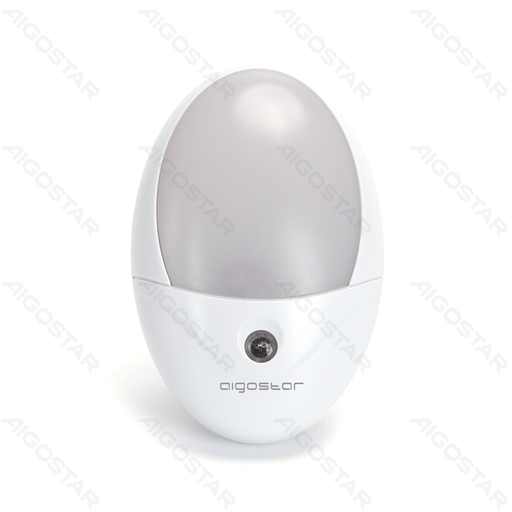
Why this product fits the profile: This plug-in model is designed for hallways, bedrooms, bathrooms and staircases indoors, and requires neither batteries nor charging cycles.
The stated PIR sensor has a range of up to 7 metres and a detection angle of 120 degrees; the light colour is clearly given as 3,000 Kelvin.
Plug-and-play installation, 20 lumens, 1 watt power consumption and a fire-resistant PC housing according to product specifications.

Why this product fits the profile: The slim design and three selectable light colours allow for planned installation under cupboards, on shelves or in the bedroom.
PIR detection, dimensions of 300 × 38 × 10 millimetres and a stated range of 3 to 5 metres make the installation location easier to assess.
41 LEDs, 1,100 mAh battery, USB charging and three colour temperatures from warm white to cool white according to the product description.

Why this product fits the profile: For an entrance, patio or garden, a portable sensor light with a battery and magnetic fixing is useful when there’s no socket at the installation point.
Suitability for outdoor areas is specified with the IP44 rating. This clearly distinguishes it from pure indoor lights with IP20.
300 lumens, 3,000 Kelvin, integrated battery, USB charging, magnet and motion sensor according to product data.

Why this product fits the profile: This warm white plug-in model is designed for children’s rooms, hallways, staircases and bedrooms indoors.
The combination of dusk and motion sensor prevents the light from activating in daylight, according to the description.
Five brightness levels, 2,700 Kelvin, up to 3 metres range and automatic shut-off after 60 seconds according to product specifications.
Position an LED light for hallways and children’s rooms so that the sensor covers the usual walking path. For adhesive lights, the surface should be grease-free and dry. Plug-in models must not be covered; only clean them when unplugged and with a dry cloth.
For bathrooms, cellars or outdoor areas: check the stated IP rating and only use the light in its intended environment. Rechargeable lights should be charged with a compatible USB power supply. If the light is damaged, becomes unusually hot or the battery swells, stop using it immediately.
We’ve put together a full, regularly updated list of products that fully meet these strict selection criteria and the safety regulations in force in the EU.
Point the sensor towards the area you actually walk through. With combined sensors, the light should be unobstructed so that neither the motion nor the dusk sensor is blocked. Adjust the brightness levels and shut-off time, if available, directly on the device.
The lifespan depends on the LED technology, operating time, switching cycles and battery ageing. With plug-in night lights, there’s no need for regular battery replacement. Rechargeable models, on the other hand, require regular charging cycles depending on usage and battery condition. Manufacturer lifespan figures should be taken as a technical guide.
That depends on the power rating and the actual lighting duration. Models with 0.3 to 1 watt have a low power requirement according to their respective product specifications. An automatic shut-off or activation only when movement is detected can reduce the operating time compared to a light that stays on permanently.