
Lieferung heute & morgen

Qualitätsgarantie

Willkommens-Angebote freischalten: KOSTENLOSE Lieferung | Bis zu 80 % RABATT | Kostenlose 30-Tage-JoyPlus-Testphase
App herunterladen
An LED night light with a motion sensor should switch on automatically at night without staying lit all the time. It’s a practical choice for families, parents with young children and households with dark hallways or staircases. However, claims such as ‘intelligent sensor’, ‘extra bright’ or ‘energy-saving’ don’t automatically mean a product is right for you.
Before you buy, watch out for these three common pitfalls:
Check the detection range, detection angle and dusk threshold. For example, a model with a 3-metre range and a 120° detection angle could suit a short hallway or the area beside a child’s bed. A staircase may call for a longer range or careful positioning.
A sensor night light should ideally only activate when the ambient light is low. Some models specify a threshold of no more than 20 lux. However, how well it works also depends on the mounting height, room layout and sensor direction.
For bedrooms, children’s rooms and routes around the home at night, moderate brightness and a comfortable colour temperature are usually more suitable than maximum output. Warm white night lights typically have a colour temperature of around 2700 to 3000 kelvin. More neutral light, around 4000 to 4500 kelvin, may be a better fit for hallways, bathrooms or work areas.
A dimmable night light, or one with several brightness settings, can be adjusted to suit different situations. Also check whether your chosen brightness setting is saved or needs to be selected again each time the light is switched on.
A plug-in night light doesn’t need battery maintenance and is ready to use straight away. Even so, its power consumption should suit how you plan to use it. At 0.3 or 0.5 watts, running costs remain relatively low when it’s left plugged in. For a rough estimate, multiply the power consumption by the daily operating time and your electricity price.
A rechargeable night light is useful for wardrobes, areas without a spare socket or flexible mounting. Claims such as ‘up to 10 hours’ depend on how often the sensor is triggered, the brightness setting and the battery’s condition. For bathrooms, cellars or outdoor areas, check the manufacturer’s guidance on moisture and the IP rating. Indoor lights without a stated moisture-protection rating should not be placed close to water.
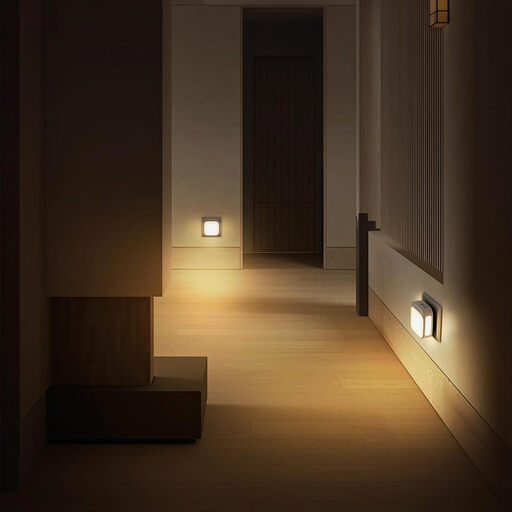
Why this product suits this profile: This two-pack is ideal if you want to light up a bedroom, hallway or baby’s room. Both lights plug straight into a socket.
According to the product information, the automatic light sensor switches on at 20 lux or below and switches off in daylight. This means you don’t need to operate the light manually.
0.3 W power consumption, stepless dimming from 10 to 100 per cent and warm white light at 2800–3000 K.

Why this product suits this profile: Its motion and dusk sensors, along with five brightness settings, make it suitable for children’s rooms, hallways, stairs and indoor bathrooms.
According to the description, the sensor switches the light on when it detects movement in the dark and off after 60 seconds without movement. This helps avoid unnecessary activation.
Five brightness settings, 2700 K warm white light, a detection range of up to 3 m and a 120° detection angle.

Why this product suits this profile: These two cordless lights are ideal for wardrobes, shelves, bedrooms or spots without an easily accessible socket.
The built-in 500 mAh battery means you don’t need to keep the lights plugged in. Remember to check the charge level regularly.
USB charging at 5 V/1 A, up to 10 hours in sensor mode, three colour temperatures and five brightness settings.
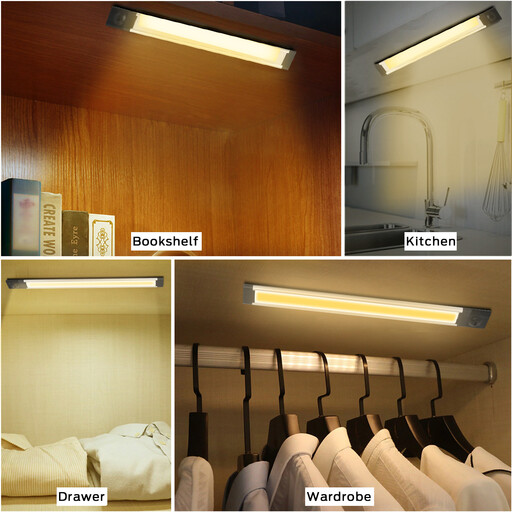
Why this product suits this profile: Its slim design, magnetic fixing and hook make it suitable for wardrobes, stair walls, cellars or storage rooms when you don’t want a permanent installation.
According to the product description, it can be mounted without drilling or screws. Before use, check that the magnet or hook is secure.
36 SMD LEDs, 400 lm, a colour temperature range of 2800 to 6500 K, and gesture control with dimming.
We’ve put together a complete, regularly updated list of products that meet these strict selection criteria and comply fully with the safety regulations in force across the EU.
Position the light so the sensor can detect movement along your route, but doesn’t point directly at a bright lamp or window. In a hallway, mounting it at a low or medium height may work well. On stairs, make sure the light doesn’t dazzle you or obscure important parts of the steps. Once it’s installed, test the sensor in daylight and in the dark.
Its lifespan depends on the LED module, electronics, operating time and heat build-up. For rechargeable models, battery ageing is another important factor. Treat any lifespan figures as manufacturer estimates; they’re not a guarantee of a specific period of use.
An energy-efficient LED night light rated at 0.3 to 0.5 watts uses little energy if it only switches on briefly. For plug-in models, power consumption while connected is what matters; for rechargeable versions, it’s how often they need charging. For a realistic estimate, consider the wattage, sensor behaviour and daily usage together.