
Lieferung heute & morgen

Qualitätsgarantie

Willkommens-Angebote freischalten: KOSTENLOSE Lieferung | Bis zu 80 % RABATT | Kostenlose 30-Tage-JoyPlus-Testphase
App herunterladen
An LED night light with a motion sensor should switch on automatically when movement is detected in a hallway, bedroom, bathroom or on the stairs. In practice, however, poor purchases are often caused not by the LED technology itself, but by unsuitable sensors, inappropriate light colours or a power supply that does not suit the intended location.
This buying guide from the Joybuy Product Recommendation Officer explains the key specifications clearly and shows which version may suit different households and usage situations.
A stated range of, for example, 3 to 5 metres does not automatically mean consistent detection throughout every room. Furniture, doors and the mounting angle can affect whether the PIR sensor detects movement. A short range may be sufficient for a narrow hallway, while a larger entrance area needs a wider detection zone.
Therefore, pay attention to:
Bright light can be useful inside a cupboard or above a work surface. As a night light for hallways and bedrooms, however, lower brightness is often more comfortable. A warm white night light at around 2800 to 3200 Kelvin is more subdued in colour than a cool white setting at 6500 to 7000 Kelvin.
The right light colour depends on how you plan to use it:
A battery-powered night light needs new batteries regularly. With a rechargeable night light, there is no need to replace batteries, but the device must be charged via USB. Check whether a charging source is available nearby and whether the light can be used for long enough in sensor mode after charging.
A wireless solution is practical for rented homes and hard-to-reach locations. AAA batteries can be replaced quickly and are suitable for a motion sensor night light used in several locations. With frequent use, an integrated rechargeable battery may be more convenient.
For USB models, the charging voltage specifications are important. The product data available here includes, for example, 5 V / 0.5 A or 5 V / 1 A. Use only compatible USB power sources, and do not charge lithium batteries with damaged cables or unsuitable power adapters.
The lumen rating describes the luminous flux. A model with 17 or 18 lumens is designed to provide subtle guidance, while 30 to 35 lumens can offer greater visibility in a hallway or bathroom. A brighter dimmable night light with several settings can be adjusted more flexibly to suit different situations.
For an LED under-cabinet light in the kitchen or a cupboard light, the length may also be crucial. Versions measuring 20, 30 or 40 centimetres should fit the mounting surface and must not obstruct doors or drawers.
Adhesive tape allows installation without drilling and is particularly appealing for tenants. The surface should be clean, dry, grease-free and as smooth as possible. Adhesion may be weaker on wallpaper, rough plaster or damp surfaces. Magnetic mounts allow the light to be removed easily, but require a suitable metal surface.
Also follow the safety instructions: these lights are primarily intended for indoor use and should be protected from water, high humidity, heat and direct sunlight. CE marking is not a promise of brightness or durability; it refers to the supplier’s declaration that the applicable product requirements have been met.
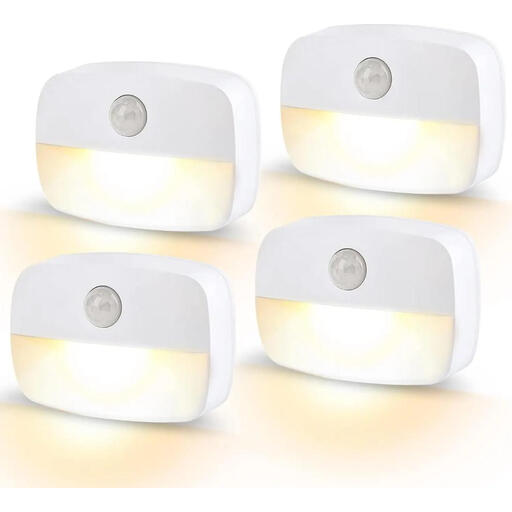
Why this product suits the profile: Four separate lights make it possible to illuminate several areas, such as hallways, cupboards, stairs or bathrooms. They can be installed using double-sided adhesive tape, with no drilling required.
The automatic switch-off after 20 seconds limits unnecessary operating time. Each light runs on three AAA batteries, which are not included.
35 lumens, a warm white light colour at 2800–3200 Kelvin, a 120° detection angle and a stated range of 13–20 feet.
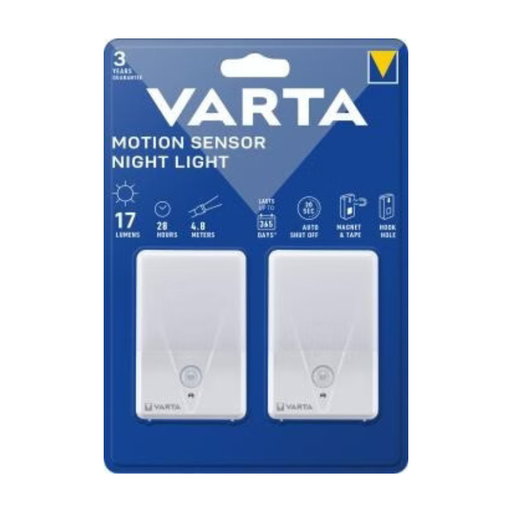
Why this product suits the profile: The set offers several mounting options: adhesive tape, a magnet or screws. This allows you to choose the installation method that best suits the surface and the level of flexibility you need.
The product specifications state that it activates in the dark, has a range of up to 3 metres and switches off after 30 seconds. Three AAA batteries are required and are not included.
17 lumens in warm white, a 120° detection angle, a twin pack and a stated 3-year guarantee.

Why this product suits the profile: The 40-centimetre version is suitable for longer kitchen cupboards, shelves or wardrobes, provided the available surface can accommodate the dimensions of 400 × 38 × 10 mm.
The product data lists 61 LEDs, a PIR detection range of 3–5 metres and three selectable colour temperatures. Before applying the adhesive, check that the mounting surface is wide enough and can support the light.
Two lights, an integrated 1100-mAh battery, USB charging at 5 V / 0.5 A and a slim housing for confined spaces.
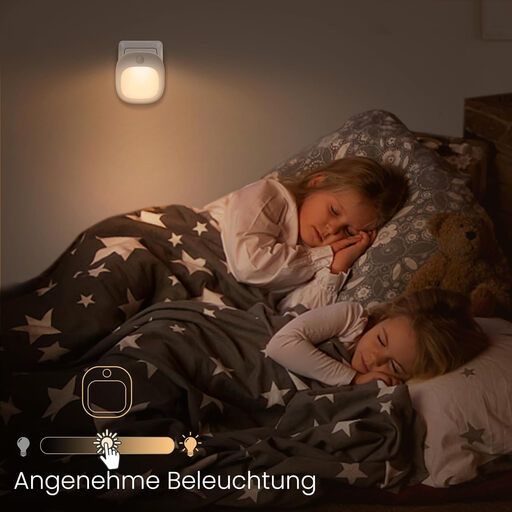
Why this product suits the profile: Five brightness levels and three colour temperatures allow you to adjust the light for bedrooms, nurseries, hallways or bathrooms. The integrated battery is charged via USB.
The sensor function is linked to darkness levels of up to 20 lux, preventing activation in bright daylight. The stated sensor range is 3–5 metres.
500-mAh battery, up to 10 hours of stated use in sensor mode, 30 lumens and CRI >85 according to the product data.
We have put together a complete, regularly updated list of products that fully meet these strict selection criteria and the safety regulations applicable in the EU.
Install the light on a clean, dry and smooth surface. Point the PIR sensor towards the area where movement is expected. Then test detection under the lighting conditions in which you intend to use it. For adhesive mounting, press the adhesive strip firmly into place first and allow it to adhere before placing any load on the device.
Battery life depends on brightness, activation frequency, switch-off time, battery type and ambient temperature. Manufacturer claims such as “up to 28 hours of total operating time” or “up to one year with five activations per day” should therefore be understood as conditional figures, not guaranteed results in everyday use.
Power consumption is usually lower in sensor mode than with lighting that stays on continuously, because the LED is activated only when movement is detected. A short automatic switch-off time and the appropriate brightness setting are key. For the running costs of a rechargeable model, charging frequency is also an important factor.