
Lieferung heute & morgen

Qualitätsgarantie

Willkommens-Angebote freischalten: KOSTENLOSE Lieferung | Bis zu 80 % RABATT | Kostenlose 30-Tage-JoyPlus-Testphase
App herunterladen
An LED night light with motion sensor should help you find your way at night without staying on all the time. In practice, however, buyers often end up with the wrong product because sensor specifications are unclear, the light colour is unsuitable or the power supply doesn’t suit the location. Before you buy, it’s worth checking the technical details carefully rather than relying on general marketing claims.
A motion sensor responds to movement. A dusk sensor also checks whether the surroundings are dark. Without both functions, a motion-sensor light may switch on during the day too. For a hallway, stairs or bedroom, a night light with both motion and light sensors is usually more practical.
It’s also important to check the detection range, detection angle and light duration. Descriptions such as “automatic” tell you little about how the product actually works.
A colour temperature of around 6,000 to 6,500 kelvin produces a cool, bright light. This can be useful for a wardrobe, worktop or garage, but is often less subtle in a bedroom or as a children’s room night light. For finding your way at night, people often choose a warm white night light of around 2,700 to 3,000 kelvin, or one with an adjustable light colour.
A rechargeable night light can be placed wherever you need it, but it must be charged regularly. A plug-in light doesn’t need batteries, but it takes up a socket and its position is limited by where that socket is. For USB models, check whether a charging cable or power adapter is included, and which charging port the light uses, such as USB-C.
A detection range of just a few metres is often enough for short trips along a hallway. A model with a 3-metre range and a 120-degree angle covers a wider area in front of the socket. A narrower sensor range may be sufficient for cupboards or shelves.
Check the auto-off time. A plug-in night light with a 60-second shut-off delay stays on for another minute after the last detected movement. An LED light strip with a motion sensor, on the other hand, may stay on for around 30 seconds, for example. The right duration depends on whether you need to light a short path or a longer flight of stairs.
A dimmable night light makes it easier to adjust the light to suit the room. For orientation, the lumen rating and dimming levels are more useful than descriptions such as “soft” or “pleasant”. A model with five brightness settings from 20 to 100 per cent gives you more choice than a simple on/off light.
RGB night lights and smart LED lighting can also create decorative scenes. However, these features don’t automatically provide suitable lighting for finding your way around. For a bedroom or children’s room, check the lowest brightness setting.
Plug-in lights are quick to install, while rechargeable lights with magnets or adhesive strips can be positioned more flexibly. Before fitting an LED light strip, make sure the surface is clean, dry and smooth. The IP rating is also worth checking: an indoor model with no stated moisture protection shouldn’t be used in a shower or other permanently damp area.
For products intended for a children’s room, parents should also consider cables, small parts, sockets and placement. Always follow the manufacturer’s instructions on range, cleaning and use.
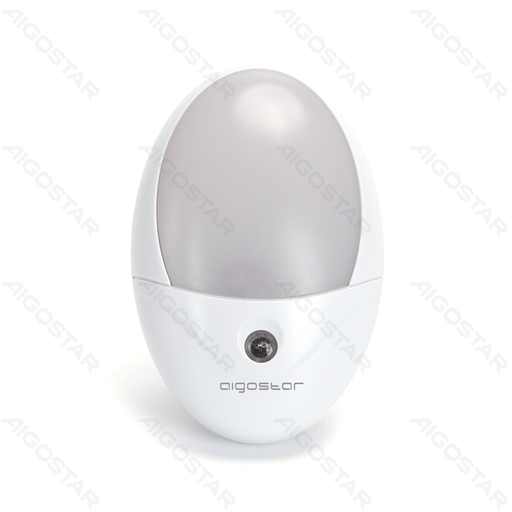
Why this product suits this profile: This plug-in model works without batteries and is designed for indoor use in hallways, bedrooms, bathrooms and on stairs. Its PIR sensor activates when the light level is low.
The specifications state the sensor type, 7-metre range, 120-degree detection angle and 20 lumens, rather than simply claiming that it works automatically.
Warm white light at 3,000 kelvin, 1 watt power consumption and direct connection to a 220- to 240-volt socket.
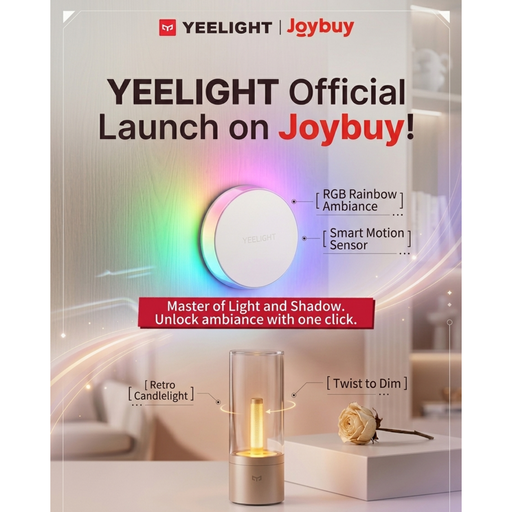
Why this product suits this profile: This rechargeable ambient light combines motion sensors with RGB colours and several preset effects. It’s suitable for bedrooms, living rooms and gaming areas.
The product details specify USB-C charging, magnetic mounting and 11 preset effects. This makes it easier to plan where to use it than with a plug-in-only model.
USB-C charging port, motion sensors and magnetic mounting, with RGB functionality.
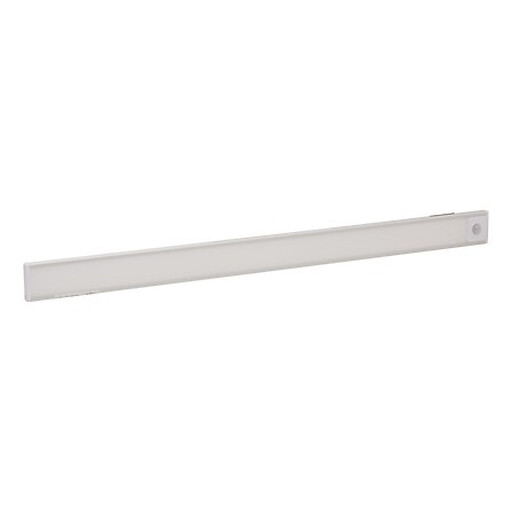
Why this product suits this profile: This slim light is designed for wardrobes, shelves, kitchen worktops and storage areas where you need to illuminate a larger surface.
The length, range, light duration and battery capacity are all specified. This makes it easier to check whether the light will cover the area you need.
57-centimetre light bar, 6,000 kelvin, 2200 mAh battery, magnetic holder and automatic shut-off after around 30 seconds.

Why this product suits this profile: This plug-in light is designed for children’s rooms, hallways, stairs and bedrooms, and offers five brightness levels with warm white light.
The motion and dusk sensors are described separately. According to the product details, the light switches off after 60 seconds without detecting any movement.
2,700 kelvin, five brightness levels, 0.5 watts power consumption and a 3-metre range at 120 degrees.
We’ve put together a complete, regularly updated list of products that meet these strict selection criteria and fully comply with the safety regulations in force in the EU.
Position the light so that its sensor picks up your usual route and isn’t blocked by furniture, curtains or covers. In a hallway, it’s best to install it at socket height or mount it close to the floor, provided the model is suitable for this. Check the detection angle and shut-off time before settling on a final position.
Its lifespan depends on the LED module, electronics, operating time and heat dissipation. A specific figure from the manufacturer is more useful than a general marketing claim. For rechargeable lights, battery capacity also matters, as repeated charging cycles can affect how long the light remains usable.
Plug-in models with low power consumption use relatively little energy while operating. Actual consumption depends on how often and for how long the sensor switches the light on. A dusk sensor or a short shut-off time can reduce unnecessary operating hours. For rechargeable models, you should also take the charger’s power consumption into account.