
Lieferung heute & morgen

Qualitätsgarantie

Willkommens-Angebote freischalten: KOSTENLOSE Lieferung | Bis zu 80 % RABATT | Kostenlose 30-Tage-JoyPlus-Testphase
App herunterladen
An LED night light with a motion sensor can automatically illuminate dark pathways and make manual switching redundant. Whether it’s for a hallway, staircase, wardrobe or front entrance, the right solution depends heavily on where you plan to use it. If you only focus on brightness or a low price, you can easily overlook important details.
A motion sensor reacts to movement. A dusk sensor, on the other hand, measures ambient light levels. For a night light in a hallway, a combination of both functions is practical: the light only switches on when it’s dark and movement is detected. A pure motion sensor can activate during the day too, if it isn’t linked to brightness levels.
Specifications like “up to 3.5 metres” or “up to 7 metres” refer to defined conditions. Furniture, walls, doors and the angle of the light can all affect detection. A cupboard light with a motion sensor usually doesn’t need a long range. For a long hallway or staircase, however, a larger detection area can be useful.
A cordless LED light can be installed flexibly, but it needs regular charging. With a USB-rechargeable LED light, battery capacity, charging port and charging frequency are key factors. Plug-in models don’t require a battery, but they do take up a socket. Adhesive strips aren’t suitable for every surface in the long term, especially not on dusty, damp or uneven surfaces.
For hallways, stairs and bedrooms, a PIR motion sensor is a common solution. It detects changes in heat radiation caused by movement. Check:
A dusk sensor night light switches on and off depending on ambient brightness. For a model from Aigostar, a threshold of 20 lux is stated in the product specifications. Such values help with comparison, but they don’t replace checking the actual installation location.
Brightness is given in lumens (lm). A subtle night light for a child’s bedroom or master bedroom generally needs a different light output than an LED under-cabinet light for work surfaces. A warm white colour temperature between around 2700 and 3200 Kelvin is often chosen for bedrooms and living areas. Cool white light in the range of about 6500 to 7000 Kelvin can be more suitable for cupboards or work surfaces.
Also pay attention to colour rendering, if it’s stated. A CRI or Ra value of at least 80 describes a standard requirement for accurate colour representation. For simple orientation in a hallway, this value is less important than it is for kitchen or work areas.
For battery-powered models, capacity and charging method are important points of comparison. The ultra-slim lights on offer are described, for example, with 800 mAh or 1100 mAh and USB charging. The 20-centimetre version measures 200 × 38 × 10 mm, and the 30-centimetre version 300 × 38 × 10 mm. This makes them suitable for narrow shelf boards, inside cupboards and kitchen cabinets.
For outdoor use, the IP rating should be explicitly stated. IP44 means protection against solid objects larger than 1 mm and against splashing water from all directions. This is not the same as a fully waterproof housing. Models without a stated IP rating should only be used in dry indoor areas.
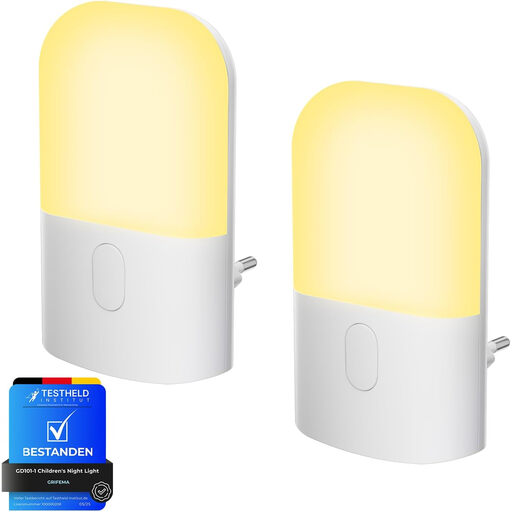
Why this product fits the profile: Two plug-in lights with 2700K warm white light, three brightness levels and a dusk sensor cover basic needs in hallways, children’s rooms or stairwells.
The automatic dusk mode reduces unnecessary switching on during daylight. Three brightness levels allow you to adapt the light to each room.
Two lights per pack, 0.5 W power consumption and no need to change batteries.
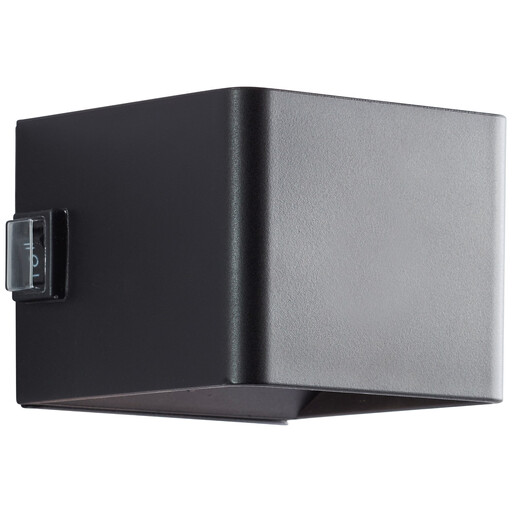
Why this product fits the profile: The portable LED wall light with motion sensor offers 300 lm, 3000K, an integrated battery, magnetic mounting and IP44 for designated outdoor areas.
The stated IP44 rating provides a clear guide for installation in sheltered outdoor areas. The battery avoids the need for a fixed power cable.
300 lm light output, USB charging cable, magnetic mount and 4 W power consumption according to product specifications.
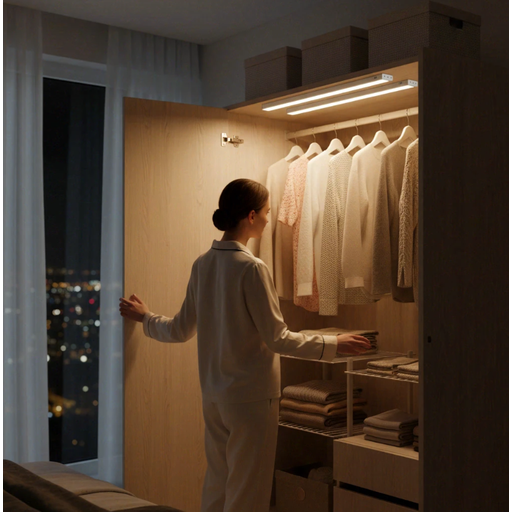
Why this product fits the profile: As an LED under-cabinet light or cupboard light with motion sensor, this set is designed for kitchens, wardrobes and shelves. Three colour temperatures allow you to choose according to the situation.
The dimensions of 300 × 38 × 10 mm can be checked before purchase. The PIR sensor has a stated range of 3 to 5 m; installation is drill-free using adhesive strips.
41 LEDs, 1100 mAh battery, USB charging and three colour ranges from warm white to cool white according to the product description.
We’ve put together a complete, regularly updated list of products that fully meet these strict selection criteria and the safety regulations in force in the EU.
Before mounting, clean the surface and check whether adhesive strips are suitable for the material. The sensor must not be blocked by decorations or objects. With a battery-powered light, regular charging is part of normal use. Only use compatible USB chargers and keep models without a stated IP rating away from moisture.
For bathrooms, cellars or entrance areas, the relevant IP rating is crucial. An indoor light with IP20 is not designed for splashing water. Outdoors, the installation location, power supply and IP rating must all be compatible.
The consumption depends on the power output, how long it’s on and its switching behaviour. In the product specifications of some plug-in models, 0.5 to 1 W is stated. A sensor can limit the operating time if the light switches off automatically after detecting movement. For an accurate estimate, compare the stated power with your daily usage time.
A general runtime cannot be derived from battery capacity alone. Brightness level, sensor activity and how long the light is on all affect the actual operating time. So check not only the capacity but also the runtime stated by the supplier and the charging port. If brightness drops, charge the battery; if it’s damaged or swollen, stop using it.
Position the light so that the motion sensor covers the usual walking path and isn’t blocked by furniture. For stairs, glare-free, warm white light and adequate illumination of the steps are important. An outdoor light should only be used in accordance with its stated IP rating.