
Lieferung heute & morgen

Qualitätsgarantie

Willkommens-Angebote freischalten: KOSTENLOSE Lieferung | Bis zu 80 % RABATT | Kostenlose 30-Tage-JoyPlus-Testphase
App herunterladen
An LED night light with a motion sensor can automatically illuminate walkways, cupboards and worktops, so you don’t have to fumble for a light switch. To make sure your purchase remains practical in your home over time, don’t focus only on the advertised brightness or maximum detection range.
Three common reasons for choosing the wrong product are:
When choosing an indoor motion sensor light, maximum range isn’t the only thing that matters. A range of 3 to 5 metres may be enough for a bedroom, hallway or children’s room. A motion-sensor wardrobe light should be fitted as close as possible to the area where movement is likely, so it switches on reliably.
For larger areas, sensors with a wider detection angle are a good choice. According to the product details, the Aigostar ceiling sensor offers 360-degree detection and a maximum detection distance of 6 metres. Depending on the model, wall-mounted sensors have a 180-degree or adjustable detection angle. Furniture, doors and walls can reduce the detection area.
A compact LED light is often enough for a wardrobe. A brighter light may be more suitable for a hallway or staircase. Lumens (lm) measure the light output and are more useful for comparing brightness than wattage alone.
Colour temperature also affects how you use the light:
Models with several colour temperatures and dimming levels are more versatile. It’s also worth checking whether the light only responds to movement or can be switched on continuously as well.
A rechargeable LED light with a USB port can be charged using a suitable mains adaptor, laptop or power bank. Before buying, check the charging details, battery capacity and stated run time. For example, the 2-pack with a 500-mAh battery is said to last up to 10 hours in sensor mode. A 30-cm under-cabinet light has a 1,100-mAh battery.
The protection rating matters when choosing an LED motion sensor light for a kitchen, bathroom or entrance. IP20 is designed for dry indoor spaces. IP44 provides protection against splashes and can be used in sheltered outdoor areas in certain conditions. However, IP44 does not protect against prolonged exposure to rain, immersion in water or high-pressure water.
Wired 230 V sensors must only be installed with the power switched off. A qualified electrician should carry out the connection. Make sure you don’t exceed the maximum load, for example for LED or incandescent bulbs.

Why it suits this profile: Two compact lights with USB charging are ideal for bedrooms, hallways, children’s rooms or small shelves.
The stated sensor range of 3 to 5 metres, activation at a maximum of 20 lux and 500-mAh battery make it easier to understand the conditions it’s designed for.
Three colour temperatures, five dimming levels and up to 30 lm according to the product details; it also has a continuous-light mode.
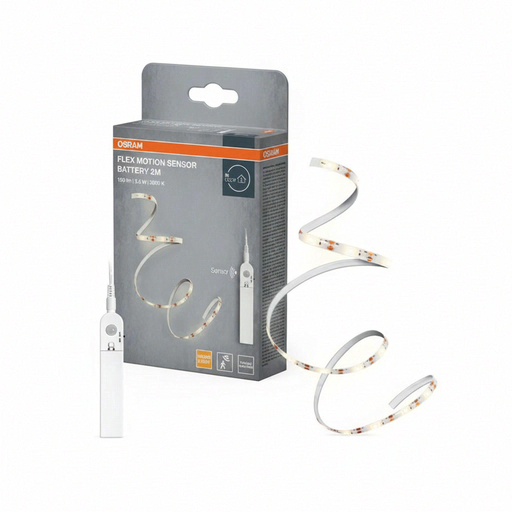
Why it suits this profile: This 2-metre LED strip is designed for longer edges, shelves or wardrobe interiors where you want a continuous line of light.
The specified length makes it easier to plan your installation. Before fitting it, check the power supply, mounting surface and the sensor’s actual position.
A 2-metre LED strip with an integrated motion sensor and battery-powered design, according to the product name.
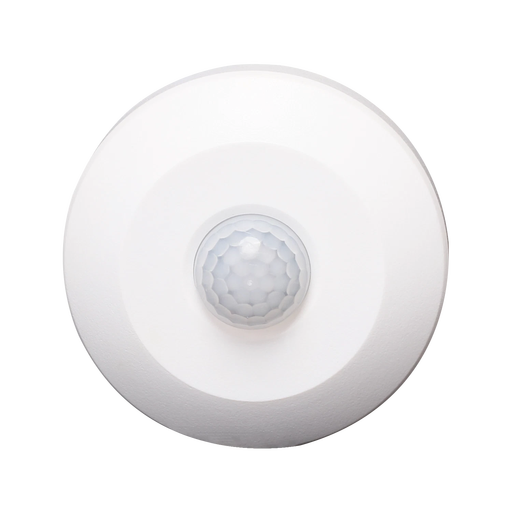
Why it suits this profile: This wired sensor is suitable for hallways, stairwells, entrances and other areas with frequent foot traffic.
Adjustable light sensitivity from 10 to 2,000 lux and a delay of 10 seconds to 7 minutes help you tailor it to the room.
360-degree detection, a 220–240 V operating voltage and a stated range of up to 6 metres; must be installed by a qualified electrician.
For a wardrobe or kitchen, slim, magnetic or self-adhesive lights are practical choices. A 20- or 30-cm LED sensor under-cabinet light can be fitted beneath wall units, on shelves or inside a wardrobe. Make sure the mounting surface is dry and that the wardrobe door won’t block the sensor.
For bedrooms and children’s rooms, low brightness settings and warm white colour temperatures are often a good choice. In a hallway, choose the detection angle and switch-off delay carefully, so the light doesn’t stay on unnecessarily after every small movement.
In the bathroom, it’s important to distinguish between a portable light and a permanently installed sensor. Where there’s moisture, check the protection rating, installation location and manufacturer’s instructions. You must not connect a wired model to the mains yourself.
We’ve put together a complete, regularly updated list of products that meet these strict selection criteria and fully comply with the safety regulations in force in the EU.
A PIR sensor detects changes in infrared radiation within its detection area caused by moving people. It won’t detect every movement equally reliably. Mounting height, direction, furniture and heat sources can all affect detection.
It depends on the battery capacity, brightness, how often the sensor is triggered and standby power consumption. Product claims such as ‘up to 10 hours’ should be treated as a guide. The actual run time may be shorter if the light is activated frequently. A USB port makes it easier to recharge regularly.
An LED motion sensor light can limit how long it stays on, provided it’s set up correctly and used in the right place. Power consumption depends on the light’s output, how long it stays on and how it switches. Wired sensors also have a small amount of standby power consumption.