
Lieferung heute & morgen

Qualitätsgarantie

Willkommens-Angebote freischalten: KOSTENLOSE Lieferung | Bis zu 80 % RABATT | Kostenlose 30-Tage-JoyPlus-Testphase
App herunterladen
An LED night light with motion sensor can automatically illuminate dark paths and save you from having to switch the light on manually. For families, older people and households with children, choosing the right model is about more than just design. The key factors are the type of sensor, power supply, brightness and intended installation location.
Many product descriptions focus on impressive detection ranges or particularly long runtimes. In practice, problems often arise elsewhere: the light activates unnecessarily during the day, the sensor fails to detect movement reliably, or the fitting does not stay securely attached to the chosen surface.
A PIR sensor typically detects movement by sensing the heat emitted by people. A twilight sensor, on the other hand, measures the brightness of the surroundings. For a hallway, a combination of both is useful, so that the LED sensor light does not activate when there is sufficient daylight.
Look out for terms such as “PIR”, “motion sensor”, “Twilight Sensor” or an adjustable lux value. A night light with only a twilight sensor switches on when it gets dark, but does not necessarily respond to movement.
The detection range is often specified under particular test conditions. Furniture, doors, unsuitable installation heights or movement from the side can affect detection. A few metres are often sufficient for a short hallway. For stairs or larger rooms, you should also consider the detection angle.
A motion sensor light should be installed so that people pass across the sensor wherever possible. Walking directly towards the sensor can result in reduced detection performance with some PIR systems.
A wireless night light can be installed flexibly, but it needs to be recharged regularly or powered with batteries. For a rechargeable sensor light, battery capacity, charging connection and operating mode are important points of comparison. Plug-in models do not need recharging, but they occupy a socket permanently.
Adhesive strips are not equally suitable for every surface either. Dusty, rough or damp surfaces can reduce adhesion. A qualified electrician is required for permanent installation on 230-volt wiring.
Check whether the model responds solely to movement, solely to brightness or to both conditions. Specifications such as 3 to 5 metres detection range, 120° detection angle or an adjustable switch-off time can help you assess suitability.
For a night light for hallways and bedrooms, a short run-on time is usually sufficient. In a cupboard or next to a drawer, the light should switch off again as quickly as possible. For a permanently installed sensor, adjustable settings such as 10 seconds to 7 minutes can be useful.
Brightness is measured in lumens. A guide light requires considerably less illumination than an LED under-cabinet light for a kitchen worktop. Warm white light of around 2700 to 3000 Kelvin is often chosen for bedrooms, children’s rooms and finding your way around at night. Neutral or cool white light may be more suitable for work areas.
You should also check the CRI or Ra value if you want colours to appear as naturally as possible. An Ra value of 80 or above is a useful reference in product specifications, but it does not replace an assessment of the actual light distribution.
A long LED light strip with motion sensor is suitable for cupboards, shelving or under-cabinet areas. Compact plug-in lights are more suited to hallways, bedrooms or children’s rooms. In damp areas, the stated IP rating must be suitable for the installation location. The indoor products presented here are not automatically suitable for direct contact with water.
For hard-wired PIR sensors, check the mains voltage, maximum connected load and installation method. Installation should be carried out in accordance with the manufacturer’s instructions and applicable electrical regulations.

Why this product suits this profile: The plug-in design needs neither batteries nor charging accessories. Five brightness levels and warm white light at 2700 Kelvin allow you to adapt it to hallways, children’s rooms or staircases.
The product data specifies a PIR and twilight sensor, a detection distance of up to 3 metres and switch-off after 60 seconds without movement.
Plug-in operation without changing batteries, five brightness levels and a 120° detection angle according to the product specifications.
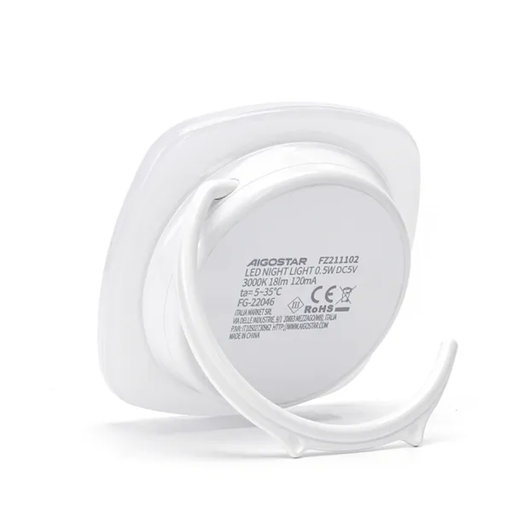
Why this product suits this profile: This rechargeable sensor light combines a compact design with warm white light, making it suitable for cupboards, hallways or use as a portable light in different locations.
The specifications clearly state the battery capacity, charging method, detection range and light output: 500 mAh, USB charging, up to 3.5 metres and 18 lumens.
120° light distribution, 3000 Kelvin, USB-rechargeable battery and ABS housing according to the product description.
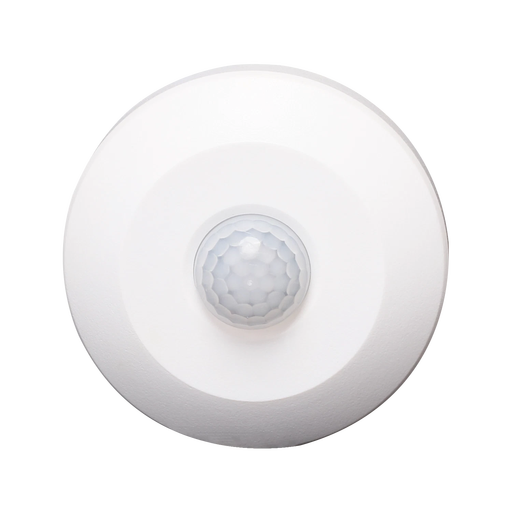
Why this product suits this profile: This wired sensor is designed for permanently installed indoor lighting in hallways, stairwells, entrances or kitchens.
The detection range, light sensitivity and run-on time are specified: up to 6 metres in diameter, 10 to 2000 lux and 10 seconds to 7 minutes.
360° detection and adjustable parameters according to the product description; connection to compatible lights up to the stated load.
We have put together a complete, regularly updated list of products that fully meet these strict selection criteria and the safety regulations applicable in the EU.
Install the light where people will pass by the sensor. The sensor should not be blocked by furniture, curtains or decorations. For adhesive installation, the surface must be dry, clean and free from grease. Plug-in models are inserted directly into a suitable indoor socket. Installation of 230-volt models must be carried out by a qualified electrician.
Runtime depends on the battery, brightness, number of activations and run-on time. For the Aigostar model mentioned, for example, the product description specifies a 500 mAh battery and up to 6 hours of light time. This figure should not be confused with the battery’s overall service life. If the runtime decreases significantly, a charging cycle may help; with non-replaceable batteries, the product may need to be replaced.
LED lights usually have low power consumption, while a motion sensor reduces the amount of time the light remains on. Actual consumption depends on the wattage, daily activation time and standby consumption. For a 1-watt light that is active for one hour a day, for example, the calculated energy consumption is around 1 watt-hour per day, plus any standby usage. The values on the product label are the relevant figures for comparison.