
Lieferung heute & morgen

Qualitätsgarantie

Willkommens-Angebote freischalten: KOSTENLOSE Lieferung | Bis zu 80 % RABATT | Kostenlose 30-Tage-JoyPlus-Testphase
App herunterladen
An LED night light with a motion sensor should illuminate hallways, cupboards or worktops automatically, so you do not have to search for a switch every time. In UK homes, these lights are often used in hallways, bedrooms, nurseries, wardrobes or underneath kitchen cabinets.
When comparing models, however, the stated brightness is not the only consideration. Some models also respond in daylight, while others switch on too late in dark areas. With cordless versions, the battery, charging port and mounting method can also determine how practical they are for everyday use.
A PIR sensor detects changes in infrared radiation, typically caused by moving people. However, it does not automatically measure whether the room is dark. A motion-sensor light can therefore also switch on when there is sufficient ambient light, unless it has an additional dusk sensor.
For hallways, bedrooms or children’s rooms, combining motion detection with a brightness threshold is often more practical. For a sensor light used solely inside a cupboard, motion detection when opening the door or walking past is often sufficient.
A higher wattage does not automatically mean more suitable illumination. For a night light, factors such as glare-free light, light distribution and colour temperature are also important. Under a kitchen cabinet, even illumination is usually needed, whereas warm, subdued light may be more comfortable in a bedroom.
The sensor’s detection range is also crucial. If a detection distance of 3 to 5 metres is specified, the actual response will also depend on the mounting height, direction of movement and any obstructions.
A self-adhesive LED light can be fitted without drilling, which is useful in rented homes. However, its grip depends on the surface being clean, dry and smooth. On rough plaster, dusty wood or damp tiles, the mounting strip may come loose.
Before fitting the light, clean the surface and test it first in an inconspicuous area. For heavier models or permanently installed 230-volt sensors, professional installation is advisable.
A PIR light sensor responds to movement and needs an unobstructed view of the detection area. Check the following:
A wide angle can be useful in a hallway. In a wardrobe, on the other hand, a shorter, more targeted detection range is often sufficient.
A rechargeable LED light with a USB connection is flexible and particularly suitable for tenants. Check the battery capacity, charging port and information about the power source. The models reviewed here specify capacities including 800 mAh and 1100 mAh, as well as USB charging at 5 V.
Permanently installed 230-volt sensors do not need to be recharged, but they must be connected in accordance with the installation instructions. Work on mains voltage should be carried out by a qualified electrician.
Colour temperature is measured in kelvins:
A dimmable night light allows you to adjust the brightness for different situations. For an under-cabinet kitchen light, its length, depth and mounting surface are also important. Very slim models with a height of around 10 mm can also fit beneath narrow shelves or inside cupboard areas.

Why this product suits this profile: The set of two compact lights is suitable for kitchens, cupboards, hallways or shelves when several small areas need to be equipped without drilling.
The product details specify a PIR detection range of 3 to 5 metres, three colour temperatures and USB charging. This makes important selection criteria clear.
2-pack, 20 cm length, 800-mAh battery, USB charging and adhesive mounting.
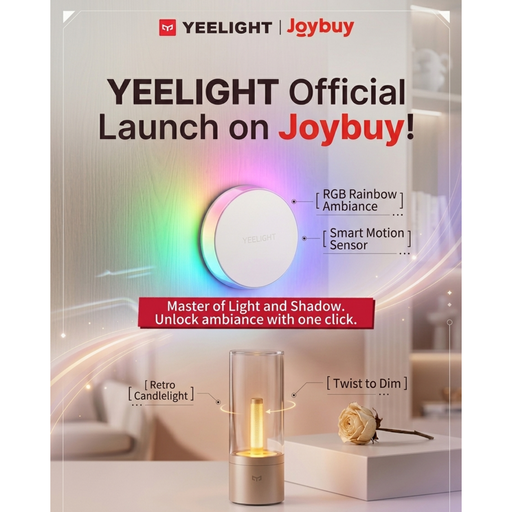
Why this product suits this profile: This magnetic, USB-C rechargeable light is aimed at users looking for a night light for the bedroom, living room or gaming area, with versatile lighting options.
The product description lists 11 preset effects, motion sensors, magnetic mounting and USB-C charging. Before buying, check which lighting modes are genuinely needed in your chosen room.
USB-C battery, magnetic mounting, motion sensor and several preset RGB lighting effects.
Why this product suits this profile: The longer design is a good choice for wardrobes, kitchen areas and shelves where a larger illuminated surface is needed.
The specified dimensions of 300 × 38 × 10 mm, 41 LEDs and a PIR range of 3 to 5 metres make it easier to check whether it will fit the available mounting location.
2-pack, 1100-mAh battery, three colour temperatures, USB charging and slim housing.
We have put together a complete, regularly updated list of products that fully meet these strict selection criteria and the safety regulations applicable in the EU.
Mount the light so that the sensor has an unobstructed view of the route people will take. With self-adhesive models, the surface must be clean, dry and free from grease. Then test the light from several directions of movement. With 230-volt sensors, disconnect the power supply before installation; the connection should be carried out by a qualified electrician.
The operating time per charge depends on the battery, brightness, switch-on duration and number of activations. It is therefore not possible to determine a general runtime from the battery capacity alone. If the brightness drops noticeably, the light should be charged. Damaged or swollen batteries must not be used.
In many situations, automatic lighting can reduce the time the light is switched on because it only activates when movement is detected. However, actual consumption depends on the power rating, run-on time and frequency of use. With a plug-in light featuring a dusk sensor, the selected brightness threshold and daily operating time are also relevant.