
Lieferung heute & morgen

Qualitätsgarantie

Willkommens-Angebote freischalten: KOSTENLOSE Lieferung | Bis zu 80 % RABATT | Kostenlose 30-Tage-JoyPlus-Testphase
App herunterladen
An LED night light with a motion sensor can help you find your way at night without needing to switch on the main lights. However, not every model is equally suitable for families with children, hallways, bedside use or wardrobes. Brightness and design matter, but so do sensor performance, installation, charging method and light colour.
A figure such as 400 lumens describes the luminous flux, but on its own it tells you little about how the light will perform in practice. A wardrobe may need less brightness, while a hallway light needs to cover a larger area. So check whether the light is dimmable and whether you can adjust its colour temperature.
A PIR sensor light responds to changes in heat radiation. Its range and detection angle affect when the light switches on. The wardrobe lights featured here have a stated detection range of 3 to 5 metres. That may be enough for a short hallway, but you’ll need to plan the positioning more carefully in a large room.
Adhesive tape is convenient, but it won’t stick securely to every wall or furniture surface over time. Magnetic LED lights are more flexible if you have a suitable metal surface or backing plate. And ‘wireless’ doesn’t mean maintenance-free: the battery needs regular USB charging, so the charging port should remain easy to reach.
Light colour is measured in Kelvin (K):
A dimmable LED light or a model with several colour temperatures gives you more flexibility. Warm white light can work well in a bedroom, while an LED under-cabinet light in the kitchen is often used in neutral or cool white.
Measure the available space before you buy. A slim light with a depth of around 10 mm will fit beneath many wall cabinets or in narrow furniture spaces. For wardrobes, consider whether you need magnetic mounts, adhesive strips or hooks.
A magnetic LED light can be removed and taken with you to charge. Adhesive, drill-free installation is suitable for rented homes, but the surface should be dry, clean and as smooth as possible.
For a USB-rechargeable night light, battery capacity, charging port and power source are important points to compare. Models with 800 or 1,100 mAh differ in how much energy they store; actual battery life also depends on brightness, sensor activity and how often the light is used.
As well as a motion sensor, touch controls, gesture control or an on/off switch can be useful. A touch-free night light is handy when both your hands are occupied. A battery-powered night light, on the other hand, doesn’t need time out for charging, but replacement batteries add an ongoing cost.

Why this product suits your needs: This two-pack is ideal if you want to light several small areas, such as a wardrobe, shelf or hallway, with compact lights. The 20 cm design takes up very little space.
The PIR sensor switches the light on without you needing to touch it. Three light colours and USB charging mean it isn’t limited to use in just one type of room.
21 LEDs, 800 mAh battery, 3–5 m sensor range and drill-free adhesive installation.
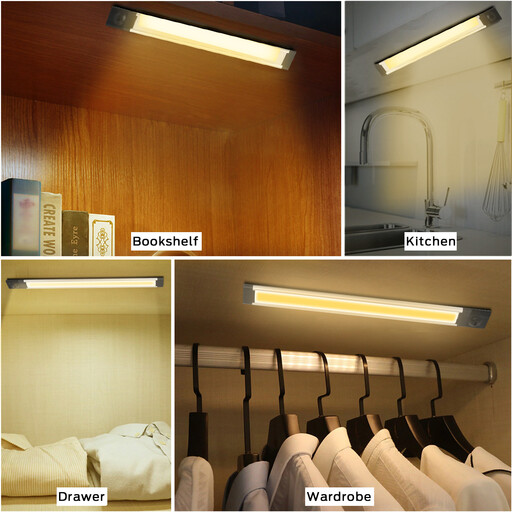
Why this product suits your needs: Measuring 26 × 4 × 1 cm, this light combines a slim design with magnetic fixing and hooks. It’s designed for bedrooms, children’s rooms, wardrobes and hallways.
You can adjust the brightness using gesture control, so you don’t have to use the full light output when you only need a little light to find your way.
36 Epistar 4014 SMD LEDs, stated light output of 400 lm, colour temperature range of 2,800–6,500 K and magnetic mounting.
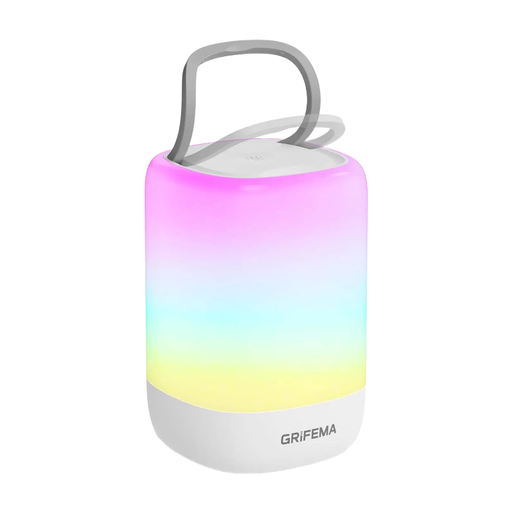
Why this product suits your needs: This portable bedside lamp is suitable for bedrooms, children’s rooms or camping. It’s operated by touch rather than a motion sensor.
The dimming function means you’re not restricted to a single brightness level. The 30-minute timer can stop the light staying on longer than necessary.
USB-C charging, 1,500 mAh lithium-ion battery, brightness control from 5 to 100 per cent, plus warm white and RGB light.
We’ve put together a complete, regularly updated list of products that meet these strict selection criteria and fully comply with the safety regulations in force in the EU.
Before installation, position the sensor and light source so they won’t be obscured by doors, curtains or furniture. Adhesive surfaces must be clean, dry and free from grease. If you’re using magnetic mounts, make sure they’re secure so the light won’t fall.
In children’s rooms, remember that a night light is not a toy. Keep small accessories, USB cables and batteries out of reach of young children. Don’t dismantle the lights or use them in damp environments. Disconnect the power before cleaning; a soft, dry cloth is all you need.
It’s best to fit the light at a height where the PIR sensor can detect people moving along the route. Clean the surface before attaching the light. If you’re using a magnetic mount, make sure the surface it attaches to is stable enough. After installation, test the light briefly from different directions.
There’s no single answer. Battery life depends on battery capacity, brightness setting, light colour and how often the light switches on. If the brightness drops noticeably, charge the battery using the USB port provided. Don’t continue using damaged or swollen batteries.
Power consumption depends on the battery, LED output and how long the light stays on. A sensor light only comes on when it detects movement, which can mean shorter operating times than with a light that stays on continuously. For a realistic estimate, check the manufacturer’s information on battery capacity, charging time and usage.