
Lieferung heute & morgen

Qualitätsgarantie

Willkommens-Angebote freischalten: KOSTENLOSE Lieferung | Bis zu 80 % RABATT | Kostenlose 30-Tage-JoyPlus-Testphase
App herunterladen
An LED night light with a motion sensor can light the way to the bathroom, a child’s room or the kitchen at night, without leaving a lamp on continuously. Options range from plug-in LED night lights to rechargeable sensor lights for wardrobes and hallways. The key factors are not just the LED technology, but how the sensor, brightness, power supply and fitting work together.
A long detection range may sound useful at first. But in a child’s room or beside the bed, a sensor that responds over a very wide area could switch on unnecessarily often, for example when someone moves in the adjoining hallway. So check that the detection range and angle suit the intended location.
A range of just a few metres is often enough for small rooms. In a hallway or on a landing, a wider angle may be more useful than an especially long range.
Wattage mainly indicates power consumption, not how bright a light appears. Lumens, colour temperature and dimmability are more useful for comparing products. A warm white night light at 2700 to 3000 Kelvin looks different from a cool white light at 6500 Kelvin.
For a night light in a child’s room or bedroom, a low, adjustable brightness is often practical. Work surfaces, wardrobes and stairs may need more light.
A plug-in model doesn’t need recharging, but it does occupy a socket continuously. A rechargeable night light is easier to position, but needs to be charged regularly via USB. If you’re choosing a stick-on light, also check that the surface is clean, dry and smooth enough for fitting.
Take extra care in bathrooms: many models are designed for dry indoor areas only. The absence of an IP rating, or a low rating, does not mean a light is suitable for use near water. For example, IP20 should not be taken to mean that a product is protected against splashes.
A motion-sensor light switches on when it detects movement. An additional dusk sensor stops the light from activating when there’s enough ambient light. Check the following:
Fit a sensor night light where furniture, curtains or doors won’t block the sensor. For a motion-sensor wardrobe light, it’s particularly important to point it towards the area where the door opens.
Warm white night lights with a colour temperature of around 2700 to 3200 Kelvin are often used in sleeping areas. Neutral or cool white light can make it easier to see in kitchens, utility rooms and wardrobes.
A dimmable night light, or one with several brightness settings, makes it easier to adjust the light to suit the room. Also check the lumen rating. Some products only state their power consumption, which doesn’t directly indicate how bright the light will be.
A plug-in LED night light, such as the GRIFEMA model, fits directly into a standard socket and doesn’t need batteries. Rechargeable models usually have a USB port and a built-in lithium battery. Before buying, check:
Actual battery life depends on factors such as how often the light is triggered, its brightness and the charge level. Manufacturer figures should therefore be treated as a guide.
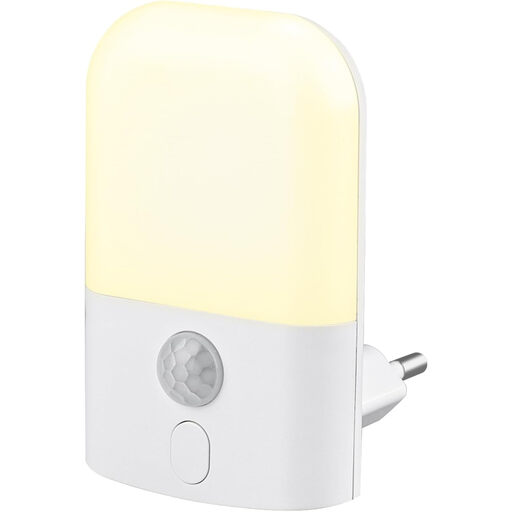
Why this product suits this need: This plug-in model is ideal for a child’s room, hallway, stairs or bedroom if you’d rather not have to recharge a battery.
Five brightness settings, from 20 to 100 per cent, make it easy to adjust the light, while the dusk sensor helps prevent it switching on unnecessarily in daylight.
2700 Kelvin, 0.5 watts, detection up to 3 metres and a 120-degree angle; switches off after 60 seconds without movement, according to the product details.
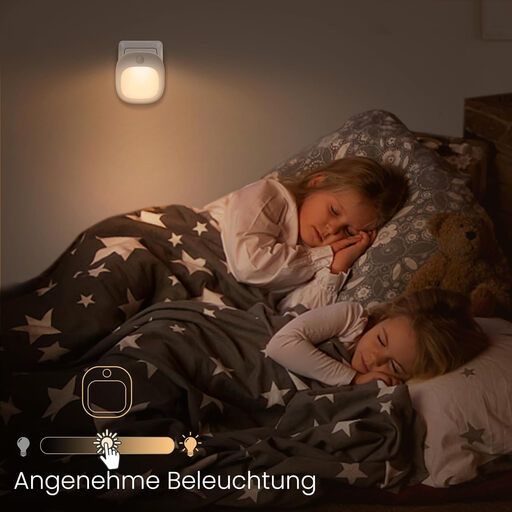
Why this product suits this need: This set combines rechargeable power with three colour temperatures, making it suitable for bedrooms, nurseries, hallways or toilets.
Brightness can be adjusted across five settings, with warm white, mixed and cooler light also available.
500-mAh battery, USB charging, 30 lumens, CRI above 85 and a stated battery life of up to 10 hours in sensor mode.
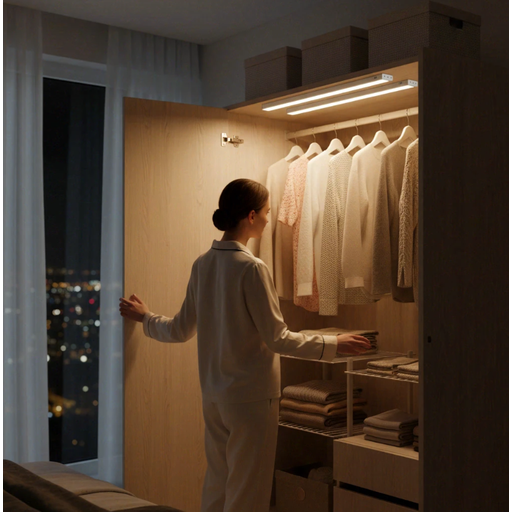
Why this product suits this need: Its slim, elongated design is intended for under kitchen cupboards, inside wardrobes, on shelves and in hallways where a larger area needs lighting.
Fit it without drilling using the adhesive strips. Three colour temperatures mean you don’t have to rely on a single light colour in every area.
Two lights, each 30 centimetres long with 41 LEDs, PIR detection from 3 to 5 metres and a 1100-mAh battery, according to the product description.
We’ve put together a complete, regularly updated list of products that meet these strict selection criteria and the applicable EU safety regulations.
Position the light so that its sensor detects the usual route through the space. In a hallway, a wall-mounted position close to the floor or at mid-height can work well. In a child’s room, avoid directing the light straight at eye level. For LED wardrobe lighting, fitting it under a shelf or near the door is a good option.
With plug-in models, make sure the sensor isn’t blocked by furniture. Fully charge rechargeable lights before first use, following the manufacturer’s instructions. Clean the casing and sensor with a dry or slightly damp cloth only, and disconnect mains-powered models before cleaning.
Consumption depends on the wattage, how long the light is on and how often it’s triggered. Models rated at 0.3 to 1 watt use relatively little energy if left on continuously. In sensor mode, however, the light only comes on when it detects movement. For a realistic estimate, multiply the stated wattage by the number of hours it’s used each day.
Only if the manufacturer specifically says it’s suitable for bathroom use and its technical protection rating is appropriate. A model designed for dry indoor areas isn’t automatically protected against water vapour or splashes. Keep it a safe distance from water sources and follow the installation instructions.
Battery life per charge depends on the battery, brightness setting and how often the light switches on. Runtime figures in product details are based on specific operating conditions. If the light starts to dim, recharge the battery. If it’s damaged or swollen, stop using it.