
Lieferung heute & morgen

Qualitätsgarantie

Willkommens-Angebote freischalten: KOSTENLOSE Lieferung | Bis zu 80 % RABATT | Kostenlose 30-Tage-JoyPlus-Testphase
App herunterladen
An LED night light with a motion sensor can automatically illuminate hallways, stairs, children’s bedrooms, bathrooms and entranceways. However, models vary considerably in their sensors, power supply, brightness and mounting options. A budget buy can quickly become impractical if the light reacts too late, stays on continuously or isn’t suitable for where you plan to use it.
A sensor night light can respond to movement, darkness or both. A PIR motion sensor activates the light when a heat source moves within its detection range. A dusk or light sensor, on the other hand, checks the ambient light level.
For a hallway, a combination of the two makes sense: the light comes on only when it’s dark and movement is detected. A motion sensor on its own may switch on unnecessarily during the day. A light sensor on its own, meanwhile, may leave the light on continuously once it gets dark.
A high lumen rating isn’t automatically right for every room. In a child’s bedroom or on the way to the bathroom, a warm white night light with moderate brightness may be more comfortable than a powerful light. An outdoor wall or courtyard, by contrast, will need considerably more lumens.
So, check the following:
A product designed to plug into an indoor socket isn’t automatically suitable for a balcony, garden or front entrance. Check the IP rating: IP20 is typically intended for dry indoor spaces. A model rated IPX4 is protected against splashes from various directions, but must not be submerged.
For an outdoor security light or an outdoor floodlight with a motion sensor, the mounting position, cable routing, operating temperature and sensor direction are also important. A high-brightness light is only a good choice if it can be mounted securely and the detection area is set correctly.
The range needs to suit the space. Three metres, for example, is enough for a short hallway. A wider detection area can be more useful on a staircase or at a front entrance. A 120° angle covers a broad area to the side, while a front-facing installation may require different specifications.
Bear in mind that furniture, doors and walls can partially block the sensor. Install the light so that movement crosses in front of the sensor rather than coming directly towards it.
A plug-in LED night light doesn’t need its batteries changing and is ready to use straight away. However, it occupies a socket permanently. A rechargeable sensor light can be mounted more flexibly, but needs to be charged regularly via USB. For cupboard or under-cabinet lighting, an LED strip light with a motion sensor can provide even illumination.
Compare:
The wattage indicates energy consumption, not brightness directly. The lumen rating is a more useful way to compare light output.
Plug-in models are suitable for hallways, bedrooms, children’s bedrooms and bathrooms, as long as the area stays dry. Adhesive or magnetic options are handy for cupboards and shelves, but should be attached to a clean, sturdy surface. Outdoor lights need an IP rating that’s suitable for the mounting location, as well as a proper electrical installation.
An LED torch can also be useful in an emergency. It works independently of a socket and can be directed where you need it. This is a different use from an automatically switching night light.

Why this product suits this profile: This plug-in model is designed for dry indoor spaces such as children’s bedrooms, hallways, staircases and kitchens, and doesn’t need batteries.
The motion and dusk sensors work together. According to the product information, the light switches off automatically after 60 seconds without movement.
Five brightness levels from 20 to 100 per cent, warm white 2,700 K light, a range of up to three metres and a 120° detection angle.
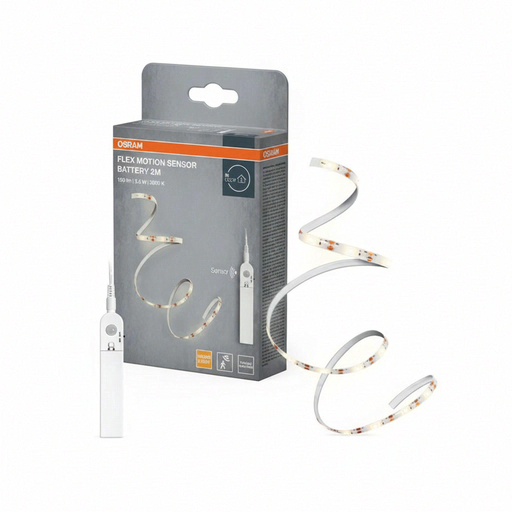
Why this product suits this profile: The two-metre LED strip is suitable for cupboards, shelves, hallways or areas without an easily accessible socket.
The battery-powered design avoids awkward cable routing. Before buying, check the battery type, mounting surface and strip length you need.
Two-metre flexible LED strip with an integrated motion sensor and a wireless mounting option.
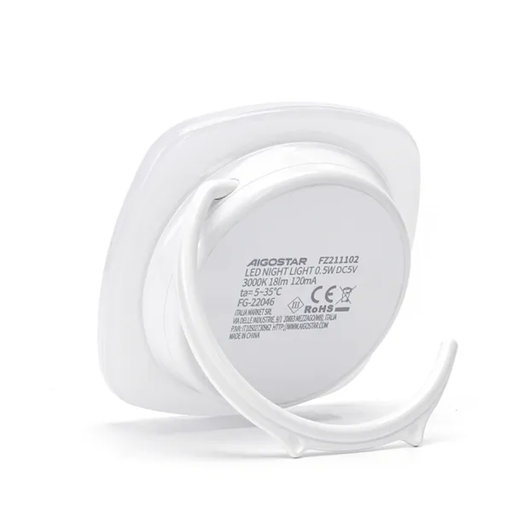
Why this product suits this profile: A rechargeable sensor light is handy for cupboards, hallways or under cabinets when there isn’t a socket close by.
Its stated sensor range of 3.5 metres and automatic operation reduce the need to switch the light on and off manually.
500-mAh battery, USB charging, warm white 3,000 K light, 18 lm and a 120° beam angle, according to the product information.
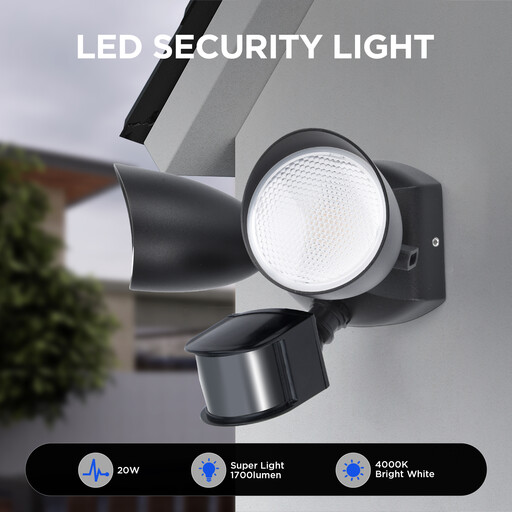
Why this product suits this profile: This outdoor light is intended for courtyards, gardens, patios or front entrances where broader illumination is needed.
Choosing a model specifically described as suitable for outdoor use helps prevent an indoor light from being accidentally exposed to rain or splashes.
20 W power consumption, 1,700 lm, 4,000 K and an integrated sensor, according to the product name.
We’ve put together a complete, regularly updated list of products that meet these strict selection criteria and fully comply with the safety regulations applicable in the EU.
Position the light so that the sensor covers your route without being blocked by furniture, curtains or doors. For plug-in models, the socket should be dry and undamaged. Outdoor lights must be installed in line with their IP rating. Then test the detection angle from several directions.
Consumption depends on the light’s power, how long it’s used and how often it switches on. A 0.5 W model uses less energy in theory if left on continuously than a much more powerful 20 W outdoor light. A motion or dusk sensor and automatic switch-off can reduce the actual operating time. For a more accurate estimate, check the wattage and how many hours a day you expect to use it.
Its lifespan depends on the LED module, electronics, rechargeable battery or disposable batteries, and the conditions in which it’s used. Indoor models should be protected from moisture. For rechargeable products, battery capacity is also important. Outdoors, only use models whose IP rating and installation instructions are suitable for the location.