
Lieferung heute & morgen

Qualitätsgarantie

Willkommens-Angebote freischalten: KOSTENLOSE Lieferung | Bis zu 80 % RABATT | Kostenlose 30-Tage-JoyPlus-Testphase
App herunterladen
An LED night light can make it easier to find your way in the hallway, nursery or bathroom without switching on the main room lighting. However, product descriptions often highlight features that are not particularly important in everyday use. More relevant are the right light colour, a suitable sensor and a power supply that matches where you intend to use it.
A high lumen count does not automatically mean greater comfort. Bright, cool-white light can be disruptive at night in a bedroom or nursery. A few lumens are often enough for paths and stairs, while a work area or changing table may require a higher light output.
You should therefore consider the combination of luminous flux in lumens, beam angle and colour temperature. A warm-white night light of around 2700 to 3000 Kelvin is generally less intrusive in many home settings than an LED night light with 6500 Kelvin. The latter produces a more neutral to cool-white light and should be used selectively.
A dusk sensor responds to the ambient light level. The light may switch on when it gets dark and off again in daylight, for example. A night light with motion sensor, on the other hand, usually uses a PIR sensor to detect movement within a specific area. Both solutions offer different benefits:
Check the range, detection angle and switch-off time. A sensor with a wide range may be triggered unnecessarily often in a narrow hallway.
A plug-in night light is ready to use straight away and needs neither batteries nor charging time. However, it occupies the socket and the installation location is fixed. A rechargeable night light can be used flexibly on a bedside table, in the nursery or along the route to the bathroom. Here, you should check the charging connection, battery capacity and stated runtime.
For battery-powered models, the battery type and battery compartment are important details. For products used around young children, it is also essential that the battery compartment remains securely closed and that the manufacturer’s safety instructions are followed.
Colour temperature is measured in Kelvin. 2700 to 3000 Kelvin typically indicates warm-white light, while 6500 Kelvin appears noticeably cooler. A dimmable night light offers additional flexibility, particularly if it is intended for use both as an orientation light and as a decorative bedside lamp.
The CRI or Ra rating describes colour rendering. A value of Ra 80 or above is common for many orientation lights. However, glare is also important for a night light: a diffuse cover and limited beam angle can reduce the risk of looking directly into the LED.
For plug-in models, check the specifications 220–240 volts, the design and whether the product is suitable for indoor use. A protection rating such as IP20 indicates a product for dry indoor areas, not for direct contact with water. Such a model should therefore not be placed near a washbasin or shower.
Also make sure that the night light does not block adjacent sockets. Particularly slim designs are practical when you want to connect other devices to the same wall socket.
Manufacturer information about PC, ABS or silicone tells you about the housing material, but does not replace the need to follow the instructions for use. An LED night light must not be covered, dismantled or immersed in liquid. Cleaning will generally require a soft, dry or slightly damp cloth. Electrical products should be disconnected from the mains before cleaning.
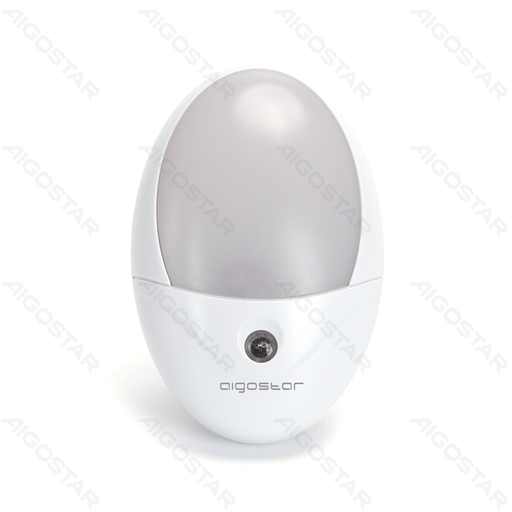
Why this product suits the profile: This compact plug-in night light uses a PIR motion sensor and warm-white light at 3000 Kelvin. It is suitable for hallways, stairs and bedrooms when lighting is only needed when movement is detected.
The product details specify the sensor type, a range of up to 7 metres and a detection angle of 120°. This makes it easier to compare the motion detection with the intended installation location.
20 lm luminous flux, 3000 K colour temperature and operation without batteries or a charger.

Why this product suits the profile: Parents can adjust the brightness across five levels between 20 and 100 per cent. The combined motion and dusk sensor is designed for use in a nursery, hallway or stairway.
The adjustable brightness reduces the risk of leaving a children's night light unused simply because its basic brightness is too strong.
2700 K warm-white light, five brightness levels, detection range of up to 3 metres and automatic switch-off after 60 seconds without movement.
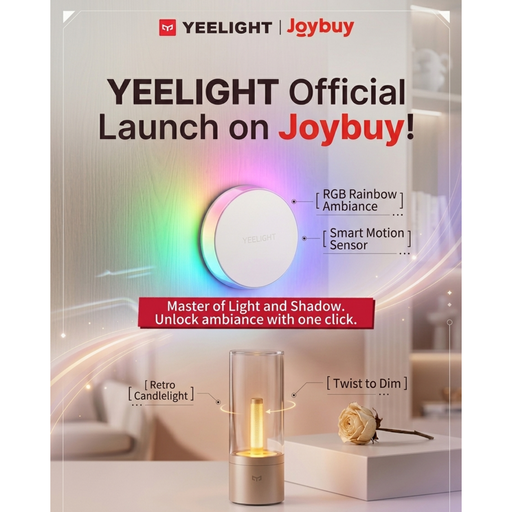
Why this product suits the profile: This rechargeable LED night light with USB-C, magnetic attachment and motion sensor is suitable for flexible use in living rooms, bedrooms or playrooms.
The flexible mounting option avoids tying the light to a single socket. Before buying, you should still check the runtime, charging interval and preferred light colour.
USB-C charging, magnetic mounting, motion sensor and 11 preset lighting effects according to the product description.

Why this product suits the profile: The soft silicone surface, three brightness levels and battery operation are designed for mobile use in the nursery or beside the bed.
The brightness is not fixed. This makes it easier to adjust the light level for settling down to sleep, finding your way at night or reading stories.
1200-mAh battery, USB-C charging connection, three brightness levels and, according to the product information, up to six hours of runtime at maximum brightness.
For a hallway or staircase, a night light with a motion sensor is usually practical because it only switches on when needed. In the nursery, a warm-white, dimmable children's night light may fit more comfortably into the bedtime routine. In the baby’s room, pay particular attention to a low base brightness, a closed housing and safe positioning outside the cot.
In the bathroom, the following applies: a model with IP20 is intended only for dry indoor areas. Keep it away from sources of water and use only products whose manufacturers expressly approve them for the intended setting. Mobile models can work well as decorative bedside lamps when design and flexible positioning matter more than automatic sensor control.
We have put together a complete, regularly updated list of products that fully meet these strict selection criteria and the safety regulations applicable in the EU.
Consumption depends on the power rating and how long the light is used. A 0.5-watt model requires 0.5 kilowatt hours over 1,000 hours of operation. Sensor operation can reduce the actual time the light is switched on. Wattage, usage time and your electricity tariff therefore determine the running costs.
Manufacturers generally state the lifespan in operating hours. Product specifications may, for example, quote figures of 10,000 to 25,000 hours. For rechargeable models, battery lifespan is also relevant. This does not provide an exact indication of how long the product will last in a household, as heat, charging cycles and operating conditions all play a part.
Position it so that the sensor can detect the route being used without being obstructed by furniture, curtains or other objects. For a plug-in model, the light should be securely fitted and must not come into contact with water, bedding or flammable materials. Always check the installation and safety instructions from the relevant manufacturer before use.