
Lieferung heute & morgen

Qualitätsgarantie

Willkommens-Angebote freischalten: KOSTENLOSE Lieferung | Bis zu 80 % RABATT | Kostenlose 30-Tage-JoyPlus-Testphase
App herunterladen
An LED night light with a sensor helps you find your way at night without staying brightly lit all the time. In practice, however, models vary considerably: some respond only to darkness, while others also detect movement. Some can be dimmed, while others offer only a fixed brightness or automatic colour changes.
For families, older people and anyone looking for energy-efficient lighting, three common buying misconceptions are worth bearing in mind:
A night light with a motion sensor usually uses a PIR sensor. It responds to movement that creates heat, such as someone walking down the hallway at night. Check the following:
According to the product details, the GRIFEMA model detects movement from up to 3 metres away at 120° and switches on in the dark. It switches off automatically after 60 seconds without movement. The Aigostar NL01 uses a PIR sensor and has a stated range of up to 7 metres at 120°. These figures are based on the manufacturers’ specifications and may vary depending on the layout of the room.
A light with a dusk sensor alone may be enough to provide continuous guidance in a child’s room or hallway. A motion sensor is particularly useful on stairs, in the bathroom or on the way to the kitchen.
A warm white night light with a colour temperature of around 2700 to 3000 Kelvin looks less cool than neutral or cool white light. For bedrooms and children’s rooms, a lower brightness is often preferable, while a hallway sensor light can be a little brighter to help you find your way.
Look for:
The GRIFEMA night light offers five settings from 20 to 100 per cent and a colour temperature of 2700 Kelvin. According to the product details, the 2-pack with light sensor offers stepless dimming from 10 to 100 per cent, a colour temperature of 2800 to 3000 Kelvin and a brightness of 20 lumens. A dimmable table lamp such as the Aigostar LIGHT08 also has touch controls. At around 400 lumens, however, it’s better suited to a desk, bedside table or reading area than to discreet night-time lighting.
Even a low power rating can add up over many hours when a light is left plugged in. So consider the stated figures in relation to how you plan to use it:
A plug-in night light doesn’t need batteries and is ready to use straight away. Before plugging it in, check the mains voltage, the condition of the socket and the product’s guidance on where it can be used. The models listed are intended for indoor use. Products with an IP20 rating are not protected against water, so they shouldn’t be used directly in damp areas or where they may be splashed.
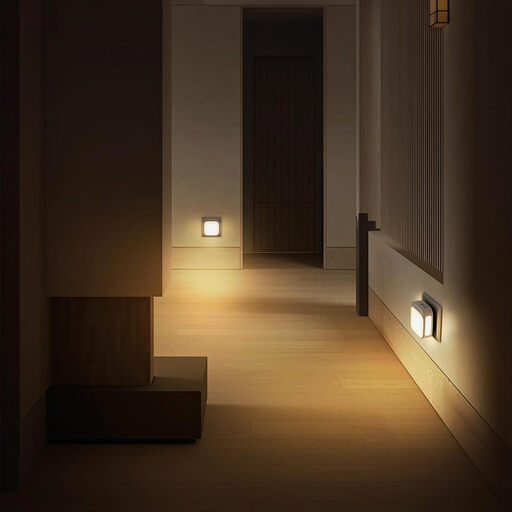
Why this product suits you: This 2-pack is ideal if you want to light several areas, such as the hallway and children’s room, while keeping energy use low.
The automatic light sensor is paired with a dimming range of 10 to 100 per cent, rather than offering just one fixed brightness.
0.3 watts of power, warm white light at 2800–3000 Kelvin and two lights in the pack.

Why this product suits you: This lamp is for anyone looking for a dimmable table lamp for a bedside table, workspace or reading area, with an additional charging option.
Adjust the brightness using the touch controls, so you’re not limited to a single light level.
8 watts, around 400 lumens, warm white light, touch dimming and a USB charging port, according to the product details.

Why this product suits you: This plug-in light offers motion detection and several brightness settings for hallways, stairs, children’s rooms or bathrooms.
Combining motion and dusk sensors means the light won’t switch on unnecessarily when there’s already enough light.
Five brightness settings, 2700 Kelvin, 0.5 watts of power and automatic switch-off after 60 seconds without movement.
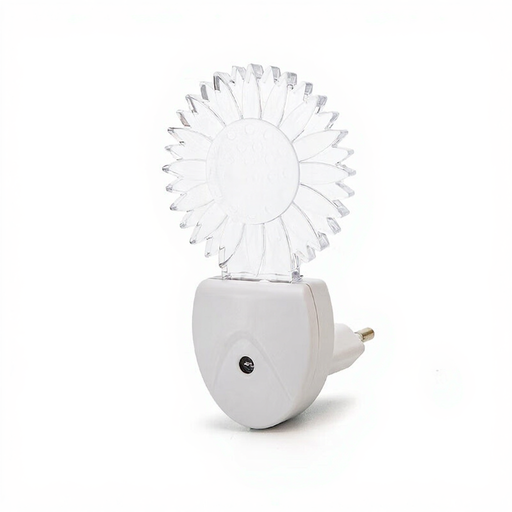
Why this product suits you: This RGB night light is for anyone who wants to combine automatic guidance lighting with colourful ambient light.
According to the product details, the integrated dusk sensor switches the light on below 20 lux and off in daylight.
RGB light, maximum power consumption of 0.5 watts, 30 lumens and direct connection to a 230-volt socket.
We’ve put together a complete, regularly updated list of products that meet these strict selection criteria and fully comply with the safety regulations in force in the EU.
Plug the model into a suitable indoor socket and make sure curtains or furniture don’t block the sensor. If it has a motion sensor, make sure the expected direction of movement falls within the stated detection angle. If brightness adjustment is available, use the buttons, touch controls or built-in dial to set your preferred level.
Lifespan depends on the LED module, electronics, how often it’s switched on and the conditions in which it’s used. The Aigostar NL01 is rated for 10,000 hours, while the Aigostar Sunflower model is rated for 25,000 hours. These are manufacturers’ figures, not a guarantee of how long the lights will last in your home.
Running costs depend on the wattage, how many hours a day the light is on and your electricity tariff. A 0.3-watt model uses 0.3 kilowatt hours over 1,000 hours of operation. With a motion sensor, actual energy use may be lower if the light only comes on for short periods. For an accurate calculation, check the power rating on the product label and compare it with how you plan to use the light.