
Lieferung heute & morgen

Qualitätsgarantie

Willkommens-Angebote freischalten: KOSTENLOSE Lieferung | Bis zu 80 % RABATT | Kostenlose 30-Tage-JoyPlus-Testphase
App herunterladen
An LED night light should work reliably every day, use little electricity and suit the room it is intended for. In practice, however, unclear product specifications, unsuitable light colours or incorrectly assessed sensors often lead to disappointing purchases. This applies just as much to a small LED lamp as to an LED desk lamp, a decorative LED lamp or a versatile RGB light.
Descriptions such as “soft” or “pleasant” reveal little about the actual light colour. The key factor is the colour temperature, measured in Kelvin:
An LED night light in warm white at 2700 K can create a very different atmosphere from a sensor light at 6500 K. If you are looking for a calm lighting atmosphere, do not focus solely on the wattage.
A night light with sensor may use a dusk sensor, motion sensor or a combination of both. A dusk sensor switches on as the surrounding light level falls, while a motion sensor is activated only when movement is detected.
Important details include the detection angle, range and switch-off time. A model with a motion detector may be suitable for stairs and hallways, while a permanently dim light beside the bed may be more practical without motion detection. The position of the socket and any furniture in front of the sensor can also affect how well it works.
A battery-powered lamp requires suitable batteries and regular checks. With a rechargeable LED lamp, the charging connection, battery capacity and stated operating time are important. Mains-powered models do not need batteries, but they do occupy a socket permanently.
Before buying, also check whether a power supply, remote control or batteries are included. When buying glass lights such as a decorative mushroom lamp, you should also consider a stable place to position it and keep it away from small children.
Brightness is often specified in lumens. An orientation light generally requires less light than an LED reading lamp with clamp or an LED desk lamp for a desk. For flexible use, several brightness levels or a dimmable LED lamp can be useful.
With RGB models, colour changes and effects are the main focus. An RGB night light is therefore not automatically suitable for every sleeping environment. Check whether warm white light is also available and whether colours, brightness or effects can be controlled directly on the device, via remote control or through an app.
A small plug-in light measuring around 7 to 8 cm in height is suitable for narrow hallways or areas beside doors. A decorative table lamp, on the other hand, requires a flat, stable surface. An LED reading lamp with clamp can save space on desks, shelves or bed frames. With clip-on lamps, the maximum clamp width is crucial.
If you are looking for a larger light source for living or gaming areas, you could consider an LED floor lamp or an LED light strip. With LED strips, check the length, power supply, mounting surface and heat dissipation. A switched-on strip should not remain tightly wound for long periods.
For dry indoor areas, many products have a protection rating of IP20. This offers no protection against water and should therefore not be confused with a light designed for damp outdoor areas. Plug-in night lights must not be covered or cleaned with liquids.
Only the specified battery types should be used in battery-powered products. Do not mix old and new batteries. Glass models should be kept out of the reach of small children, particularly because of the potential risk of breakage and swallowing.
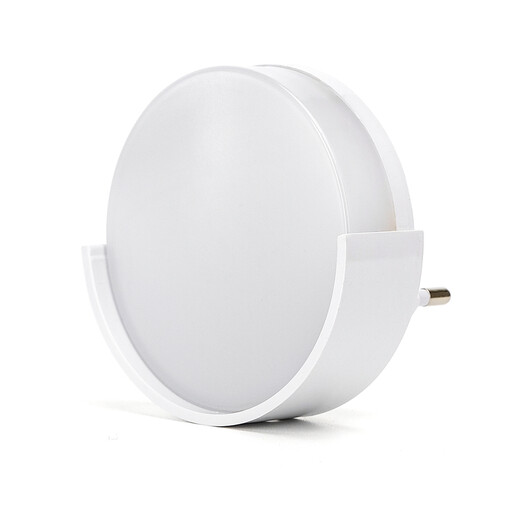
Why this product suits this profile: This plug-in model works without batteries and, according to the product specifications, switches on automatically when the light level falls below 20 lux. It is suitable for hallways, bedrooms or children’s rooms in dry indoor environments.
The automatic dusk function reduces the need to switch the light on and off manually. Not using a rechargeable battery avoids additional charging cycles and replacement batteries.
1 W power consumption, 40 lm, 6500 K, 220–240 V and IP20 for dry indoor areas.
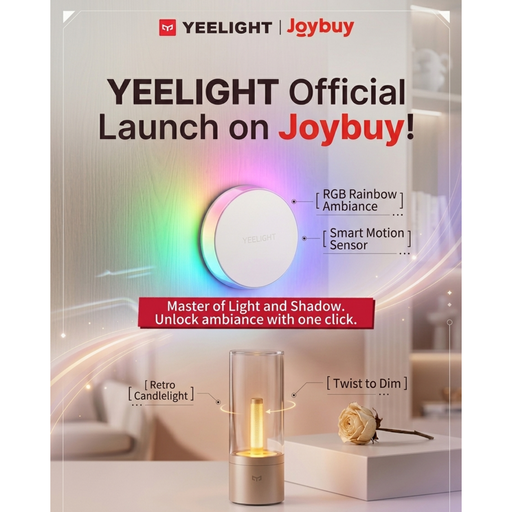
Why this product suits this profile: This model combines RGB lighting, motion sensors, preset effects, magnetic mounting and a USB-C charging port. This makes it flexible enough for living areas, bedrooms or gaming spaces.
The control options and rechargeable power supply are clearly specified. Nevertheless, check before buying that the desired sensor and effect controls are suitable for the intended location.
USB-C charging, magnetic mounting, motion sensors and several preset lighting effects according to the product description.
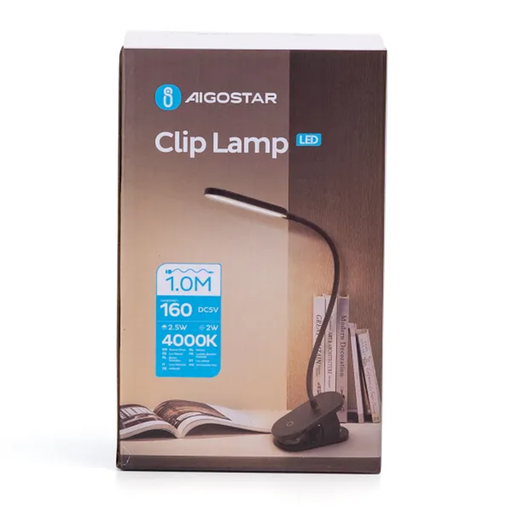
Why this product suits this profile: This clip-on lamp is designed for users who want to position light precisely on a desk, beside a bed or over a work surface. The flexible neck and built-in battery support mobile use.
The three brightness levels and stated battery capacity make usage more predictable than with a light that provides no power-supply details.
2.5 W, 160 lm, 4000 K, 1200-mAh battery and flexible clamp according to the product data.
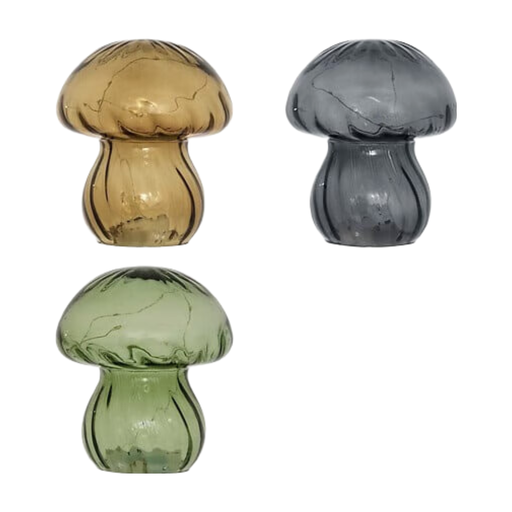
Why this product suits this profile: The glass mushroom design is intended as a decorative LED lamp for bedrooms, living areas or side tables. According to the product description, the colour is supplied at random.
The dimensions, glass material and two required AAA batteries are specified. This allows you to check in advance whether the available surface and household circumstances are suitable.
15.5 cm height, 13.2 cm diameter, LED technology and battery-powered operation; batteries are not included.
We have put together a complete, regularly updated list of products that fully meet these strict selection criteria and the safety regulations applicable in the EU.
In a children’s room, position the light so that cables, plugs and small parts are out of reach. A plug-in model must not be covered. If you are using a night light with motion sensor, make sure its detection area remains unobstructed.
In the bedroom, low-level warm white light is often more practical than RGB lighting that stays on continuously. For gaming or living areas, however, an RGB light, an LED light strip or an LED floor lamp with remote control may be a good choice. The key considerations are the mounting location, cable management and the control method you want.
This depends on its power rating and daily operating time. A 0.5 W model running for 10 hours uses approximately 0.005 kWh per day in theory. Actual consumption may vary depending on sensor operation and standby functions. The wattage shown on the product data sheet is therefore an important point of comparison.
A sensor can be practical when the light is only needed in darkness or when movement is detected. Dusk or motion sensors are often well suited to hallways, stairs and entrance areas. However, check the range, detection angle, switch-off time and sensor position.
Many products state a service life in operating hours. For example, an Aigostar sensor light specifies 25,000 hours, while a clip-on lamp is rated at 20,000 hours. These are manufacturer specifications and are not a guarantee of a particular service life in your household. With rechargeable LED lamps, you should also take battery ageing into account.