
Lieferung heute & morgen

Qualitätsgarantie

Willkommens-Angebote freischalten: KOSTENLOSE Lieferung | Bis zu 80 % RABATT | Kostenlose 30-Tage-JoyPlus-Testphase
App herunterladen
An LED night light for children should help them find their way at night without making the room unnecessarily bright. In practice, however, some product claims can lead to disappointing purchases. A wide choice of colours is no substitute for easy controls, a motion sensor won’t work equally reliably in every room, and a rechargeable night light isn’t automatically suitable for babies.
This buying guide explains which technical details matter and which children’s night light could suit different everyday situations.
An RGB night light can display seven or more colours. But for night-time care, trips to the toilet or a child’s bedroom, low, even brightness is often more important than a wide choice of colours. Check whether the light is dimmable and whether you can select a warm white night light setting separately.
A night light with a motion sensor needs a clear view of the area it is meant to detect. Furniture, curtains or an unsuitable mounting height can limit detection. It’s also worth checking whether the light has a dusk sensor. Without a light sensor, it may switch on even when the room is already bright enough.
For a rechargeable night light, check the charging method, charging accessories and whether it can be used while charging. A USB connection is convenient, but you’ll need a suitable power adaptor or another power source. For products intended for babies and toddlers, also check the age guidance and safety warnings. Electronic devices should never be left unsupervised with young children.
Brightness is given in lumens or as a percentage, depending on the product. A low lumen output may be enough for a hallway or as a guide light, while reading lights have different requirements. A dimmable night light with several settings is easier to adjust to its surroundings.
Colour temperature is measured in Kelvin:
A night light with a timer can limit how long it stays on. Check whether it switches off after an hour, for example, or whether it has a different set time.
For a night light with a motion sensor, the detection angle and range are important. A model with a range of up to 3 metres and a 120-degree detection angle will suit different uses from a small guide light by the bed. If a lux value is given, the dusk sensor should switch the light on when the ambient brightness reaches the specified level.
Plug-in models don’t need a battery and are suitable for fixed positions in hallways, bathrooms or by stairs. USB and battery-powered models, on the other hand, are more flexible to position. Details such as ABS or PC describe the materials used, but don’t by themselves prove that a product is suitable for children.
Also check:
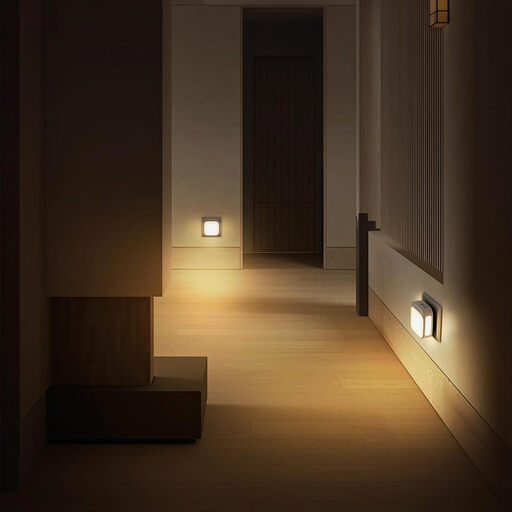
Why this product suits this need: This two-pack is ideal for households looking to add warm white guide lighting to several areas, such as the hallway and children’s bedroom.
The stated automatic light sensor switches the light on when it gets dark. This reduces the need to switch it on and off manually, but you should still check that the socket is suitable.
Pack of 2, 0,3 W power consumption, warm white light at 2.800–3.000 K and stepless dimming from 10 to 100 per cent.
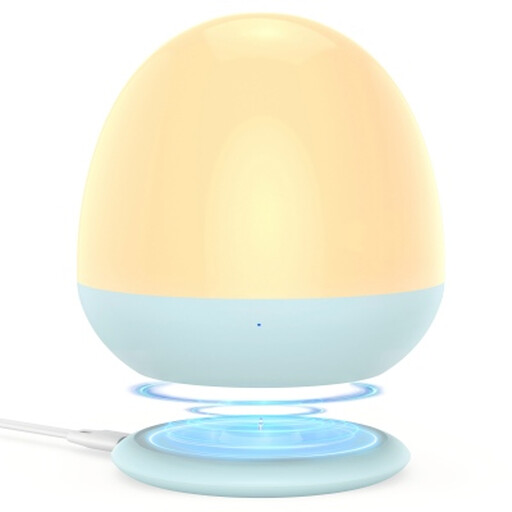
Why this product suits this need: Touch controls, a timer and a sturdy charging base make this a good fit for established routines in a child’s room or for night-time feeds.
The charging base means you don’t have to keep a cable connected all the time. The manufacturer also states that it is for ages three and up and should be kept away from water.
ABS and PC casing, USB charging and wireless charging via the included base, plus touch controls and a timer.

Why this product suits this need: This plug-in model is designed for hallways, stairs, bathrooms or kitchens, and switches on automatically when it detects movement in the dark.
The motion and dusk sensors work together. This means the light is designed to switch on only when it detects both movement and darkness.
Five brightness settings, 2.700 K warm white LED light, detection range of up to 3 metres and automatic switch-off after 60 seconds without movement.
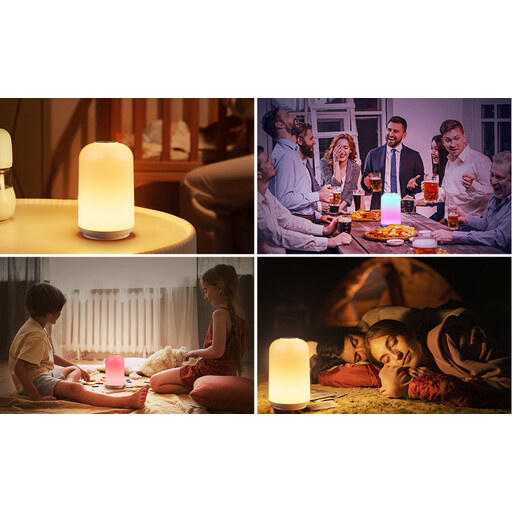
Why this product suits this need: This battery-powered model can be placed on a bedside table, shelf or chest of drawers without needing a socket, and offers several lighting modes.
The warm white setting can be used independently of the RGB colours. You can adjust the brightness continuously in warm white mode.
12 SMD LEDs, 40 lumens, built-in battery, USB charging, warm white at 2.600–2.800 K and seven RGB colours.
We’ve put together a complete, regularly updated list of products that meet these strict selection criteria and fully comply with the safety regulations in force in the EU.
Energy use depends on the stated power consumption and how long the light is on. A 0,3 W model uses less energy than a 1 W model over the same period. Sensors and timers can reduce the actual time the light is on. Your electricity tariff and daily usage also affect running costs.
Position it so that furniture or doors don’t block the detection area. In hallways and on stairs, choose a spot that covers the route without shining directly at eye level. For plug-in models, follow the manufacturer’s instructions and keep the light a safe distance from water sources.
You can only estimate its lifespan by checking the manufacturer’s information and considering the conditions in which it is used. Battery charge cycles, heat, charging habits and physical wear can all affect how long it lasts. Using a timer or sensor and cleaning the light correctly can help limit its daily running time.