
Lieferung heute & morgen

Qualitätsgarantie

Willkommens-Angebote freischalten: KOSTENLOSE Lieferung | Bis zu 80 % RABATT | Kostenlose 30-Tage-JoyPlus-Testphase
App herunterladen
An LED outdoor floodlight should reliably illuminate your driveway, garden, patio, garage or courtyard. In practice, however, a high lumen rating alone won’t guarantee the right solution. People often buy products with an uncomfortable light colour, a poorly positioned motion sensor or an IP rating that isn’t suited to where the light will be installed.
A high lumen rating describes the luminous flux; it doesn’t automatically tell you how much area will actually be illuminated. A narrow beam can light up one spot on a driveway, while a wider beam angle is better suited to a courtyard, garden or patio. If you’re buying several lights, check whether the stated figure applies to each floodlight or to the whole set.
A waterproof LED floodlight isn’t automatically suitable for every installation position. The IP65 rating generally means protection against dust and water jets. IP66 provides greater protection against powerful water jets. Even so, the specific installation conditions, protected connections and installation instructions remain important. Outdoor cable connections must also be protected against moisture.
An LED floodlight with a motion sensor needs a suitable detection range. Walls, hedges, parked vehicles and passing traffic can all affect how it works. With a solar outdoor floodlight, operating time depends on its orientation, shade, battery capacity and the weather. Without direct sunlight, the actual lighting time may be shorter than the manufacturer’s estimate.
Moderate brightness is often enough for paths and entrance areas. An outdoor LED floodlight for a garage, courtyard or commercial space will usually need more luminous flux and a suitable installation height. Check the following details:
Glare is also worth considering for a garden floodlight or outdoor wall light. The beam shouldn’t shine unnecessarily into neighbours’ homes, onto passing pedestrians or through windows.
The IP rating should be suitable for the installation position. An IP65 outdoor light is generally suitable for many sheltered and exposed outdoor areas, provided you follow the manufacturer’s instructions. IP66 outdoor lighting offers greater protection against powerful water jets. However, an IP rating doesn’t automatically indicate UV resistance, corrosion protection or suitability for frost.
For metal housings, the coating, seals and glass cover are important considerations. Plastic may be suitable for lightweight wall-mounted lights, while aluminium can be a robust alternative for some designs. Whatever the material, make sure the fixture is securely fastened to withstand wind and vibration over time.
Mains-powered lights need a safe, weatherproof connection. Fixed-wiring models should be installed by a suitably qualified electrician. Solar lights don’t need a mains cable, but they do need an installation spot with as much direct sunlight as possible.
An adjustable bracket makes it easier to aim the light. Before you buy, check:
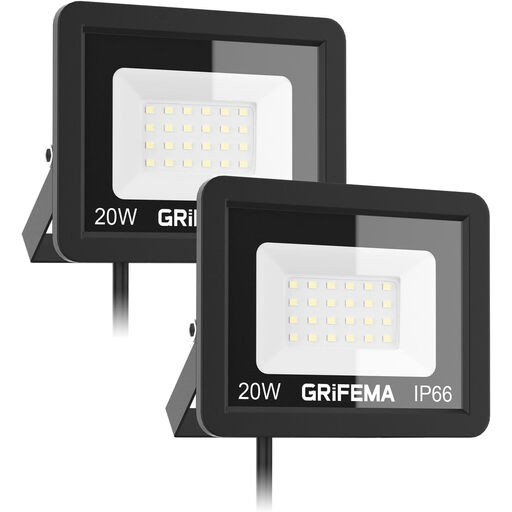
Why this product suits this profile: With a combined output of 2200 lm and a colour temperature of 6500 K, these two floodlights are ideal if you want to illuminate several areas, such as a garage, courtyard or garden, with cool light. The brackets are adjustable through 180°.
The product description clearly states the total output for the set. This makes it easier to assess the light performance than an unclear combined figure would.
IP66 rating, 180° adjustable bracket and two lights. The set is described as being supplied without a plug, so the power connections must be installed professionally and protected from the weather.
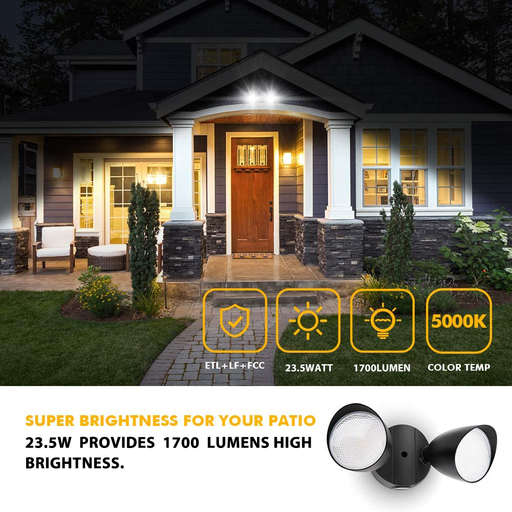
Why this product suits this profile: This model is for anyone looking for a permanently mounted wall light for a garage, shed, garden or driveway, with two independently adjustable heads.
The two adjustable light heads let you direct the light more precisely, instead of illuminating an entire area from just one direction.
Aluminium housing, toughened glass panels and two heads adjustable through 180°. Designed for fixed wiring.
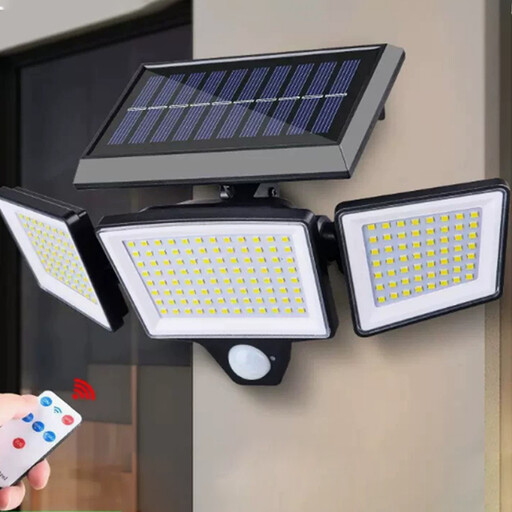
Why this product suits this profile: For driveways, courtyards and garden areas without a mains connection, this solar security light offers three lighting modes, three light heads and a motion sensor.
The detection range and angle are specified, which helps with planning. You’ll still need to check sightlines and sunlight at the installation spot.
3000 lm according to the product specifications, 270° coverage, 180° sensor angle and IP65 rating. The solar panel should be cleaned regularly.
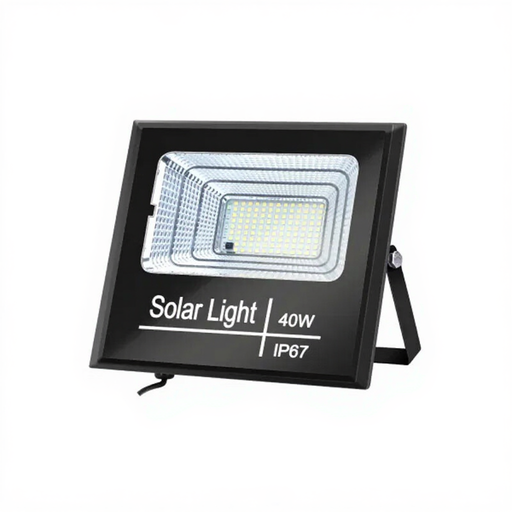
Why this product suits this profile: The separate solar panel gives you more flexibility when positioning the light and its power source, for example on a shed, beside a garden path or in a remote part of a courtyard.
The product description gives the battery capacity and a possible operating time. Before buying, also check that the IP rating in the specific listing is suitable for your chosen installation position.
Separate solar panel, 10,000-mAh battery according to the description and mains-free installation. The product specifications state IP67, while the listing title states IP65 – check this detail before placing your order.
We’ve put together a complete, regularly updated list of products that fully meet these strict selection criteria and the safety regulations in force in the EU.
Consumption depends on the power rating and how long the light is used each day. A 20-watt floodlight running for one hour uses 0.02 kWh, based on a simple calculation. Motion sensors can reduce the time the light is switched on. Solar lights don’t add directly to your mains electricity bill, although the battery and solar panel are wear-and-tear components.
Neutral to cool colour temperatures are often chosen for security and work areas, as they can make outlines clearer. A warmer light often feels less stark in seating areas, on patios and for decorative lighting. What matters is how you plan to use the light, its glare and consideration for nearby homes.
First, choose a stable mounting surface that’s suitable for the IP rating. Aim the beam so it doesn’t shine unnecessarily into windows or onto public paths. Mains-powered models should only be used with adequately protected connections. If you’re unsure about fixed electrical installation, consult a qualified professional.