
Lieferung heute & morgen

Qualitätsgarantie

Willkommens-Angebote freischalten: KOSTENLOSE Lieferung | Bis zu 80 % RABATT | Kostenlose 30-Tage-JoyPlus-Testphase
App herunterladen
An LED outdoor floodlight should reliably illuminate paths, patios, driveways or façades. In practice, however, unclear power ratings, an unsuitable IP rating or a poorly chosen installation location can often lead to the wrong purchase. So when choosing solar lights and outdoor security lights, it’s worth looking closely at the technical specifications rather than relying on marketing claims.
Wattage describes power consumption, not the amount of light produced. Luminous flux, measured in lumens, is a more useful figure for comparing products. Depending on the LED technology, a 20-watt outdoor floodlight can vary considerably in brightness. Moderate brightness is often enough for paths and decorative areas, while a driveway or building façade needs broader illumination.
A light designed for a sheltered outdoor area isn’t necessarily suitable for an exposed location. An IP rating consists of two digits:
For example, an IP65 outdoor light may be suitable beneath an eaves overhang. For a garden ground spotlight installed in a recess or liable to come into contact with water, an IP67 outdoor light may be a better choice. The IP rating doesn’t remove the need to seal cable entries and connections correctly.
A solar outdoor floodlight needs sufficient daylight. Trees, house walls and neighbouring buildings can significantly reduce charging performance. A model with a separate solar panel gives you more flexibility to position the panel towards the sun. Even so, check the cable length, mounting surface and possible shade before buying. The stated lighting times depend, among other things, on the charge level, season, temperature and selected brightness.
Warm white light at around 2,700 to 3,000 Kelvin is often suitable for patios, seating areas and decorative parts of the garden. Neutral white light at around 4,000 Kelvin provides clear illumination for paths and entrances. Cool white light from around 5,000 Kelvin creates greater contrast and is often chosen for garages, driveways or security-focused applications.
As well as the light colour, consider the beam angle. A narrow-beam garden spotlight can highlight individual plants or architectural features. A wide-beam LED outdoor floodlight spreads light over a larger area.
An outdoor wall light with a motion sensor can switch on only when it detects movement. Check the detection angle, range, on-time and dusk sensor. A sensor with too short a range may not light the path until someone is already at the entrance.
For an outdoor security light, the installation height should suit the detection area. Models with an adjustable head let you direct the light more precisely. For decorative uses, app controls, adjustable light colour or synchronisation may matter more than a motion sensor.
Solar lights can usually be installed without a mains connection. Mains-connected 230-volt models should be installed in accordance with the installation instructions. Work on electrical systems should be carried out by a qualified electrician. Switch off the power supply before installation or maintenance.
For an outdoor recessed spotlight, the cut-out size, installation depth, heat dissipation and protection against moisture must all be suitable. A product originally designed for dry indoor spaces should not be adapted for outdoor use.
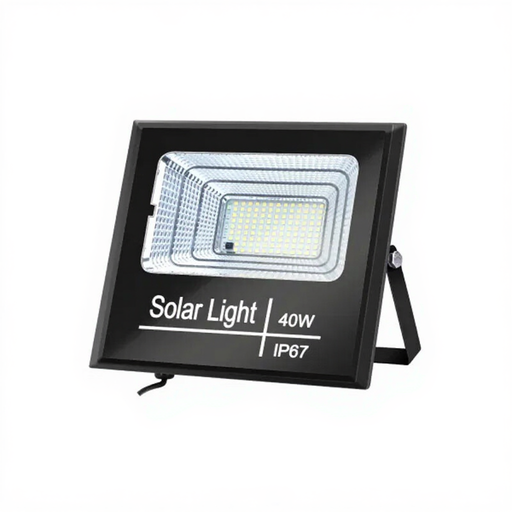
Why this product suits this profile: Its off-grid design is ideal for garden paths, remote areas and smaller properties without a mains connection.
The separate solar panel can be positioned independently of the floodlight, making it easier to work around a shaded installation spot. The product description lists a 10,000 mAh battery and a lighting time of up to 12 hours under the stated conditions.
Solar-powered, with no mains cable; separate panel; aluminium and glass housing. The product specifications state an IP67 rating.
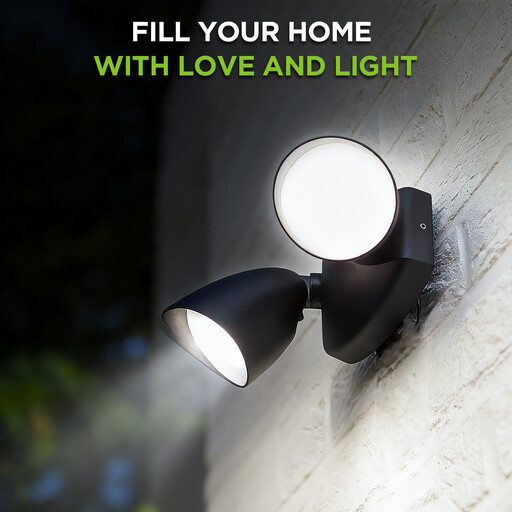
Why this product suits this profile: Its stated figures of 1,800 lumens, 20 watts and 4,000 Kelvin provide clear points of comparison for a driveway, patio or garden area.
Brightness is described in more than just wattage. The two adjustable light heads can also be directed separately, rather than providing a fixed spread of light.
1,800 lumens; 4,000 Kelvin; two adjustable heads. Check the full IP rating and electrical connection details before installation.
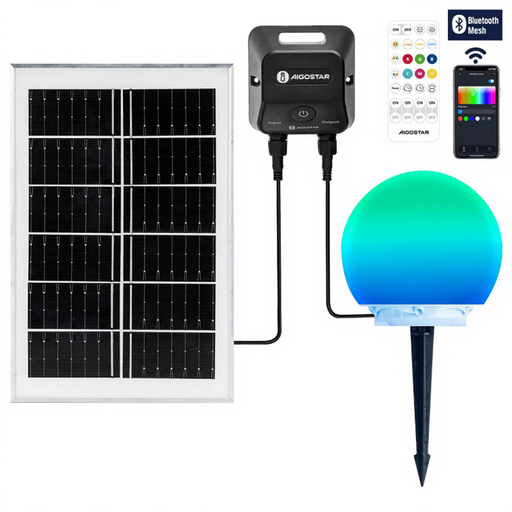
Why this product suits this profile: This model is for anyone looking to combine ground lighting for paths, flower beds or patios with app controls and adjustable light colour.
Positioning the solar panel separately reduces dependence on the installation location. The stated IP67 rating is designed for a suitable outdoor installation spot; avoid areas where water can collect and make sure the cable is routed correctly.
RGB and white light from 2,700 to 6,500 Kelvin; 4,000 mAh battery; Bluetooth Mesh control and a 5-watt solar panel, according to the product description.
We’ve put together a complete, regularly updated list of products that meet these strict selection criteria and fully comply with the safety regulations in force in the EU.
It depends on the area, installation height and intended use. A few hundred lumens are often enough for decorative accents. Paths and entrances usually need more even illumination, while driveways and façades can benefit from a higher lumen output. The beam angle and direction are also important.
There are fewer hours of sunshine in winter, and the sun is lower in the sky. This can mean longer charging times and shorter lighting times. Ideally, install a solar outdoor floodlight in an open spot where it won’t be shaded. If you need reliable lighting regularly, a mains-powered model may be a more predictable option.
Running costs depend on the power rating, daily lighting time and electricity tariff. A simple calculation is: wattage divided by 1,000, multiplied by the operating hours and the price per kilowatt-hour. A 20-watt floodlight running for five hours a day uses around 0.1 kilowatt-hours per day. A motion sensor or timer can reduce the actual operating time.