
Lieferung heute & morgen

Qualitätsgarantie

Willkommens-Angebote freischalten: KOSTENLOSE Lieferung | Bis zu 80 % RABATT | Kostenlose 30-Tage-JoyPlus-Testphase
App herunterladen
The right LED outdoor lighting can illuminate paths, light up your entrance or add a decorative touch to your patio and garden. In practice, however, poor purchases are not caused by brightness and design alone. The intended location, IP rating, power supply and installation method are all crucial.
A high lumen rating does not automatically mean that a light is suitable for every area. Bright security lighting for a garage requires different features from a warm white outdoor wall light by the entrance. The beam angle and ability to adjust the light also affect how evenly an area is illuminated.
Ratings such as IP44, IPX4 and IP68 describe protection against solid foreign objects and water. A light rated IP44 is protected against splashing water, but is not suitable for immersion. A waterproof torch should also be used according to the manufacturer’s instructions, as connection covers and seals must be properly closed.
A permanently installed LED outdoor light often requires a suitable power connection and secure mounting. For outdoor electrical connections, professional installation is advisable. Portable battery-powered or rechargeable models are more flexible, but must be charged regularly or fitted with new batteries. For imported products, you should also check that the stated mains voltage is compatible with the German power supply.
For a covered patio or protected entrance, a splash-resistant light may be sufficient. At locations fully exposed to the weather, the manufacturer’s specifications should be checked particularly carefully. IP44, for example, protects against splashing water, but not powerful water jets or prolonged immersion. The IP rating should always be suitable for the specific installation position.
An outdoor wall light with 300 lumens may be sufficient for a small entrance. For a driveway or larger courtyard, the direction of the light, mounting height and, where appropriate, several lights are more important than a single specification.
An integrated LED with a mains connection is suitable for permanent lighting installations. An outdoor rechargeable light, on the other hand, is practical when there is no power connection or the position needs to be changed occasionally. Models with motion sensors can reduce the need for manual operation, but their response depends on mounting height, detection angle and surroundings.
When choosing an LED torch, you should also consider battery capacity, charging connection, lighting modes and grip size. For emergencies, a torch that uses standard batteries may be a sensible choice, while a USB-C solution requires fewer disposable batteries for regular outdoor activities.
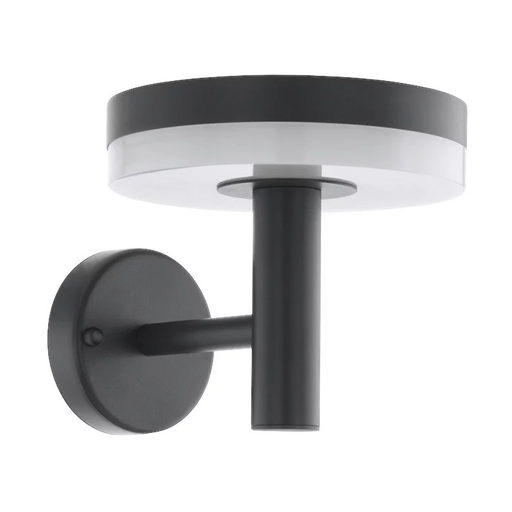
Why this product suits this profile: This permanently installed outdoor wall light is designed for entrances, patios, gardens and paths, combining straightforward technical features with warm white light.
The specifications clearly state 950 lumens, 3,000 Kelvin and 11 watts. This makes it easier to match the light to its intended location than relying on general advertising claims.
Integrated LED module, warm white light and anthracite finish. According to the product specifications, the LED module cannot be replaced.
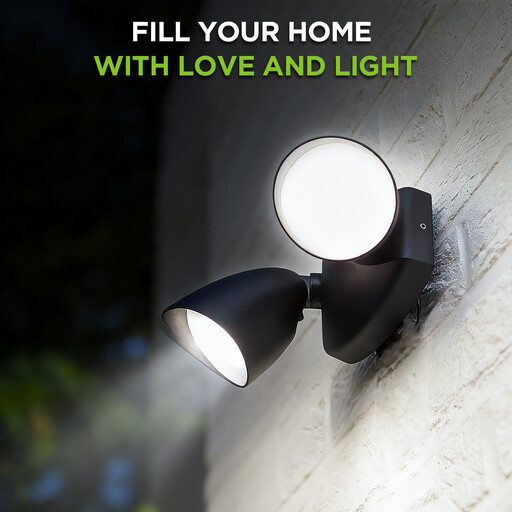
Why this product suits this profile: This dual-head floodlight is designed for larger outdoor areas such as courtyards, gardens, garages and driveways, with two separately adjustable light heads.
The two light heads allow the light to be distributed more precisely. You should check the installation location and power connection before buying.
The product name specifies 1,800 lumens and 20 watts; the dual-head design allows flexible positioning of the light beams.
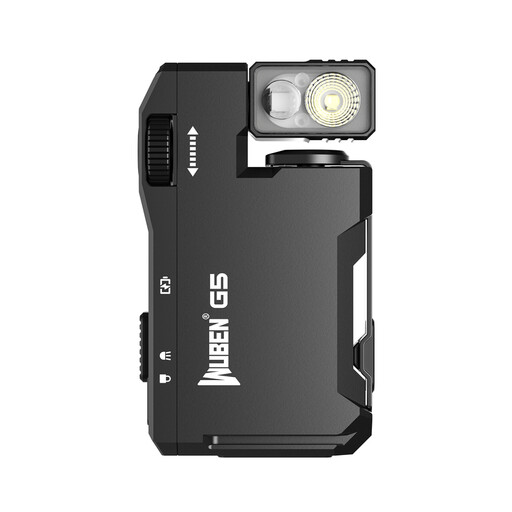
Why this product suits this profile: For camping, hiking, emergencies and regular outdoor activities, this portable LED torch offers several modes and a USB-C charging connection.
The specifications list brightness, range, charging method and IP rating separately. With IP68, this model is classified differently from a light offering splash protection only.
1200 lumens, six lighting modes, USB-C rechargeable battery and IP68 according to the product specifications. The charging port should be dry before charging.
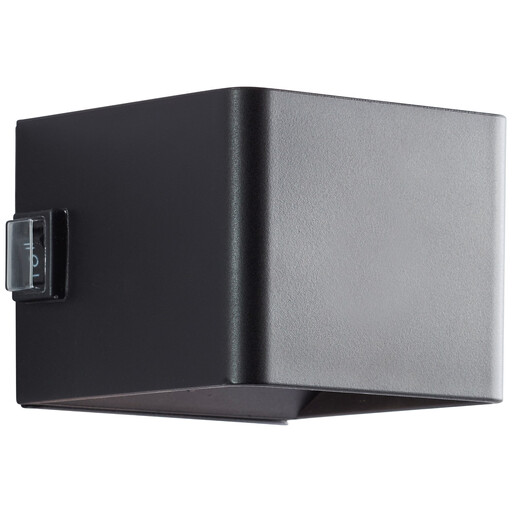
Why this product suits this profile: This portable light is suitable for patios, gardens and entrances when there is no permanent power line and automatic activation is preferred.
The rechargeable battery, USB charging cable, magnet and motion sensor are all clearly specified. However, the IP44 rating makes it clear that the light must not be fully submerged.
300 lumens, 3,000 Kelvin, integrated rechargeable battery, motion sensor and magnetic mounting according to the product data.
We have put together a complete, regularly updated list of products that fully meet these strict selection criteria and the safety regulations applicable in the EU.
That depends on the installation location. IP44 may be sufficient for protected areas. At locations fully exposed to the weather, the manufacturer’s specifications for rain, water jets and installation position must be suitable. An IP rating does not replace an assessment of the specific installation situation.
Consumption depends on the wattage and the daily operating time. A 10-watt light switched on for five hours a day uses 50 watt-hours per day in theory. Motion sensors and timers can reduce the actual operating time.
Service life depends on the LED module, heat dissipation, operating time and environmental conditions. With permanently integrated modules, replacement is often not possible. Buyers should therefore check before purchasing whether the entire light fitting or just the light source can be replaced.