
Lieferung heute & morgen

Qualitätsgarantie

Willkommens-Angebote freischalten: KOSTENLOSE Lieferung | Bis zu 80 % RABATT | Kostenlose 30-Tage-JoyPlus-Testphase
App herunterladen
Whether it's for a driveway, balcony, garage, patio or garden, LED outdoor lighting needs to work reliably, be bright enough and suit your existing power supply. If you only focus on wattage or marketing terms, you can easily overlook important details. Three common buying pitfalls crop up time and again:
Luminous flux is given in lumens (lm). For decorative garden lighting, a few hundred lumens can be enough. Security lighting outdoors, an LED floodlight or a spotlight for the driveway, on the other hand, usually needs significantly more light.
Just as important is the beam angle:
Colour temperature is measured in Kelvin. 2700 to 3000 K produces warm white light for patios and gardens. 4000 K gives a neutral feel. 5000 to 6500 K delivers a cooler, daylight-like appearance, which is often used for garages, driveways and work areas.
The IP code consists of two digits. The first describes protection against solid foreign objects and dust, the second protection against water.
The protection rating does not replace proper installation. Cable entries, seals and the position of the light must also be taken into account.
A mains-powered outdoor wall light or an LED outdoor floodlight running on 230 volts should be connected by a qualified electrician. Before buying, check the connection type, installation depth and existing wiring. With dimmable recessed spotlights, you also need to make sure the dimmer you're using is compatible.
Solar lights don't need a mains connection, but they depend on the position of the solar panel. Trees, house walls and roof overhangs can reduce charging performance. A battery with a larger capacity doesn't automatically extend the lighting duration if the panel isn't getting enough sunlight.
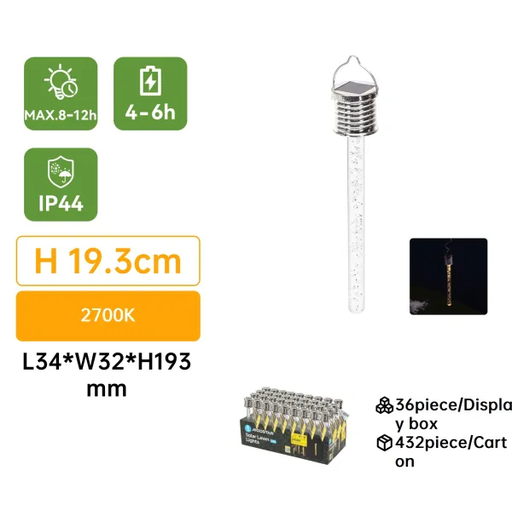
Why this product suits the profile: The compact solar light is ideal for decorative accents in sheltered spots, such as on a balcony, by a pergola or in the garden.
The specifications clearly state IP44, 2700 K and low power consumption. This makes it obvious that it's decorative lighting, not a security light.
Solar-powered, warm white light at 2700 K and a stated lighting duration of 8 to 12 hours depending on charging conditions.
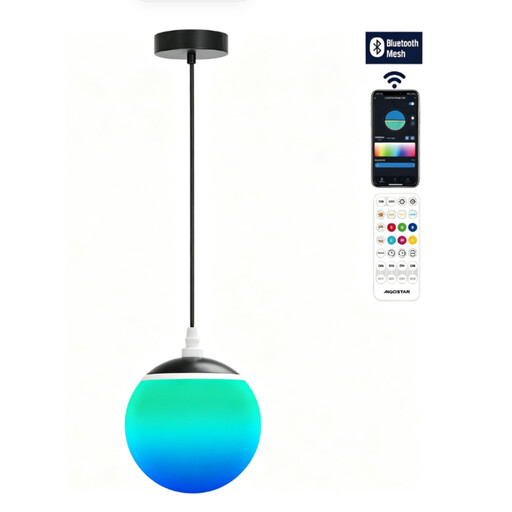
Why this product suits the profile: The separate positioning of the panel and light is practical for pergolas, patios and areas with partial shade.
The IP65 rating, the requirement for direct sunlight on the panel and the note not to submerge the light make the usage limits clear.
IP65, 200 lm, adjustable colour temperature from 2700 to 6500 K and Bluetooth mesh control with schedules and brightness adjustment.
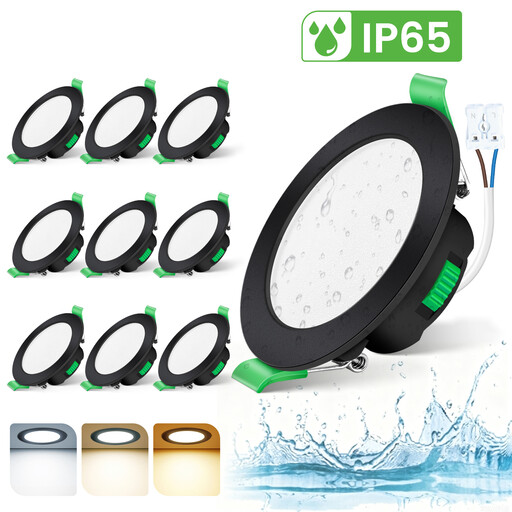
Why this product suits the profile: The six-pack is designed for multiple installation points in bathrooms, kitchens, hallways or covered outdoor areas.
Before buying, you can check the cut-out diameter of 67 to 75 mm, the 230 V connection and suitability for dimmable applications.
IP65, three selectable colour temperatures from 3000 to 6500 K and dimmable from 10 to 100 per cent with a compatible trailing-edge dimmer.
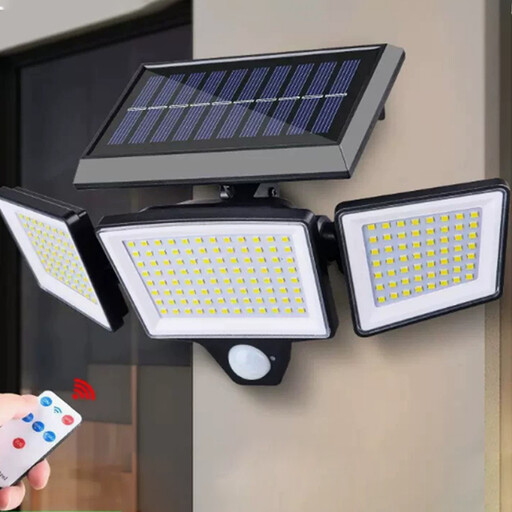
Why this product suits the profile: Three adjustable light heads and a motion sensor are designed for driveways, courtyards, garages and larger outdoor areas.
The product data states the detection angle, three operating modes, IP65 and the necessary orientation of the solar panel. This makes planning before installation much easier.
Rated at 3000 lm, a 180-degree detection angle, three light modes and an IP65 rating.
We've put together a complete, regularly updated list of products that fully meet these strict selection criteria and the safety regulations in force across the EU.
For decorative areas, a few hundred lumens are often enough. Paths, entrances and smaller patios need more, depending on the mounting height. For driveways or outdoor security lighting, lights with a higher luminous flux and suitable light distribution make sense. The distance, beam angle and number of lights are also crucial.
For sheltered areas, IP44 or IP54 can be sufficient. For exposed exterior walls, garden paths and façades, an IP65 outdoor light is often the more appropriate choice. The installation instructions and the usage limits stated by the manufacturer remain the deciding factors.
The running costs depend on the power, daily operating time and your electricity tariff. A light with 10 watts that runs for five hours a day uses 0.05 kWh per day in theory. With solar lights, there's no mains electricity consumption, but you do need to consider the charging conditions, battery capacity and lower sunlight levels in winter.