
Lieferung heute & morgen

Qualitätsgarantie

Willkommens-Angebote freischalten: KOSTENLOSE Lieferung | Bis zu 80 % RABATT | Kostenlose 30-Tage-JoyPlus-Testphase
App herunterladen
LED outdoor lighting should reliably illuminate paths, entrances, façades or seating areas and suit the building’s style. Yet product descriptions often throw around technical terms without explaining what they mean in practice. If you focus only on wattage, design or extra-long ranges, you might end up with a light that’s not suitable for where you plan to use it.
The most common buying mistakes stem from three issues:
The location is crucial when choosing an outdoor light. Decorative lighting on a balcony usually needs less light than a floodlight for a driveway or garage.
These ranges are guides. The required brightness also depends on mounting height, beam angle, wall colour and the desired light distribution.
The colour temperature is given in Kelvin. Warm white light around 3.000 K usually looks subtle in residential settings and suits patio lighting or entrances. Neutral or daylight white variants can offer clearer visibility on paths, at garages or in work areas.
The IP44 marking is common on many outdoor lights. The first digit describes protection against solid objects, the second against water. In practice, IP44 means protection against solid objects from 1 millimetre and against splashing water.
You shouldn’t choose a waterproof outdoor light based on a marketing term alone. Instead, check the specific IP code and the installation notes. A light with IPX4, like the Philips SFL4000T/10, is protected against splashing water but, according to the product information, must not be immersed in water. The same goes for IP44: do not place it in puddles and do not use a direct high-pressure water jet.
The light should also be mounted so that water doesn’t collect at connection points. For hard-wired models, installation by an appropriately qualified person is advisable or required.
For the entrance area, outdoor lighting with a motion sensor can be very practical. It switches the light on when movement is detected and cuts unnecessary operating time. Before buying, check the range, detection angle and adjustability. A sensor doesn’t replace appropriate base lighting and shouldn’t be aimed at constantly moving branches or very busy areas.
With battery-powered lights, battery type and what’s included matter. The M.TK Starburst light, for example, requires four AA batteries, which the product information says are not included. The rattan lantern runs on three AAA batteries, also not included. A rechargeable LED outdoor light with a USB port can need fewer disposable batteries with frequent use, but it will need charging regularly.
The replaceability of the light source matters too. With the EGLO Mazzini LED module, the LED module is integrated and, according to the product information, cannot be replaced. Keep that in mind for long-term planning.
The following models cover different needs: permanently installed outdoor wall lights, mobile solutions and an LED torch for emergencies and when you’re out and about.
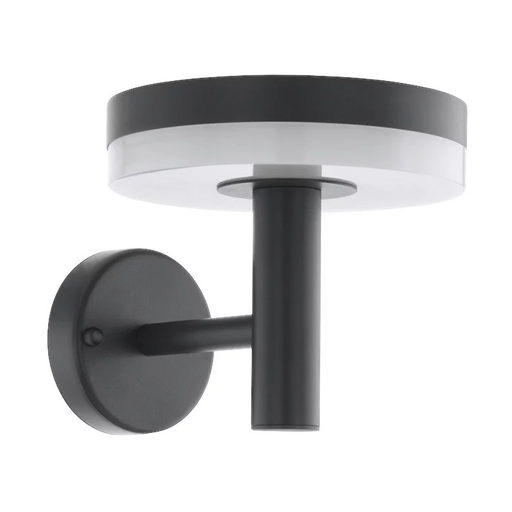
Why this product fits the profile: The permanently installed LED outdoor light is suitable for entrances, paths, patios and garden areas when you want even base lighting with a warm white colour temperature.
The specs of 11 W, 950 lumens and 3.000 K make selection clearer than advertising based only on watts or design. The light is designed for outdoor use.
Integrated 11 W LED module, 950 lumens, warm white light and anthracite finish. The LED module is not replaceable.
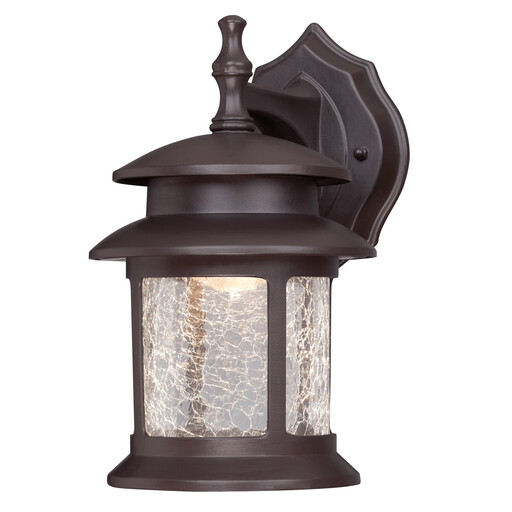
Why this product fits the profile: The combination of aluminium housing, clear crackle glass, warm white light and dimming suits front doors, patios and exterior walls where variable lighting is useful.
The IP44 rating is accompanied by specific installation guidance. Dimming requires a compatible LED dimmer, which is not included.
9 W LED, 1.000‑lumen light source, 3.000 K and a stated average service life of 35,000 hours. Connection by a qualified electrician.
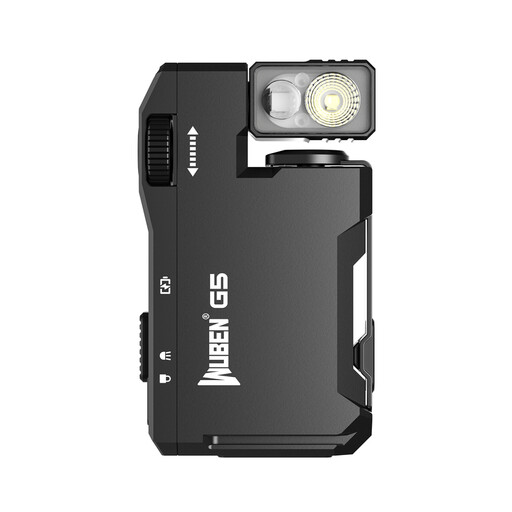
Why this product fits the profile: For camping, hiking, power cuts or outdoor tasks, a mobile outdoor torch with a rechargeable battery complements fixed garden lighting.
The IP68 rating and USB‑C rechargeable battery are clearly stated. Ensure the charging port is dry before charging; do not shine the light directly into eyes.
Stated 1.200 lumens, up to 93 metres range, six lighting modes and aluminium housing with USB‑C charging.
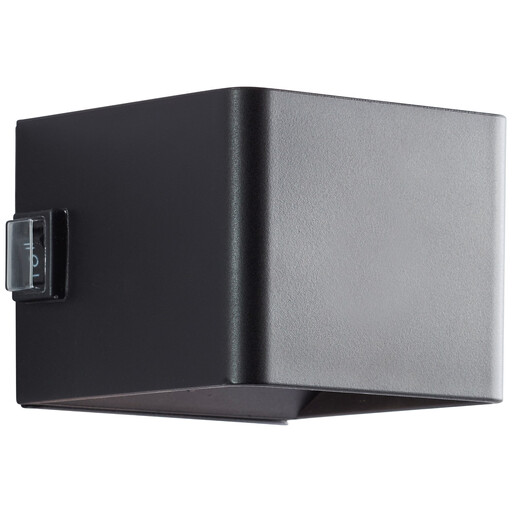
Why this product fits the profile: This mobile outdoor wall light can be used without a fixed mains connection and is suitable for patio, garden or entrance when flexibility is key.
The integrated battery, USB charging and IP44 rating are specified separately. The light is splashproof but not suitable for immersion.
300 lumens, 3.000 K, motion sensor, magnetic mounting and integrated battery. The stated energy efficiency class is G.
We’ve compiled a complete, continuously updated list of products that fully meet these strict selection criteria and the safety regulations in force in the EU.
With a permanently installed outdoor light, the connection, sealing and mounting should match the existing installation. Models like the Westinghouse Winslett or the Westinghouse 6400340 operate at 220–240 V and are designed to be connected to the mains. Installation should be carried out by a qualified electrician. Disconnect the power supply before maintenance or cleaning.
For balconies and rented flats, mobile LED outdoor lights, solar lights or battery lights are often easier to use. Even so, you must observe drilling and mounting rules and the house rules. With any light, remove batteries for longer storage if this is stated in the safety instructions.
For partially sheltered areas such as covered entrances or patios, an IP44 outdoor light is commonly used. In exposed spots or harsher weather, a higher rating can make sense. What matters are the exact mounting location, the manufacturer’s instructions and professional installation.
Depending on the size of the area, a few hundred lumens are often enough for paths and entrances. An outdoor wall light with around 950 to 1.000 lumens can illuminate larger walls or access areas. For yards, garages or targeted lighting, floodlights with higher light output are suitable. Beam angle and mounting height are also key.
Running costs depend on wattage, daily operating time and your electricity tariff. A 10 W light consumes, in purely arithmetic terms, 0.1 kWh over ten hours of operation. A motion sensor, timer or dusk sensor can reduce operating time. With battery and solar lights, you’ll instead incur costs for batteries or charging cycles.