
Lieferung heute & morgen

Qualitätsgarantie

Willkommens-Angebote freischalten: KOSTENLOSE Lieferung | Bis zu 80 % RABATT | Kostenlose 30-Tage-JoyPlus-Testphase
App herunterladen
The right LED outdoor lighting should work reliably, suit the installation spot and not become unusable after a short time. There are significant differences between solar garden lights, outdoor wall lights and LED floodlights for outside. If you only focus on brightness or a striking design, you’ll often overlook important technical details.
A marking such as IP44 does not mean a light is completely waterproof. IP44 protects against solid foreign objects from 1 millimetre and against splashing water from various directions. That can be sufficient for sheltered terraces, balconies or paths. A permanently exposed installation in heavy rain, however, calls for careful assessment of the exact location.
An IP66 LED floodlight offers higher protection against dust and powerful jets of water. Even so, this does not automatically mean the product is suitable for immersion. With outdoor lights, cables, plug connections and wall feed-throughs also need proper protection from moisture.
The value lumens (lm) indicates total luminous flux. It shows how much light a fitting emits but on its own says little about how well a surface is lit. Reflector design, beam angle and mounting height determine whether the light reaches a path, a house wall or a larger driveway.
Lower light output is often enough for decorative garden lighting. For a garage, a work area or security-focused outdoor lighting, beam direction and positioning are also crucial. A very bright light can cause glare if aimed wrongly, without illuminating the target area evenly.
Solar garden lights need a spot with sufficient direct sunlight. Trees, walls and short winter days reduce charging performance. Values such as ‘4–6 hours charging time’ and ‘8–12 hours lighting time’ are product figures under suitable conditions, not a guaranteed daily runtime.
With a battery-powered outdoor light, you should check capacity, charging port and charging time. A motion sensor can extend operating time because the light only activates when movement is detected. By contrast, a permanently installed LED outdoor wall light will often require a mains connection.
Colour temperature is given in Kelvin:
For terrace lighting, warm white is usually more subtle. In a driveway or a workshop area, neutral or cool white can make it easier to find your way.
Before buying, decide whether the light will be plug-in, hardwired, solar-powered or battery-powered. A permanently installed outdoor wall light should only be connected to a suitable power supply. Electrical work on outdoor connections belongs in the hands of a suitably qualified professional.
A motion sensor is handy for entrances, paths and garages. Still, pay attention to the detection area, switch-on time and potential false triggers caused by animals or moving plants. For purely decorative purposes, solar lights or a battery-operated string of lights may be sufficient.
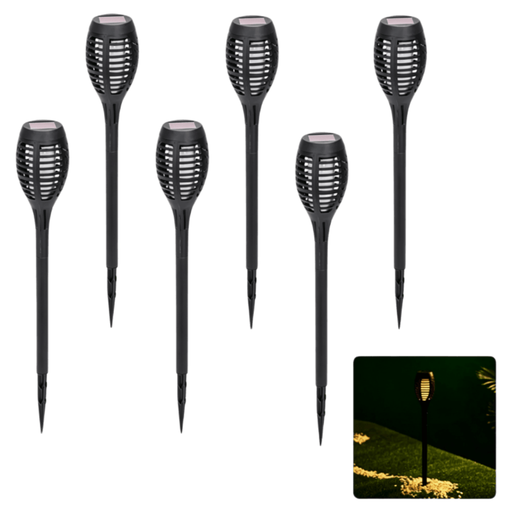
Why this product suits the profile: The 6-piece set is ideal for users who want to mark paths, lawns or beds decoratively without cabling.
The specs explicitly state charging time, lighting time and IP44 rating. That makes it easier to judge a realistic place of use.
2700 K warm white, integrated Ni-MH battery, 6 lights per set and solar power with no external cabling.
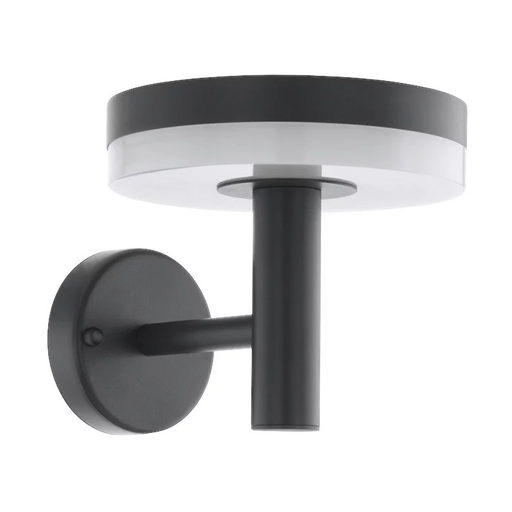
Why this product suits the profile: This hardwired light is intended for entrances, terraces, paths and façade areas with a permanent mains connection.
The listing states 950 lm, 11 W, 3000 K and the dimensions. That makes it easier to plan both light effect and mounting area.
Integrated LED module, 950 lm, warm white light at 3000 K and an anthracite housing made of metal and plastic.
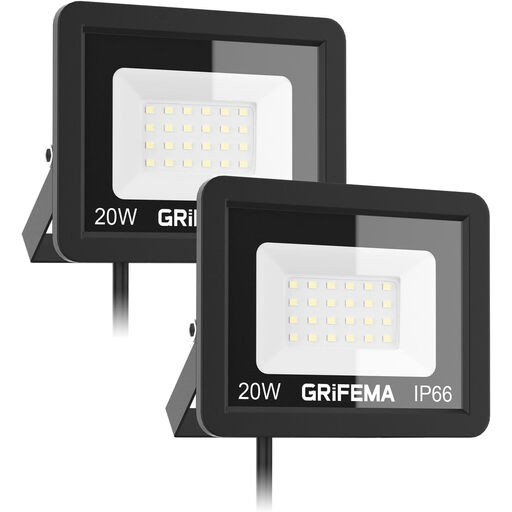
Why this product suits the profile: This 2-piece set is aimed at households that want powerful light across the garden, garage, yard or work areas.
The combination of 2200 lm total luminous flux, 6500 K and IP66 makes the intended performance and protection data clear. A mains connection does, however, need to be planned.
Two floodlights at 20 W each, combined luminous flux of 2200 lm, IP66 rating and a bracket adjustable by 180°.
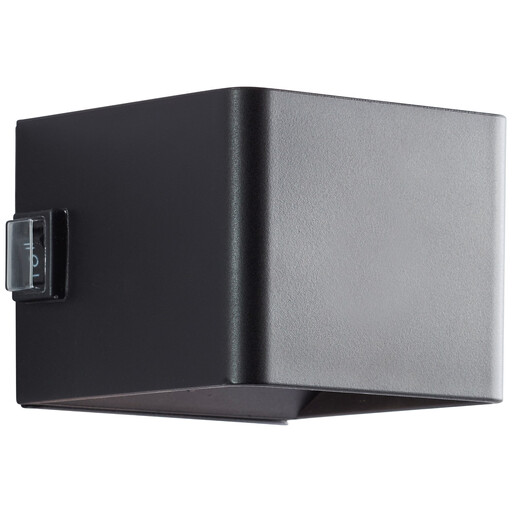
Why this product suits the profile: This portable light is suitable for the terrace, balcony, entrance or metal surfaces where no permanent mains power is available.
The product description specifies battery, USB charging cable, magnet, motion sensor and IP44. That makes its mobility and limits clearer than with an unspecified battery-powered outdoor light.
300 lm, 3000 K, integrated battery, USB charging, magnetic mounting and motion sensor.
For flexible control on the go, an LED torch can be more useful than a fixed light. According to the product details, the Philips SFL4000T/10 offers 120 lm, a range of up to 140 metres, three AAA batteries and IPX4 splash protection. For more demanding outdoor or emergency use, the WUBEN G5 states 1200 lm, USB-C charging, six modes and IP68. With both models, do not shine the beam directly into your eyes.
For seasonal décor such as outdoor Christmas lights, cable length, plug type, timer functions and IP rating are crucial. According to the product information, the M.TK Meteor Shower Lights feature 720 LEDs, 15 drops, 3000 K and IP44. They are splash-proof but must not be immersed.
If you’re specifically looking for outdoor lighting with motion sensor, distinguish between a portable battery light and a hardwired outdoor wall light. For a permanently installed solution, models with light and motion sensor are an option. Before installation, check the wall material, fixings and the safe execution of the power connection.
That depends on the installation location. IP44 is suitable for many sheltered areas and splashing water. For exposed façades, carports or heavily used installation sites, higher ratings such as IP65 or IP66 may be more appropriate. Cable connections and sockets must be protected separately as appropriate.
Consumption depends on wattage and daily operating time. A 10 W light that runs for five hours a day uses 50 Wh per day in simple terms. Motion sensors, timers and shorter on-times can reduce consumption. With solar garden lights, there are no direct mains electricity costs during operation; actual runtime, however, depends on sunlight and the battery.
Service life is influenced by the LED module, electronics, heat dissipation, moisture and use. A product statement such as ‘up to 15,000 hours’ is a rated value under defined conditions, not a guarantee for every environment. Regular cleaning, dry connections and installation within the specified temperature and protection limits can support reliable use.