
Lieferung heute & morgen

Qualitätsgarantie

Willkommens-Angebote freischalten: KOSTENLOSE Lieferung | Bis zu 80 % RABATT | Kostenlose 30-Tage-JoyPlus-Testphase
App herunterladen
The right LED outdoor lighting can make paths clearly visible, improve entrance security or highlight your garden and patio. In practice, however, unsuitable purchases are often caused not by the LED technology itself, but by unclear product information and an inaccurate assessment of the installation location. Before buying, it is therefore worth checking the IP rating, light output, power supply and installation requirements.
An IP44 outdoor light is protected against solid foreign objects measuring 1 millimetre or more and against splashing water from various directions. It is suitable, for example, for a partially sheltered entrance, a covered patio or decorative garden areas. However, IP44 is not automatically sufficient for permanently exposed locations subject to driving rain.
A waterproof outdoor light should be selected to suit the installation situation. Where there is greater exposure to rain, dust or splashing water, an IP66 LED floodlight may be the better choice. The IP rating does not replace correct installation, however: cables, plug connections and wall penetrations must also be protected against moisture.
The wattage mainly describes energy consumption. For brightness, the luminous flux in lumens is the key factor. A light producing 300 lumens may be sufficient for a small entrance, while security lighting for a driveway or courtyard requires considerably more light.
Colour temperature also affects how the light is used:
Very bright lighting can be disruptive in residential areas. The beam angle should therefore be considered alongside the lumen value, particularly in relation to neighbours, windows and adjoining properties.
A permanently installed LED outdoor wall light generally requires a suitable power connection. Electrical work on a building’s installation in Germany should be carried out by a qualified electrician. For rented properties, you will also need the landlord’s permission if drilling is required or a cable is to be installed.
A solar garden light, on the other hand, needs a sunny location. Shade from walls, trees or roofing reduces charging performance. Battery-powered or USB lights are flexible, but they need to be charged regularly. For consistently reliable security lighting, a mains-powered solution is usually easier to plan.
First check whether the light will be installed under a roof, on a sheltered wall or completely outdoors. IP44 may be sufficient for decorative garden lighting exposed to occasional splashing water. For freestanding spotlights and more severe weather conditions, higher IP ratings are preferable.
Compare the luminous flux in lumens rather than just the power consumption. An adjustable LED outdoor spotlight can direct light precisely towards a driveway, façade or path. Dual light heads are useful when two areas need to be illuminated at the same time. Also consider glare and the installation height.
Metal housings, coated aluminium or stainless steel can be suitable for outdoor areas, provided that the seals and coating remain intact. Plastic is lightweight and may be a sensible choice for decorative lights. With integrated LED modules, check whether the module can be replaced. Some models have a permanently integrated light source.
With solar lights, charging time, battery capacity and location all need to be considered together. RGB models such as an RGB solar light are primarily decorative and are not designed to provide bright path or security lighting. For outdoor Christmas lights, it is also important to check whether the power supply, cable and controller are suitable for the intended outdoor area.
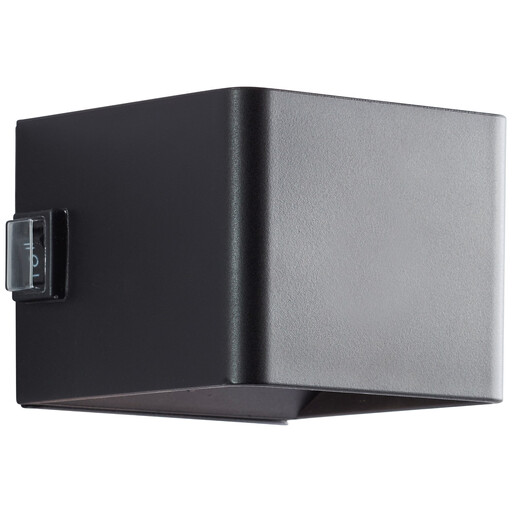
Why this product suits the profile: This battery-powered light can be used in various locations without a fixed power connection, such as on a patio, by an entrance or in a garage. A magnet and USB charging cable make it easy to use flexibly.
The specifications clearly state 300 lumens, 3,000 Kelvin, IP44, a battery and a motion sensor. This makes it easier to compare the light with the actual installation location.
4 watts, warm white light at 3,000 Kelvin, integrated battery, magnetic mounting and motion sensor.
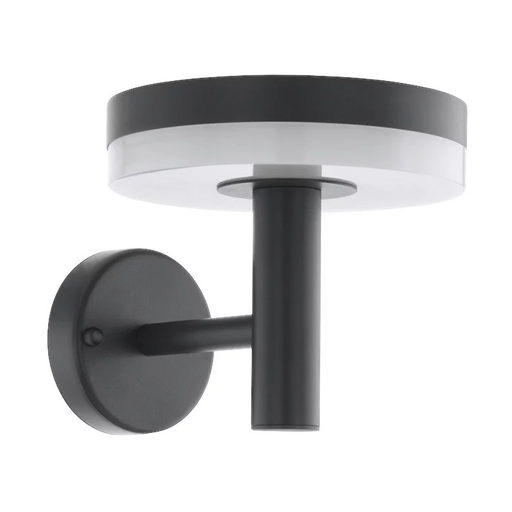
Why this product suits the profile: This permanently installed LED outdoor light combines an anthracite metal and plastic construction with warm white light, making it suitable for entrances, patios and paths.
The product data specifies the power consumption, luminous flux and colour temperature. Before installation, you should still check that the IP rating and connection are suitable for the installation situation.
11 watts, 950 lumens, 3,000 Kelvin and integrated LED module; dimensions: 24.5 × 18 × 24.5 cm.
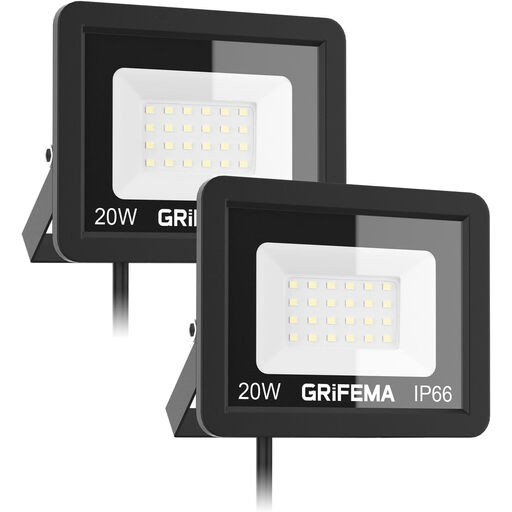
Why this product suits the profile: This two-piece set is designed for users who want to illuminate larger areas such as gardens, garages, courtyards or workspaces and need a high IP rating.
IP66 is stated explicitly, distinguishing it from a basic IP44 decorative light. As no plug is included, the connection and installation need to be planned in advance.
Two spotlights with 20 watts per light, 2,200 lumens in total, 6,500 Kelvin, IP66 and brackets adjustable through 180 degrees.
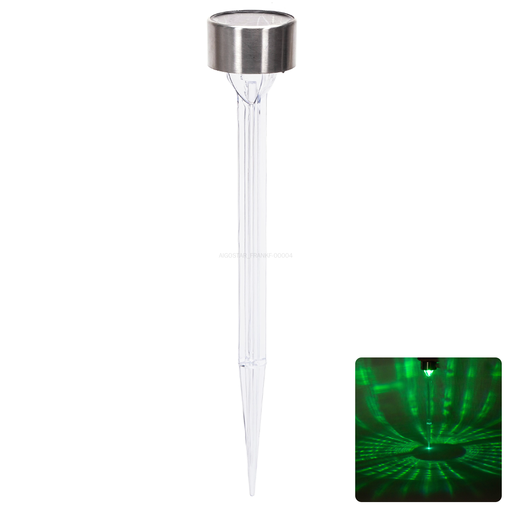
Why this product suits the profile: This solar-powered RGB light is designed for flowerbeds, lawns and garden paths when you want colourful accents rather than functional illumination.
The low power consumption of 0.006 watts makes it clear that this is ambient lighting rather than a bright spotlight. A location with direct sunlight remains essential.
RGB light, IP44, ground spike, charging time of 4 to 6 hours and, according to the product information, up to 8 to 12 hours of illumination.
We have put together a complete, regularly updated list of products that fully meet these strict selection criteria and the safety regulations applicable in the EU.
Before installation, check the desired beam of light in darkness. Motion sensors need a clear field of view and should not point directly towards heavily used areas or heat sources. With an outdoor light with motion sensor, the delay time is also important: a short setting saves energy, while longer intervals may be more convenient for paths or entrances.
Solar lights are best installed away from artificial light sources and in an unobstructed location. For permanently connected lights, plug connections, cables and mounting materials must be suitable for outdoor use. Lights should not be installed in recesses where water can collect.
Running costs depend on the power rating, daily operating time and electricity tariff. The calculation is: Watts ÷ 1,000 × operating hours × electricity price. A 10-watt light switched on for four hours a day uses around 14.6 kilowatt hours per year. Motion sensors and timers can reduce the operating time.
The lifespan is affected by the LED module, heat dissipation, electronics and environmental conditions. Check the lifespan stated by the manufacturer and whether the LED module can be replaced. With solar lights, the battery is also a wear component whose capacity may decline over the course of charging cycles.
A warm white LED outdoor wall light, a portable battery-powered light or a light with a motion sensor may be suitable for a home entrance. Key considerations are an appropriate luminous flux, adequate protection against splashing water and glare-free positioning. For a wall fully exposed to the weather, the IP rating must suit the specific installation position.