
Lieferung heute & morgen

Qualitätsgarantie

Willkommens-Angebote freischalten: KOSTENLOSE Lieferung | Bis zu 80 % RABATT | Kostenlose 30-Tage-JoyPlus-Testphase
App herunterladen
An LED outdoor wall light with a motion sensor should provide light when needed, help you find your way and make your outdoor space more comfortable to use. In practice, however, unclear product details, choosing the wrong IP rating or picking an unsuitable mounting position can quickly lead to a disappointing purchase. This applies to homeowners and tenants alike, as well as anyone using a balcony, patio, garage or garden.
A high lumen rating doesn’t automatically mean a light is right for every area. A compact 300-lumen light may be enough for a small entrance, while a wide driveway or larger courtyard will need brighter lighting directed differently.
So, pay attention to:
The IP rating needs to suit the mounting position. An IP44 outdoor light is protected against solid objects 1 millimetre or larger, as well as splashing water from different directions. This makes it suitable for many sheltered outdoor areas, but it’s no substitute for a light with a higher IP rating on a completely exposed wall.
Before buying, check:
In Germany, electrical work on permanently wired lights may only be carried out by suitably qualified professionals.
A motion sensor isn’t the same as a dusk sensor. A motion sensor responds to movement, while a dusk sensor detects ambient light levels. Depending on the model, the light may therefore also switch on during the day if it doesn’t have a separate light sensor.
If you’re considering a solar-powered and rechargeable wall light, also check the charging method, battery capacity and how often it may need recharging. A built-in battery offers flexibility, but needs to be charged regularly. A wired LED outdoor wall light, on the other hand, is always ready to use but requires a suitable power connection.
An IP rating consists of two digits. The first describes protection against solid objects, while the second indicates protection against water. IP44, for example, means protection against solid objects 1 millimetre or larger and splashing water. This may be suitable for a covered entrance; for an exposed mounting position, check the manufacturer’s guidance for the specific weather conditions.
When choosing an outdoor wall light, the combination of lumens, light distribution and colour temperature matters more than any one figure on its own. Warm white outdoor lighting at around 3000 K is often a good choice for a patio, balcony or garden if you’d prefer a softer, less functional feel. 4000 K can work well for paths, driveways or work areas, as the light appears more neutral.
For rechargeable models, check:
For permanently installed models, the connection type, mounting surface and cable routing are also important. An outdoor security light should be positioned so that its motion sensor covers the area you want without being constantly triggered by passing cars, branches or pets.
Why it suits this type of buyer: This portable light doesn’t need a permanent power connection and can be used in different locations. That makes it a good fit for rented homes, patios, gardens or entrances where installation options are limited.
The specifications list 300 lumens, 3000 kelvin, a motion sensor and an IP44 rating. This makes it easier to check whether the light suits your intended location, rather than relying on general marketing claims.
Built-in battery, USB cable, rocker switch, magnetic mounting and 4-watt power consumption.

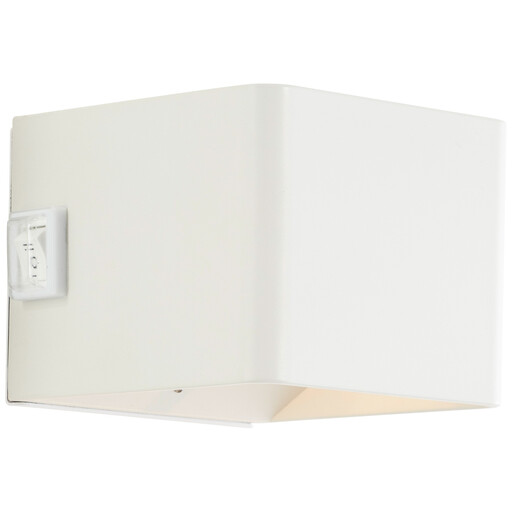
Why it suits this type of buyer: This model combines motion and light sensors with a U-shaped design. It’s intended for areas such as entrances, paths, balconies, patios, garages and stairs.
The product description specifies the intended outdoor areas, sensor types and 3000 K colour temperature. This helps you compare mounting positions and the effect of the light more effectively.
24-watt power, warm white light at 3000 K and a matt die-cast aluminium housing, according to the product description.
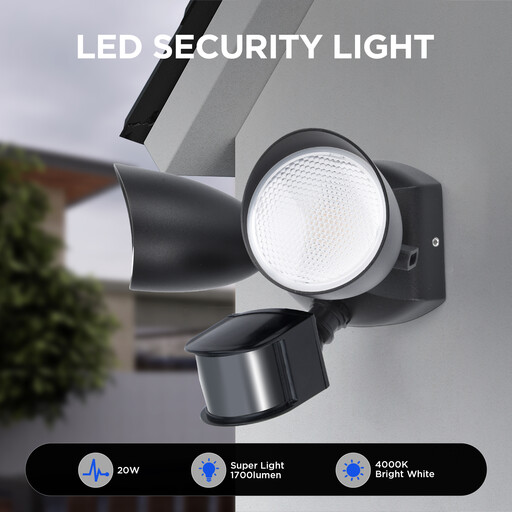
Why it suits this type of buyer: With 1700 lumens, 4000 K and two adjustable light heads, this model is designed for larger outdoor areas such as courtyards, driveways or gardens.
The high light output is given as a specific figure. Before buying, though, check that the two light heads can be directed to cover the area you want to illuminate and monitor.
20-watt power, 1700 lumens, 4000 K and an integrated sensor, according to the product name.
We’ve put together a complete, regularly updated list of products that meet these strict selection criteria and fully comply with the safety regulations in force in the EU.
A mounting height of around 1.8 to 2.5 metres is common for many applications. However, the manufacturer’s guidance, detection angle and area you want to cover are what matter most. Once the light is installed, check that it reliably detects people and that the sensor isn’t pointing directly at a busy road.
Consumption depends on the wattage and how long the light is on each day. A 4-watt light running for one hour uses 0.004 kilowatt-hours. With sensor-activated lighting, the actual time the light is on is usually shorter than with continuous use. Rechargeable and solar lights don’t need a constant mains supply, but they will need recharging depending on how often they’re used and the charging conditions.
Lifespan depends on factors including operating hours, ambient temperature, moisture, the power supply or battery, and build quality. Check the manufacturer’s specific figures for LED lifespan and warranty. For battery-powered models, the battery’s potential ageing is another important factor to consider.