
Lieferung heute & morgen

Qualitätsgarantie

Willkommens-Angebote freischalten: KOSTENLOSE Lieferung | Bis zu 80 % RABATT | Kostenlose 30-Tage-JoyPlus-Testphase
App herunterladen
An LED outdoor wall floodlight should reliably illuminate dark areas, use little energy and withstand rain, dust and temperature fluctuations. In practice, however, unsuitable purchases are often caused not by the LED technology itself, but by incompatible connections, incorrectly assessed IP ratings or an unsuitable colour temperature.
This buying guide is aimed at homeowners, tenants and anyone with a garden, garage, courtyard or shed. It explains which details matter before you buy and which models suit different usage scenarios.
Wattage describes power consumption, not the amount of light directly. The lumen value is more important when comparing products. Depending on the LED technology, a 20-watt floodlight can produce different amounts of light. For garage or courtyard lighting, you should also check whether the light is spread broadly or focused into a narrow beam.
The level of protection is shown by the IP code. The first digit indicates, among other things, protection against dust, while the second indicates protection against water. An IP44 floodlight is protected against splashing water from different directions, but is not designed to withstand direct high-pressure jets. An IP66 outdoor floodlight offers greater dust protection and protection against powerful water jets.
The installation position is still important: water should not collect permanently around connection points, and cable connections must be suitable for outdoor use.
An outdoor floodlight with a motion sensor can make operation more convenient. However, its performance depends on the detection range, installation height, orientation and possible triggering by animals or passing vehicles. A sensor should be positioned so that people cross its detection area rather than walking directly towards the light.
The right choice depends on where the light will be used. For areas near windows or neighbouring properties, the beam should be adjusted so that nobody is dazzled unnecessarily.
Lumens indicate luminous flux. A small entrance area often needs less light than a wide courtyard entrance. With an outdoor twin-head floodlight, the two beams can be aimed separately. This can be useful when, for example, you want to illuminate a garage wall and a pathway at the same time.
As well as the lumen value, consider the beam angle, adjustable heads and installation height. A very bright floodlight with a narrow beam can strongly illuminate one spot while leaving areas to the side in darkness.
Hard-wired lights require a suitable outdoor connection. Work on a 230-volt installation in Germany may only be carried out by a suitably qualified person. Before buying, you should therefore check the voltage, frequency, connection type and items included in the package.
A cordless outdoor wall light with an integrated rechargeable battery is more flexible. However, depending on battery capacity, frequency of use and outdoor temperature, it will not always provide the same operating time. Models with USB charging are particularly suitable for locations without a power connection, but are not automatically suitable for highly exposed areas that remain wet for long periods.
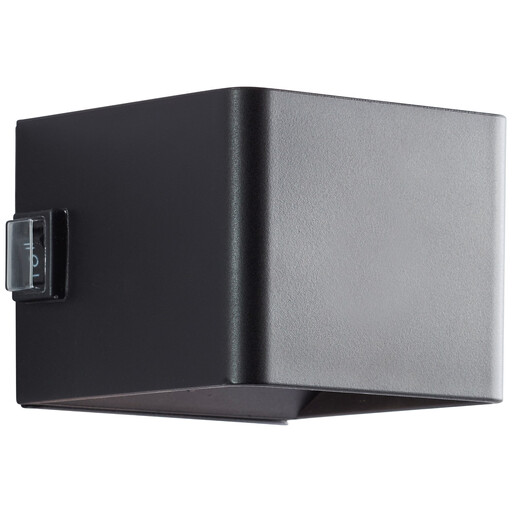
Why this product suits this profile: This battery-powered light does not require a permanent power connection and can be charged via USB. It is designed for smaller entrance, patio or garden areas.
The specifications state 300 lumens, 3000 K, IP44, a rechargeable battery and a motion sensor. This makes it easier to assess the light realistically for limited areas rather than planning it as a powerful outdoor LED floodlight.
Integrated rechargeable battery, USB connection, magnetic mounting, motion sensor and 300 lumens.
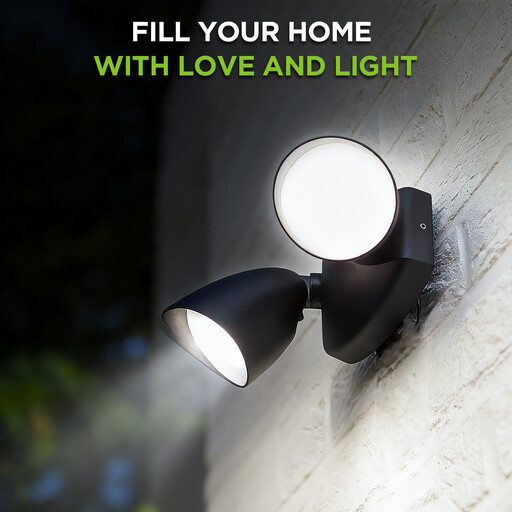
Why this product suits this profile: According to its product name, this outdoor twin-head floodlight combines 1800 lumens, 20 watts and 4000 K with a metal housing. It is suitable for garages, courtyards, patios or gardens with a permanent wall connection.
The neutral colour temperature and separate adjustment of the two heads make it easier to direct the light precisely. Before installation, check the IP rating and connection details on the product page.
1800 lumens, 20 watts, 4000 K and two adjustable light heads according to the product name.
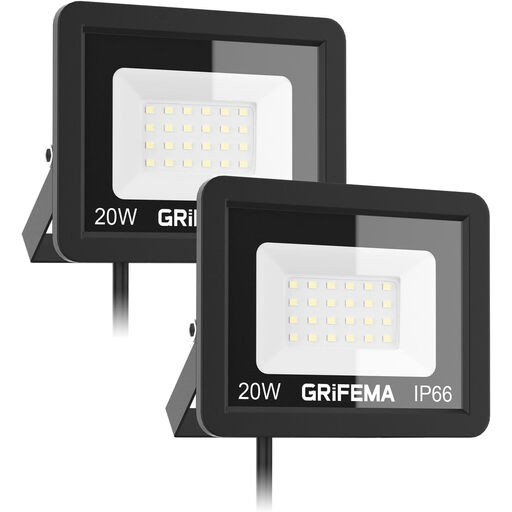
Why this product suits this profile: This set of two floodlights is an appealing choice for larger gardens, courtyards, garages or work areas where several installation points need to be covered.
The product specifications state a combined output of 2200 lumens, 6500 K, IP66 and adjustable 180-degree brackets. This makes the colour temperature, IP rating and positioning easier to assess before buying.
IP66 rating, 180-degree bracket, two units and a combined 2200 lumens according to the product description.
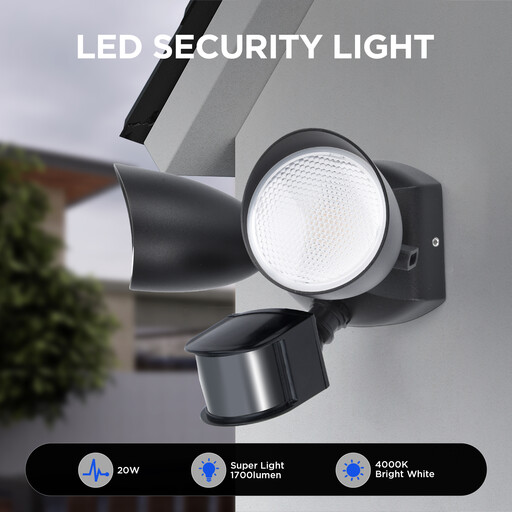
Why this product suits this profile: The combination of 1700 lumens, 4000 K, a sensor and two light heads is suitable for entrances, courtyards and driveways where the light should not stay on continuously.
The sensor is listed as a product feature, but it does not replace correct adjustment. Installation height, detection direction and connection by a qualified person must still be taken into account.
1700 lumens, 20 watts, 4000 K, integrated twin heads and sensor according to the product name.
We have put together a complete, regularly updated list of products that fully meet these strict selection criteria and the safety regulations applicable in the EU.
Before installation, make sure the wall is strong enough and that the fixings are suitable for the surface. Outdoor installations require corrosion-resistant screws and cable connections protected against moisture. For permanently connected lights, disconnect the circuit at the main switch before carrying out any work.
When positioning the light:
Running costs can be roughly estimated using this formula:
Power in watts ÷ 1000 × operating hours × electricity price = electricity costs
For example, a 20-watt floodlight uses 0.2 kilowatt-hours over ten hours of operation. With sensor-controlled operation, actual consumption depends on how often and for how long the light is activated.
For protected installation under a roof, IP44 may be sufficient depending on the installation situation. On walls exposed directly to the weather, greater water resistance is often advisable. For suitable products, IP66 indicates dust-tightness and protection against powerful water jets. The specifications for the specific model and the installation instructions are decisive.
4000 K produces neutral white light and is versatile for entrances, garages and courtyards. 5000 K looks more like daylight and may be suitable for visibility or work areas. Brightness, beam angle and glare prevention are also important.
It is not possible to give a reliable general lifespan without specific manufacturer information. Operating hours, heat dissipation, moisture protection and the quality of the power supply are all relevant. Buyers should therefore check the stated lifespan, warranty terms and replacement options for the product in question.