
Lieferung heute & morgen

Qualitätsgarantie

Willkommens-Angebote freischalten: KOSTENLOSE Lieferung | Bis zu 80 % RABATT | Kostenlose 30-Tage-JoyPlus-Testphase
App herunterladen
Choosing the right LED outdoor wall light can be a challenge. The market offers a plethora of options, but not all of them live up to their promises. A hasty decision often leads to disappointment: lights that fail after one winter, lighting that creates an uncomfortable atmosphere, or models that prove to be impractical. Before you make a decision, it's crucial to understand the common pitfalls that lead to unnecessary costs and hassle.
Many buyers focus on design while overlooking critical technical details. Three common mistakes are particularly costly:
To avoid these mistakes, you should focus on three objective core parameters. These are the key determinants of the longevity, functionality, and suitability of your new outdoor lighting.
The IP (Ingress Protection) rating indicates how well a light is protected against the ingress of foreign objects (first digit) and water (second digit). For outdoor use, the following values are relevant:
The material affects not only the appearance but also the corrosion resistance and robustness.
These two values define the effect of the light.
Instead of making a one-size-fits-all recommendation, we have identified lights that are tailored to specific needs and use cases.
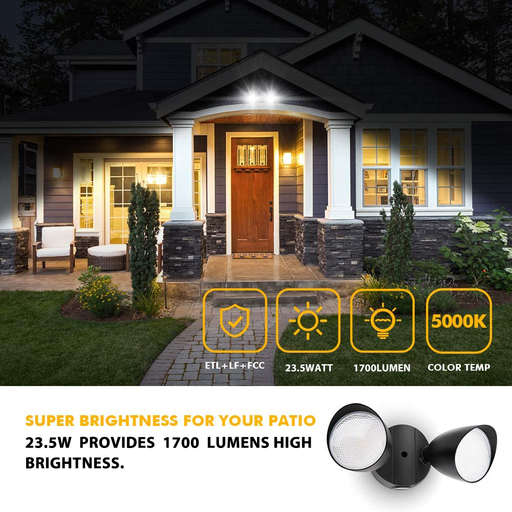
Why This Fits Their Persona: Ideal for users who prioritise maximum visibility and deterrence. This light is perfect for illuminating driveways, garages, or dark corners of the garden.
The die-cast aluminium housing is corrosion-resistant and durable. The light colour of 5000K (Daylight White) is intentionally chosen for maximum brightness and visibility, avoiding the trap of an inappropriately cosy light colour for security purposes.
Two individually adjustable spotlight heads allow for precise and flexible illumination of two different areas simultaneously.
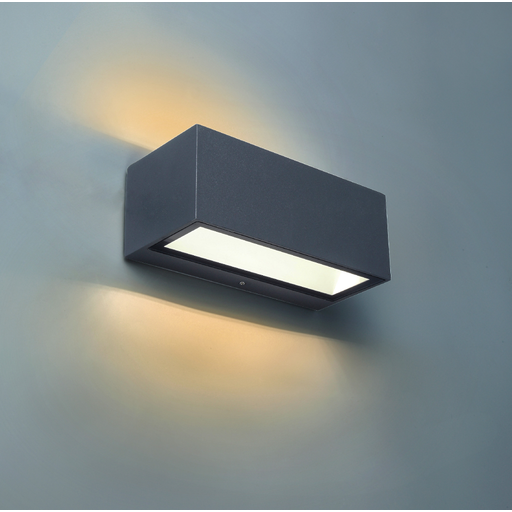
Why This Fits Their Persona: Perfect for homeowners aiming for a modern facade design. This up-and-down outdoor light creates architectural accents and a stylish atmosphere at the entrance or on the patio.
With an IP54 rating, this light is explicitly protected against dust and splashing water, sidestepping the trap of inadequate weather resistance. The die-cast aluminium housing in anthracite is both durable and visually appealing.
Creates a crisp up-and-down light effect that accentuates modern facades. The high brightness of 1300 lumens ensures effective yet aesthetic illumination.
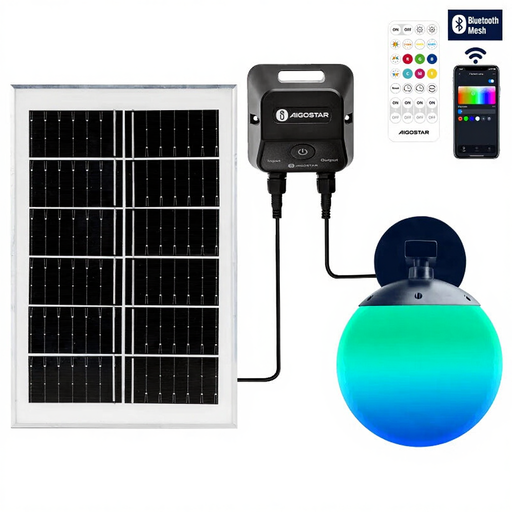
Why This Fits Their Persona: This outdoor solar wall light is the solution for anyone wanting to avoid electricity costs and complex wiring. Ideal for gardens, sheds, or areas without a direct power connection.
Thanks to its high protection rating of IP65, the light is completely protected against dust and powerful water jets, making it extremely weatherproof. Solar power makes it independent of the quality of internal LED drivers, which often fail in cheap mains-powered models.
No electricity costs and simple installation. App control via Bluetooth Mesh allows for control of colours (RGBCCT) and brightness, offering maximum flexibility.
A carefully curated selection of lights that meet objective quality criteria can make all the difference for your home. We have compiled a comprehensive list of products that meet these requirements.
The recommended mounting height depends on the application. For general pathway or entrance lighting, a height of about 1.8 to 2.2 metres (approx. 6 to 7.2 feet) above the ground is ideal. This ensures good light distribution without causing glare. For lights with a motion sensor, the height should take into account the sensor's detection range, which is specified in the manufacturer's instructions.
An IP44 certification means the light is protected against solid foreign objects larger than 1 mm in diameter and against splashing water from all directions. This is sufficient for most covered areas, such as balconies, loggias, or directly under an eave. For walls directly exposed to rain, a higher protection rating like IP54 or IP65 is a safer and more durable choice.
No, many modern LED lights, especially models with a slim profile, feature fixed (integrated) LED modules. The advantage is that no bulb changes are necessary and the design can be more compact. The disadvantage is that if the LED module fails, the entire fixture must be replaced. Therefore, look for products from established manufacturers that specify a long LED lifespan (e.g., 30,000 hours or more).