
Lieferung heute & morgen

Qualitätsgarantie

Willkommens-Angebote freischalten: KOSTENLOSE Lieferung | Bis zu 80 % RABATT | Kostenlose 30-Tage-JoyPlus-Testphase
App herunterladen
An LED outdoor wall light can illuminate your entrance, provide orientation or create an atmospheric terrace setting. In practice, however, unclear information about brightness, protection ratings and sensors often leads to unsuitable purchases. A high wattage, for example, does not automatically mean the light will illuminate an area appropriately. An integrated motion sensor is only useful when its detection range and lighting duration suit the surroundings.
This buying guide from the Joybuy Product Recommendation Officer explains which details matter when buying an LED outdoor light and which models suit different usage situations.
Power consumption in watts describes energy usage, not the actual amount of light produced. For comparisons, the luminous flux in lumens is what matters:
A very bright LED security light can cause uncomfortable glare at a small entrance. Conversely, a decorative garden wall light may not provide enough illumination to light a longer driveway safely.
If you are looking for a weatherproof outdoor wall light, you should check its IP protection rating. The first digit describes protection against solid foreign objects, while the second indicates protection against water.
IP44 may be suitable for a covered entrance. For an unprotected façade or an exposed mounting position, an IP65 outdoor light is often more appropriate. However, the protection rating does not replace properly sealing the wall opening.
An outdoor wall light with a motion sensor will not automatically operate optimally in every situation. Before buying, you should check:
A motion sensor is practical for a house entrance. For a permanently illuminated terrace, however, a standard or dimmable outdoor wall light may be a better choice.
An outdoor wall light in warm white at around 2,700 to 3,000 Kelvin usually creates a discreet atmosphere around entrances and terraces. Neutral white at around 4,000 Kelvin supports clear orientation along paths and around garages. At 5,000 Kelvin, the light appears noticeably cooler and is more suitable for work or security areas.
Also check whether the colour temperature is fixed. Depending on the model, smart and RGBCCT lights allow you to choose between warm-white, neutral-white and coloured light settings.
Hard-wired lights operating at 230 volts require suitable electrical installation. Work on electrical systems must only be carried out by appropriately qualified personnel. Before installation, check the condition of the wall, cable routing and fixing materials.
A solar outdoor wall light does not require a conventional power cable. However, the location must provide enough sunlight for the solar panel. Charging performance may be lower on façades that are permanently shaded. USB- or battery-powered models can be positioned flexibly, but need to be charged regularly.
Metal housings, plastic covers, glass and seals react differently to moisture, dirt and temperature fluctuations. A light should be installed so that water cannot collect around cable entries or recesses. Clean covers with a soft, slightly damp cloth and follow the manufacturer’s instructions.
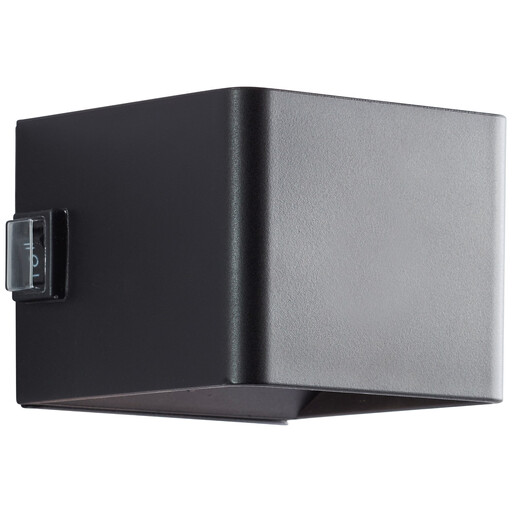
Why this product suits the profile: This battery-powered light can be used without a permanent power connection. With 300 lumens, 3,000 Kelvin, USB charging, magnetic mounting and a motion sensor, it offers flexible use in smaller areas.
The stated 300 lumens and IP44 rating make its limitations clear. Rather than making vague high-performance claims, it is a compact light for areas exposed to splashing water.
Integrated battery, USB cable, magnet and motion sensor; compact dimensions of approximately 8 × 10.3 × 10.1 cm.
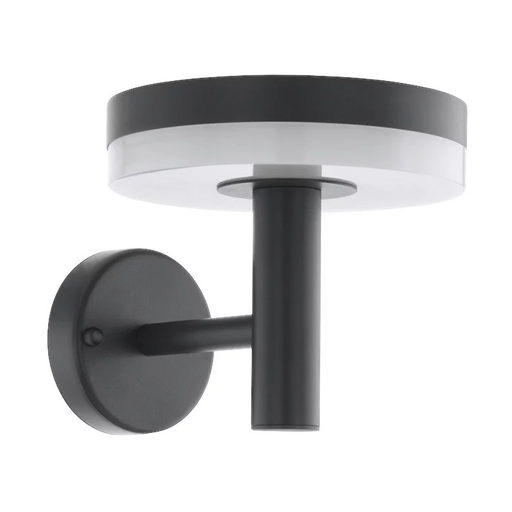
Why this product suits the profile: This permanently installed LED outdoor light combines an anthracite-coloured housing with an integrated LED module, 950 lumens and a warm-white colour temperature of 3,000 Kelvin.
The luminous flux, colour temperature and power consumption are clearly specified. This makes it easier to compare the light with your actual requirements for an entrance or terrace.
950 lumens, 3,000 Kelvin, integrated 11 W LED module and a metal-and-plastic housing described as suitable for various outdoor areas.
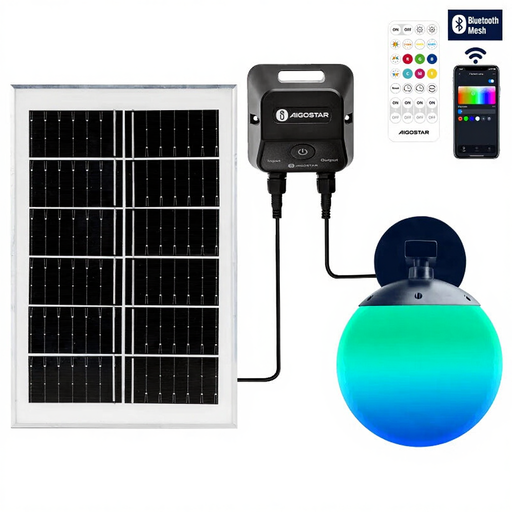
Why this product suits the profile: For larger outdoor areas without an existing power connection, this solar outdoor wall light offers a 5 W solar panel with a 5 m cable, a 4,000 mAh battery, Bluetooth Mesh control and adjustable colour temperatures from 2,700 to 6,500 Kelvin.
The IP65 protection rating, battery type and charging time are specified. This allows you to check in advance whether the location and desired operating time are compatible.
IP65, RGB and white light, Bluetooth Mesh for connecting multiple lights, plus automatic lighting without permanent wiring.
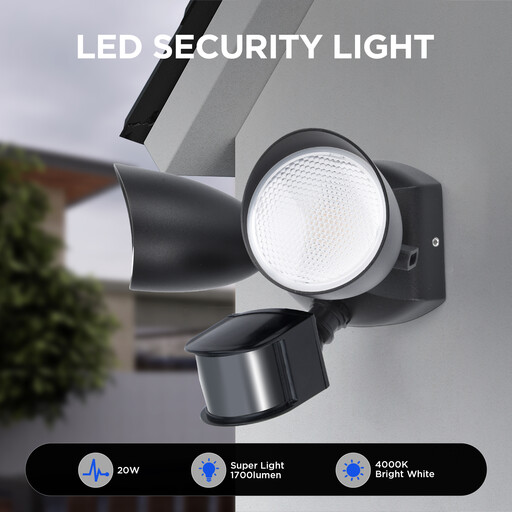
Why this product suits the profile: Two integrated light heads and 1,700 lumens are ideal for garage driveways, courtyards or larger wall areas. The neutral-white 4,000 Kelvin colour temperature supports clear orientation.
The light output and colour temperature are clearly stated. The adjustable or separately orientable heads help illuminate a large area more precisely.
1,700 lumens, 4,000 Kelvin and two light heads for broader illumination; designed as a permanently installed outdoor light with sensor.
We have compiled a complete, regularly updated list of products that fully meet these strict selection criteria and the safety regulations applicable in the EU.
The following formula is sufficient for a rough calculation:
Power in kilowatts × operating hours × electricity price = electricity costs
A 10 W light switched on for three hours a day uses approximately 10.95 kilowatt-hours per year. With sensor operation, actual consumption may be lower, depending on detections and lighting duration. Solar and battery-powered lights do not incur direct electricity costs at the connection point. However, charging behaviour, battery capacity and replacement options should be taken into account.
For covered areas, IP44 may be sufficient depending on the installation location. In areas directly exposed to the weather, an IP65 outdoor light offers greater protection against dust and water jets. The specific position, installation instructions and correctly sealed installation remain decisive.
Its service life depends on the LED module, electronics, heat dissipation, operating duration and exposure to the weather. For permanently integrated modules, check whether the LED module can be replaced. Manufacturer service-life specifications should be viewed as technical guidelines, not a guarantee for every installation situation.
For entrances, garages and paths, a motion sensor can reduce the need for manual switching. For a frequently used terrace or decorative lighting, a light with a fixed switch or dimming function may be more suitable. Before buying, check the range, detection angle and adjustable overrun time.