
Lieferung heute & morgen

Qualitätsgarantie

Willkommens-Angebote freischalten: KOSTENLOSE Lieferung | Bis zu 80 % RABATT | Kostenlose 30-Tage-JoyPlus-Testphase
App herunterladen
An LED outdoor wall light should reliably illuminate your front door, patio, balcony or garage. In practice, unclear product information, unsuitable IP ratings and misjudged brightness often lead to disappointing purchases. So whether you’re looking for an outdoor light with a motion sensor, an LED wall light for outside or decorative garden lighting, don’t focus on design alone.
For LED lights, wattage mainly indicates power consumption. The luminous flux, measured in lumens, determines how bright a light actually is. For example, a 4-watt light may produce 300 lumens, while a 20-watt model producing 1,700 lumens can illuminate a much larger area. The right output depends on where you’ll use it:
Very bright LED floodlights can be uncomfortable at small entrances. For targeted lighting, adjustable light heads or the right mounting height are often more important than choosing the highest possible lumen output.
The term weatherproof outdoor light alone tells you little about whether a particular light is suitable for your needs. The IP rating is a more reliable guide. The first digit indicates protection against solid objects, while the second indicates protection against water.
An IP44 outdoor wall light is protected against solid objects larger than 1 millimetre and water splashes from different directions. It may be suitable for a covered entrance, patio or sheltered exterior wall. A higher IP rating may be a better choice for exposed areas subject to harsher weather. The installation instructions and the manufacturer’s recommended installation conditions are still essential.
A motion sensor means you don’t have to switch the light on manually, but it needs the right detection angle and a suitable mounting position. Depending on the sensor settings, branches, passing vehicles or pets may trigger it unnecessarily.
A solar garden light needs plenty of direct sunlight. In shaded spots or after several overcast days, its operating time may be reduced. Models with a rechargeable battery and USB connection are more flexible, but need to be charged regularly. Before buying, check whether a permanent power supply is available and how often you’re likely to use the light.
Even lighting is important for paths and security areas. Warm white outdoor lighting at around 2,700 to 3,000 kelvin gives a subtle glow and often works well on patios, by entrances and around seating areas. Neutral white light at around 4,000 kelvin helps you see your surroundings clearly. At 5,000 kelvin, the light looks noticeably cooler and is generally better suited to functional outdoor floodlights.
Also check the beam angle. A wide beam spreads light across a wall or patio, while a narrow beam can highlight specific areas.
Check the IP rating in the product specifications. For an IP44 light, cable entries, seals and fixings must be installed correctly to maintain the intended level of protection. Metal, plastic and glass casings differ in weight, maintenance requirements and appearance. A sturdy construction is particularly important if the outdoor light will be regularly exposed to rain, dust or changes in temperature.
Permanently installed lights are connected to the mains. At 220–240 volts, installation should follow the safety instructions and be carried out by a qualified electrician. Rechargeable lights with a USB connection don’t need fixed wiring, but their operating time depends on battery capacity.
Measure the available wall space before you buy. The dimensions, fixing-hole spacing and cable routing need to suit the installation position. If the LED light has an integrated module, also check whether the module can be replaced, as this may not be possible on every model.
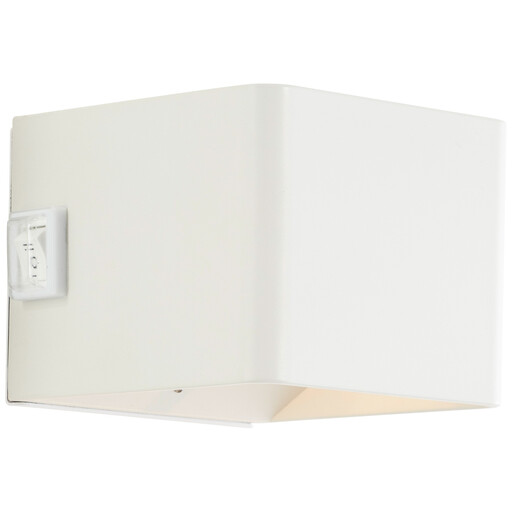
Why this product suits this profile: This rechargeable light doesn’t need fixed wiring and can be charged via USB. Its 300 lumens and 3,000 kelvin colour temperature make it suitable for smaller entrance areas, balconies and patios.
The specifications clearly state the luminous flux, colour temperature, battery, USB connection, motion sensor and IP44 rating. This makes it easier to decide whether the light is right for your needs before you buy.
Built-in battery, USB charging, magnetic mounting, motion sensor and IP44 rating.
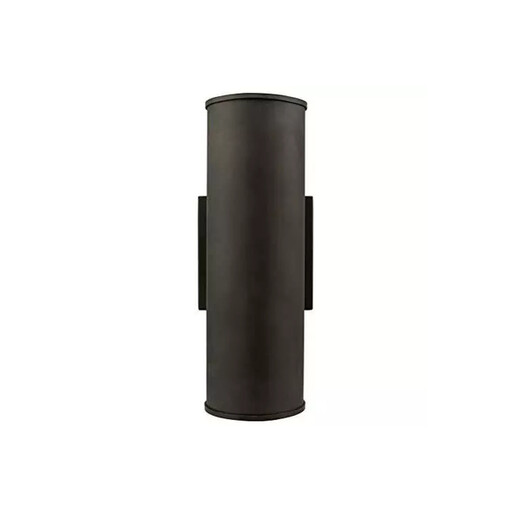
Why this product suits this profile: This permanently installed wall light creates an up-and-down beam and delivers 870 lumens at 3,000 kelvin. Its IP44-rated casing makes it suitable for entrances, patios and garage doors.
The IP44 rating, colour temperature and luminous flux are all clearly specified. This makes it easier to distinguish this light from products described as “weatherproof” without any further explanation.
Two integrated 8-watt LEDs, 870 lumens, warm white light at 3,000 kelvin and up-and-down lighting.
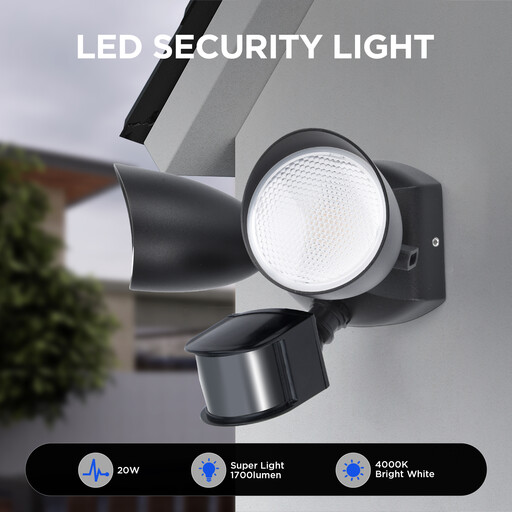
Why this product suits this profile: With a stated output of 1,700 lumens and a built-in sensor, this light is designed for larger areas such as a courtyard, driveway, garden or garage.
The choice is based not just on wattage, but on the stated lumen output and sensor function. Before installation, check the detection area in the instructions.
1,700 lumens, 20 watts, 4,000 kelvin and two light heads for functional outdoor lighting.
We’ve put together a complete, regularly updated list of products that meet these strict selection criteria and fully comply with the safety regulations applicable in the EU.
Depending on the size of the entrance, around 300 to 1,000 lumens should be enough. A warm white colour temperature of around 3,000 kelvin gives a subtle glow. A motion sensor can be useful if you don’t want the light on all the time. Also check whether IP44 is sufficient for the specific installation position, which is usually at least partly sheltered.
Its lifespan depends on the LED module, how long it’s used for, heat dissipation, the power supply and the weather. Treat the manufacturer’s figures as a technical guide. With integrated LEDs, bear in mind that the module may not be replaceable on every model. Installing the light in an accessible, dry location and cleaning it regularly can help keep it working well.
Running costs depend on the light’s power, how long it’s used each day and your electricity tariff. A 20-watt light used for one hour a day consumes around 7.3 kilowatt-hours a year. A 4-watt rechargeable light uses considerably less mains electricity when charging, but needs to be recharged regularly. For a fair comparison, consider the wattage, actual time spent lit and frequency of use together.