
Lieferung heute & morgen

Qualitätsgarantie

Willkommens-Angebote freischalten: KOSTENLOSE Lieferung | Bis zu 80 % RABATT | Kostenlose 30-Tage-JoyPlus-Testphase
App herunterladen
An LED outdoor wall light should reliably illuminate your entrance area, terrace, garden or garage. In practice, however, unclear IP ratings, misjudged brightness and unsuitable connections often lead to poor purchases. Even a decorative outdoor light can be unsuitable if it is permanently exposed to rain or if the light shines directly into windows and neighbouring properties.
This buying guide explains which technical specifications are relevant and which models suit different usage situations.
The IP44 rating means protection against solid foreign objects larger than 1 millimetre and against splashing water. This is suitable for many sheltered entrance areas, covered terraces and house walls. However, an IP44 light is not automatically designed for direct water jets, pressure washing or permanently exposed weather conditions.
Before buying, you should therefore check:
With LED lights, the wattage primarily indicates power consumption, not the actual brightness. The luminous flux in lumens (lm) is the key measure. A compact light with 300 lumens may be sufficient for orientation along a path, whereas security lighting for a garage or courtyard often needs more light.
The colour temperature also affects how you use the light:
A hardwired outdoor LED light requires a suitable mains connection in the UK. Work on the 220–240 volt installation should only be carried out by a suitably qualified electrician. With an E27 outdoor wall light, you must also check whether the desired LED bulb is approved for outdoor use.
With a dimmable outdoor wall light, the light, LED bulb and dimmer must all be compatible. An external dimmer is not automatically included. With integrated LED modules, replacement of the light module is often not possible. This information should be in the technical data before you buy.
For a weatherproof outdoor wall light, the IP rating is a central point to check. IP44 is particularly suitable for areas exposed to splashing water, provided the light is correctly installed and sealed. For an exposed façade, higher requirements may be advisable depending on the installation situation.
In addition to luminous flux, the beam angle and light distribution are important. Two adjustable light heads, for example, can direct light separately towards a driveway and a door. An up-and-down light distributes light upwards and downwards, placing more decorative emphasis on the façade.
An outdoor light with a motion sensor only switches on when movement is detected or according to a set sensor programme. This can be practical for paths, entrances and garages. You should consider the sensor range, detection angle and possible false triggers caused by animals or passing vehicles.
A mains-powered outdoor LED light provides constant illumination when correctly connected. A solar outdoor wall light, on the other hand, needs sufficient direct sunlight for its battery. In shade, during winter or in heavily overcast weather, the lighting duration may be shorter.
Battery and USB models offer flexibility without fixed wiring. However, you need to plan for the charge level, charging port and mounting surface. For all types, cleaning with a soft or damp cloth according to the manufacturer's instructions is recommended. Abrasive cleaners and high-pressure water can damage surfaces and seals.
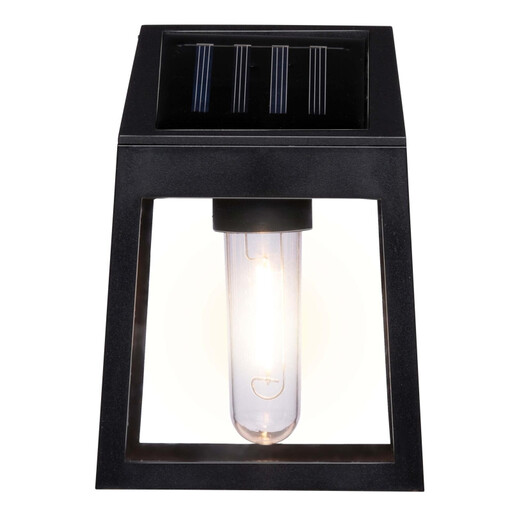
Why this product suits the profile: The compact solar light is ideal for house walls, gates and paths where no mains power is available. The solar panel charges the integrated battery, and the light switches on automatically at dusk.
It requires no fixed wiring. Before installation, however, you should check whether the location receives enough daylight.
Integrated AA Ni-MH battery with 1.2 V and 600 mAh; automatic switch-on at dusk.
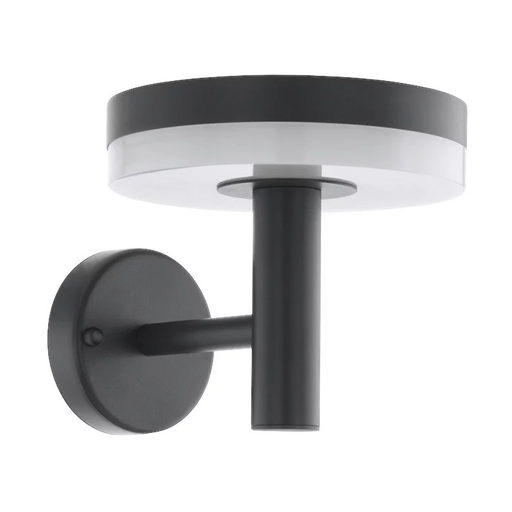
Why this product suits the profile: This fixed-installation light combines an anthracite-coloured housing with warm white light, making it a good match for entrances, terraces and garden paths.
The specifications state 11 W, 950 lm and 3,000 K. This allows you to assess the lighting effect more objectively before installation than by relying on wattage alone.
Integrated 11 W LED module; warm white colour temperature of 3,000 K and stated luminous flux of 950 lm.
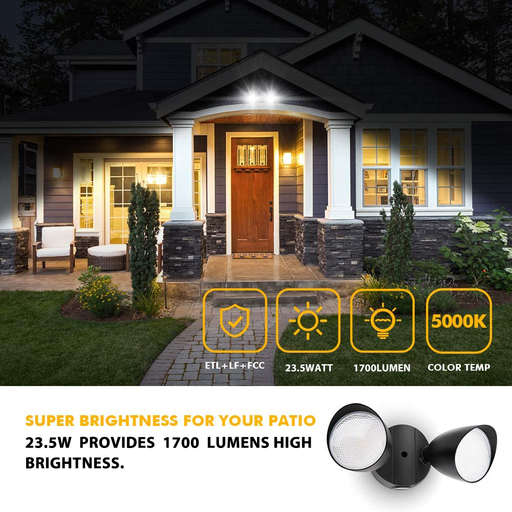
Why this product suits the profile: The two separately adjustable light heads are ideal for a garage, shed, courtyard or driveway when you need to illuminate specific areas precisely.
The adjustable heads reduce the risk of the light shining only onto the house wall or directly into eyes and windows.
Two heads adjustable through 180 degrees; integrated LED chips with 5,000 K and a die-cast aluminium housing with toughened glass covers.
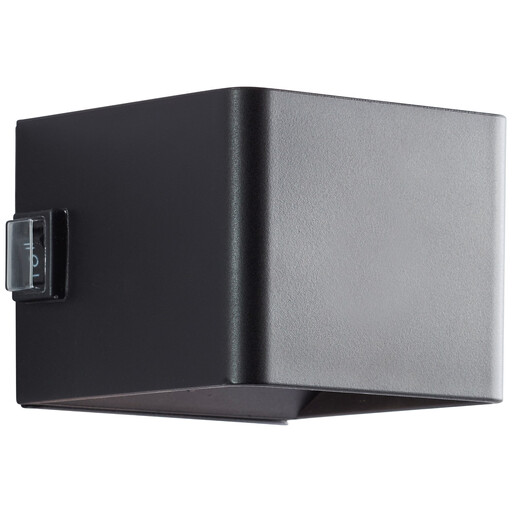
Why this product suits the profile: This battery-powered model with a USB charging cable and magnet can be flexibly attached to suitable metal surfaces, for example on a terrace or in an entrance area.
The product data specifies the battery, USB port, IP44 and motion sensor. This makes the power supply and operation clearer to assess before purchase.
300 lm at 3,000 K; integrated battery, magnetic mount, USB charging cable and motion sensor.
We have compiled a complete, regularly updated list of products that fully meet these strict selection criteria and the safety regulations in force in the EU.
For an outdoor light for a terrace, warm white light is usually more pleasant than daylight white. For garage driveways, sheds and work surfaces, a neutral or daylight white LED outdoor wall light can make orientation easier. The mounting height should be chosen so that the sensor or light beam is not blocked by wall projections.
With an E27 light, you need to check the socket, maximum wattage and outdoor approval of the bulb. With fixed-installation models, the mains voltage, fixing materials and seal must be compatible with the wall surface. Before any maintenance, disconnect the power supply at the circuit breaker.
For paths and subtle orientation, around 300 to 500 lumens may be sufficient. For entrances, garage driveways or targeted courtyard lighting, higher values are often chosen. The mounting height, beam angle and desired light distribution are also decisive factors.
IP44 protects against splashing water and is suitable for many sheltered outdoor areas. For direct, permanent exposure to the elements or installation under special conditions, you should compare the specific installation situation with the manufacturer's specifications.
The running costs depend on the wattage, daily operating time and your electricity tariff. A 10 W light that is switched on for five hours a day uses a calculated 0.05 kWh per day. A motion sensor, dusk sensor or solar power supply can reduce the actual operating time or mains electricity consumption.