
Lieferung heute & morgen

Qualitätsgarantie

Willkommens-Angebote freischalten: KOSTENLOSE Lieferung | Bis zu 80 % RABATT | Kostenlose 30-Tage-JoyPlus-Testphase
App herunterladen
An LED outdoor wall light should do more than simply decorate an exterior wall. At the entrance, it provides orientation; on the patio, pleasant illumination; and by the garage or garden path, additional outdoor security lighting. At the same time, models vary considerably in terms of power supply, sensors, colour temperature and IP rating.
Many poor purchases result from three typical marketing pitfalls:
The IP rating consists of two digits. The first describes protection against solid particles, while the second indicates protection against water. An IP44 outdoor light is generally suitable for areas exposed to splashing water, such as a partially sheltered entrance or covered patio. However, it is not a licence to install the light anywhere outdoors without protection.
Before installation, you should check:
Professional installation is particularly important for permanently wired lights. Mobile models with a battery or USB connection offer greater flexibility, but require a sheltered place for charging.
Brightness is measured in lumens (lm). Lower light output may be sufficient for subtle entrance lighting or a balcony. A wide-beam outdoor spotlight for a driveway, garage or security lighting will usually require a different light distribution from a decorative wall light.
Colour temperature is measured in kelvin (K):
Also check whether the LED module can be replaced. With integrated LEDs, replacing the bulb later may not be possible, depending on the design.
A wired light provides a constant power supply when installed correctly. Solar lights operate independently of the mains, but require a suitable location with sufficient sunlight. In shaded areas, during short winter days or on cloudy days, the operating time may be reduced.
For a rough estimate of electricity costs, use:
Power in kW × operating hours × electricity price = energy costs
An 11-watt light uses around 0.11 kWh after ten hours of operation. Motion or light sensors can reduce the actual operating time. For a solar garden light chain, you should also consider battery capacity, charging time and the position of the solar panel.
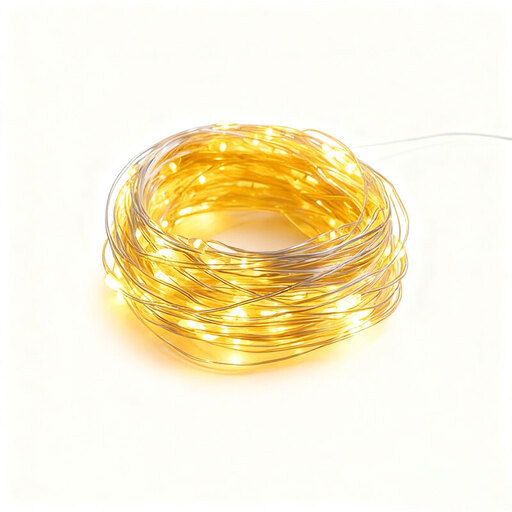
Why this product suits this profile: This solar-powered light chain is suitable for decorative garden lighting, balconies and patios where there is no nearby socket.
The specifications state an 8 m length, 50 LEDs, 3000 K, three lighting modes and IP44. This makes it easier to assess the coverage and usage limits than a purely promotional claim such as “weatherproof”.
50 warm-white LEDs, a solar panel and On/Off/Flash mode; the IP44 rating is specified for areas exposed to splashing water.
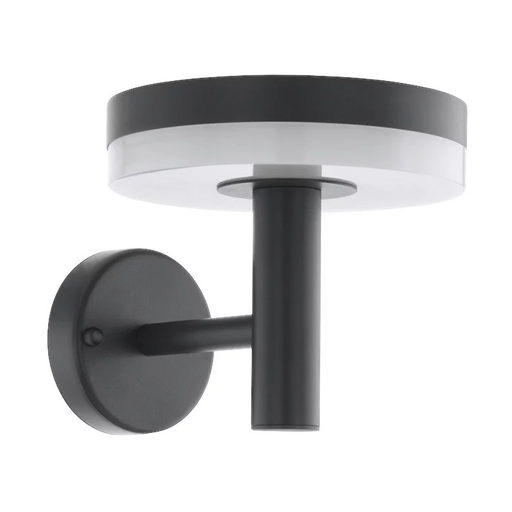
Why this product suits this profile: This permanently mounted LED outdoor wall light combines clearly defined light output with an anthracite-coloured housing, making it suitable for entrances, paths or patios.
The product data specifies 11 W, 950 lm, 3000 K and dimensions of 24.5 × 18 × 24.5 cm. This makes it easier to check the brightness, colour temperature and available mounting space.
Integrated 11 W LED module, 950 lm luminous flux and warm white light at 3000 K; metal and plastic construction with a white diffuser.
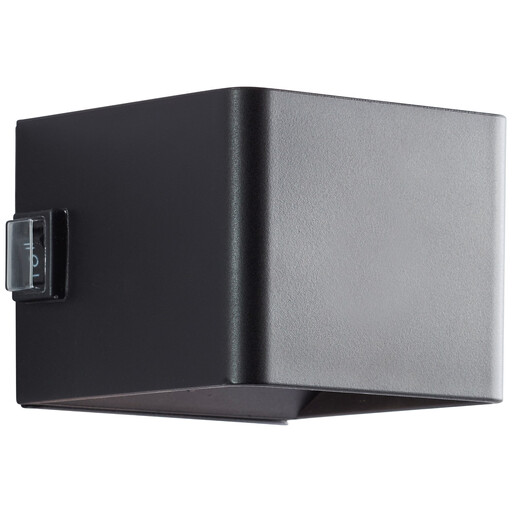
Why this product suits this profile: This mobile model with a battery, USB charging and magnetic mounting is suitable for rented homes, sheds, metal surfaces or places without a permanent power connection.
The mobile design avoids unnecessary electrical work. At the same time, IP44, 300 lm, 3000 K and the integrated motion sensor are clearly specified.
Battery, USB connection, magnet and motion sensor; 4 W power consumption and 300 lm luminous flux according to the product specifications.
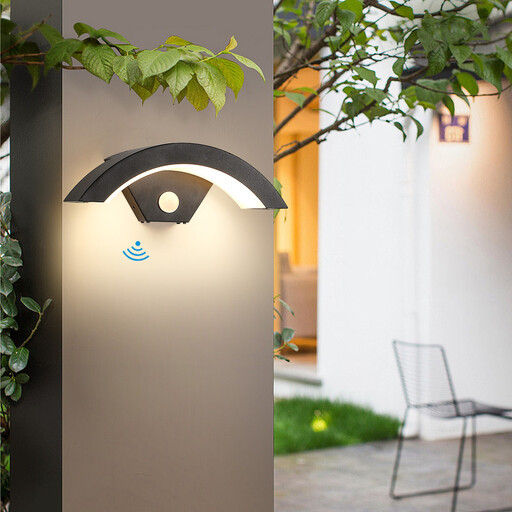
Why this product suits this profile: This model is aimed at users looking for a permanently mounted outdoor light with motion and light sensors for a driveway, garage, balcony or entrance.
The sensor functions are described clearly. Before buying, you should nevertheless check the mounting height, detection range and actual IP rating in the full technical specifications.
24 W power, warm white light at 3000 K and a housing made from matt die-cast aluminium, according to the product description.
Before buying a weather-resistant outdoor light, you should measure the exact installation location. Consider the distance from the wall, mounting height, cable routing and the angle of the light output. An outdoor light with a motion sensor should not point directly towards a busy road or moving branches, as this can lead to false triggers.
For renters, mobile rechargeable models are a practical option, provided they can be mounted securely without damaging the building fabric. For permanently installed lights on the exterior of a house, the connection and seal should be fitted professionally. Clean solar panels regularly with a dry or slightly damp cloth, and do not use abrasive cleaning products on lights.
That depends on its purpose. Lower light output is often sufficient for decorative patio lighting or a small balcony. For paths, garages and entrance areas, the light distribution and mounting position are also important. So do not compare only the lumen rating; consider the beam angle and light fitting height as well.
IP44 protects against solid foreign objects measuring 1 mm or more and splashing water. This IP rating may be suitable for covered outdoor areas. In locations exposed to the weather directly and continuously, you should follow the manufacturer’s guidance for the specific installation site and choose a higher IP rating if necessary.
The cost depends on the wattage, daily operating time and your electricity tariff. Sensor operation can reduce the running time. Solar lights have no mains electricity running costs, although the lighting duration depends on daylight, battery capacity and location.