
Lieferung heute & morgen

Qualitätsgarantie

Willkommens-Angebote freischalten: KOSTENLOSE Lieferung | Bis zu 80 % RABATT | Kostenlose 30-Tage-JoyPlus-Testphase
App herunterladen
An LED outdoor wall light should reliably illuminate your entrance, patio or courtyard while complementing your home’s façade. In practice, unclear product information, incorrectly assessed IP ratings or an unsuitable light colour often lead to disappointing purchases. As a Joybuy Product Recommendation Officer, I explain the most important features objectively so you can choose a suitable outdoor wall light for your home.
An IP44 outdoor light is protected against solid foreign objects measuring 1 millimetre or more, as well as splashing water from various directions. This makes it suitable for many sheltered outdoor areas, such as beneath a porch roof, on a covered patio or beside an entrance.
However, IP44 does not mean that the light is protected against powerful water jets, prolonged standing water or immersion. For an unprotected external wall exposed to frequent driving rain, a higher IP rating may be advisable. Also make sure that the seals, connections and wall mounting are installed correctly.
For LED lights, wattage primarily describes energy consumption, not brightness directly. The amount of light is indicated by lumens (lm). A light with 950 lumens may be sufficient for illuminating an entrance, while a wide courtyard or large garage area requires more light and a suitable beam spread.
The design also matters: An up-and-down wall light distributes light upwards and downwards, creating a decorative effect on the façade. An adjustable twin spotlight, by contrast, directs the light more precisely towards a courtyard, driveway or garden.
Warm white light of around 2700 to 3000 kelvin creates a subtle atmosphere around an entrance or on a patio. Neutral white, at around 4000 kelvin, is more suitable for practical illumination. Daylight white at 5000 kelvin can provide stronger contrast on paths, around garages or in work areas.
An outdoor wall light with a motion sensor switches on only when movement is detected. With a light that also has a daylight sensor, activation may depend on the surrounding brightness as well. So check whether the detection range, switch-on duration and mounting height suit your intended use.
First, assess the installation location:
For permanently connected mains-powered lights, installation must be carried out by a qualified electrician. The power supply must be disconnected before maintenance or installation.
At a minimum, lumens, power consumption and light distribution are important when choosing a light. A compact wall spotlight can illuminate a house entrance precisely. For a longer façade or courtyard, two lights, a wide beam angle or adjustable light heads are often more practical.
Also check the dimensions and distance from the wall. A slim LED outdoor wall lamp may fit beside a narrow house entrance, while a projecting light could get in the way in a narrow passage.
A dimmable outdoor wall light requires a compatible LED dimmer. Not every existing dimmer switch works with integrated LED modules. On some lights, the LED module is permanently integrated and cannot be replaced. This reduces maintenance during the intended service life, but limits repair options if a fault develops later.
Before buying, also check the mains voltage, frequency, connection type, mounting hardware and installation instructions. Manufacturer information such as CE, REACH or RoHS compliance should be clearly stated and verifiable in the product description.
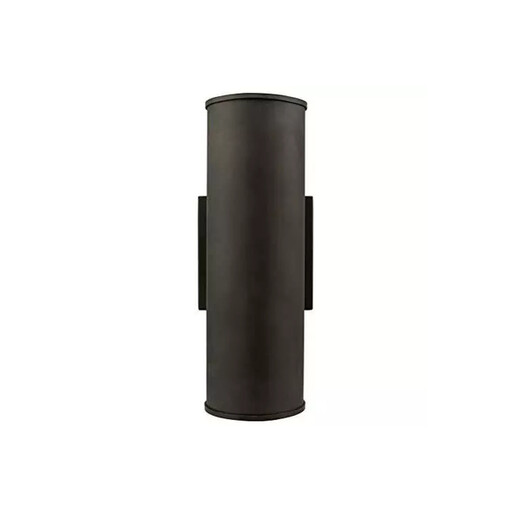
Why this product suits this profile: This compact outdoor wall light combines a rectangular design with up-and-down lighting, making it suitable for entrances, patios or garage doors.
The specifications state 870 lumens, 3000 kelvin and IP44. This makes it easier to assess the brightness, light colour and splash-water protection before buying.
Integrated 2 × 8 W LED with 870 lumens, warm white 3000 K lighting and mounting accessories included, according to the product description.
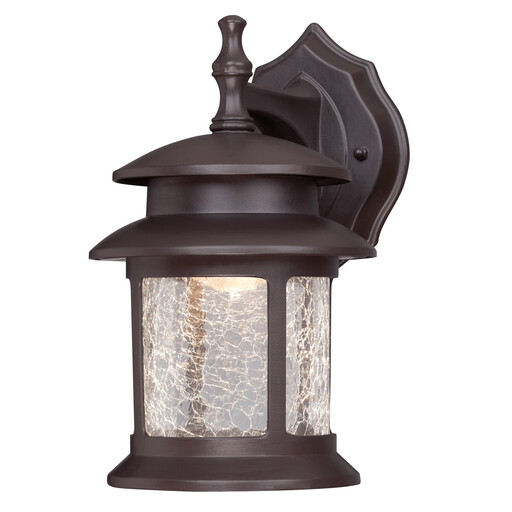
Why this product suits this profile: This model is aimed at buyers who prefer dimmable warm white light and a classic combination of aluminium and glass.
The product data explicitly states IP44 and indicates the need for a compatible LED dimmer. This avoids assuming that dimming will work without suitable control equipment.
9 W LED, 1000 lumens of light output from the light source, 3000 kelvin, IP44 and a stated average lifespan of 35,000 hours.
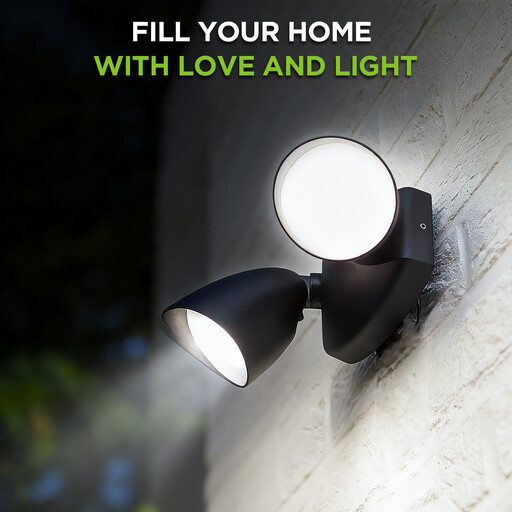
Why this product suits this profile: The two light heads are designed for larger outdoor areas such as courtyards, garages, gardens or driveways, where precise positioning of the lighting is important.
The stated light output of 1800 lumens and the separate positioning of the two heads help when planning broader courtyard lighting. The light colour is 4000 kelvin.
20 W power consumption, 1800 lumens, full-metal construction and two adjustable heads, according to the product specifications.
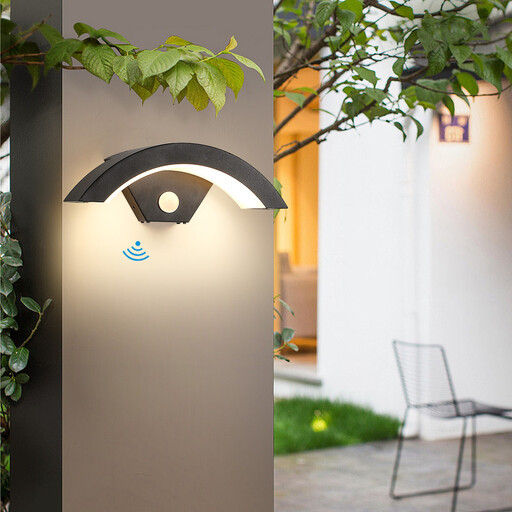
Why this product suits this profile: For entrances, paths, balconies, garages and driveways, automatic activation when movement is detected can reduce the need for manual operation.
The description mentions daylight and motion sensors, as well as intended use in several outdoor areas. The specific IP rating should be checked in the full product data before buying.
24 W, warm white light at 3000 kelvin, a matt aluminium housing and automatic motion detection, according to the product description.
We have put together a complete, regularly updated list of products that fully meet these strict selection criteria and the safety regulations applicable in the EU.
For a small entrance light, a few hundred lumens may be sufficient, depending on the distance from the wall and the beam angle. For a courtyard, garage or larger patio, 900 lumens or more is often advisable. The lumen value is not the only important factor: it also matters whether the light is emitted broadly, upwards and downwards or as a focused beam.
IP44 protects against splashing water and is suitable for many sheltered installation locations. For highly exposed façades, areas subject to direct water jets or locations with consistently high humidity, check the required IP rating based on the installation location. Correct sealing and installation remain essential, regardless of the IP rating.
The service life depends on factors including operating time, heat dissipation, power quality and ambient temperature. Some manufacturers state an average service life; for the Westinghouse 6400340, for example, 35,000 hours are specified. This is a manufacturer’s stated value, not a guarantee for every individual application. With integrated LED modules, you should also check whether replacement is possible.