
Lieferung heute & morgen

Qualitätsgarantie

Willkommens-Angebote freischalten: KOSTENLOSE Lieferung | Bis zu 80 % RABATT | Kostenlose 30-Tage-JoyPlus-Testphase
App herunterladen
An LED outdoor wall light with a motion sensor can automatically illuminate paths, entrances, garages and patios. To make sure it works reliably day to day, though, you should look beyond brightness, design and a low price. The actual level of protection against moisture, the type of power supply and the sensor settings are all important factors.
A brighter light isn’t always better. A powerful outdoor light with a motion sensor could be uncomfortably dazzling by a small front entrance. On the other hand, a compact light with only a few hundred lumens might not illuminate enough of a courtyard or wide driveway.
So check:
The term “weather-resistant” doesn’t automatically tell you how well a light is protected against water. The IP rating is what matters. An IP44 outdoor light is protected against solid objects above a certain size, as well as splashing water from various directions. Depending on the installation site, more exposed locations may require a different level of protection.
Important: The rating only applies when covers, seals and cable entries are fitted correctly. You should also avoid installing an outdoor wall light where water can collect on its casing.
A motion sensor can be triggered by passing cars, pets, branches or pedestrians on the pavement. If you can’t adjust the detection area, the time the light stays on or the light-level threshold, it may switch on unnecessarily often.
So look for:
A permanently installed LED outdoor wall light will usually need a suitable mains connection. This means it’s always ready to use, but the electrical connection must only be made by a suitably qualified professional. This is especially important for work on your home’s electrical system.
A rechargeable battery-powered wall light that doesn’t rely on solar power can be a more flexible option if there’s no mains connection. The battery will need charging regularly, though. With portable models, also check how they’re charged and whether there’s a switch in addition to the motion sensor.
Warm white light at around 2700 to 3000 Kelvin tends to feel subtle outdoors, making it a good choice for patios, balconies and front entrances. Neutral white light at around 4000 Kelvin can work well for courtyards and entrances when you want edges and details to remain clearly visible.
Lumens measure the total amount of light produced. On their own, however, they don’t tell you how bright a particular spot will look. The design, reflector, installation height and direction of the beam all affect the result.
Aluminium casings can be sturdy and corrosion-resistant. Even so, check that the product description gives specific details about the material and confirms that the light is designed for outdoor installation. Also make sure the wall plugs and screws are suitable for the surface. Special fixings may be needed for façades with external wall insulation.
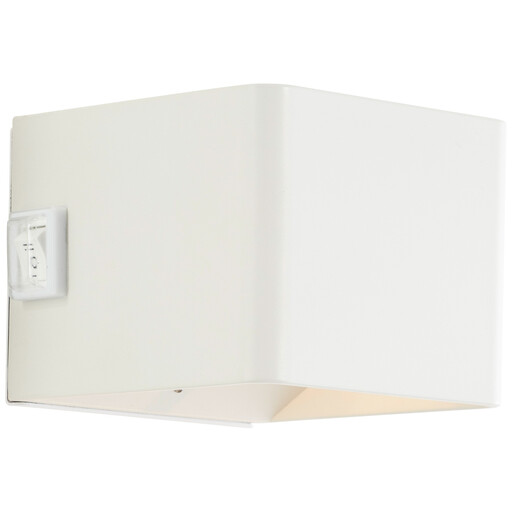
Why this product suits this profile: This compact light is a good fit for renters, balconies and smaller entrances without a fixed power supply. Its built-in battery charges via USB, so you can move the light wherever you need it.
The specifications state 300 lumens, 3000 Kelvin and IP44. This makes it easier to assess the brightness and intended splash protection before you buy than relying on a general marketing claim.
Built-in battery, USB connection, magnetic mount, rocker switch, motion sensor and IP44 rating.
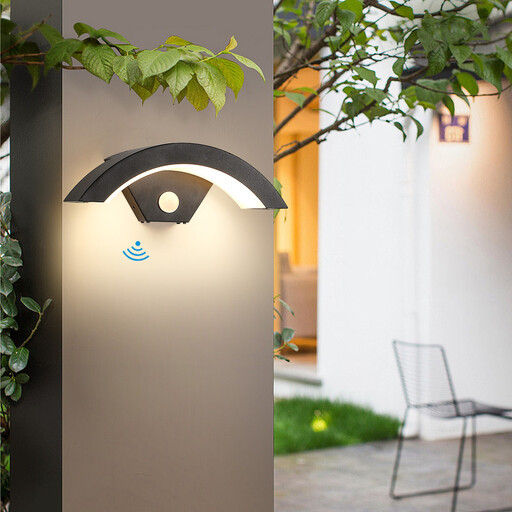
Why this product suits this profile: This model combines motion and light sensors. According to the product description, it’s designed for areas such as front paths, gardens, balconies, patios, garages and driveways.
The built-in light sensor can help prevent the light from switching on unnecessarily in bright conditions. Before installation, check the instructions for the specific sensor settings and detection range.
24 watts, warm white light at 3000 Kelvin, U-shaped design, aluminium casing, and a combined light and motion sensor.
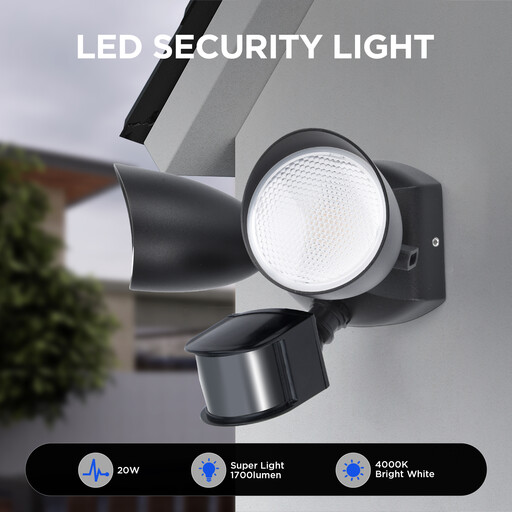
Why this product suits this profile: With two light heads and a stated luminous flux of 1700 lumens, this light could suit larger areas such as courtyards, driveways and entrances, provided the installation site and beam direction are right.
The product details clearly state the power, luminous flux and colour temperature. This helps you compare its suitability for lighting a larger area with the lower output of smaller models.
20 watts, 1700 lumens, 4000 Kelvin, built-in sensor and two adjustable light heads, according to the product name.
We’ve put together a complete, regularly updated list of products that meet these strict selection criteria and fully comply with the safety regulations applicable in the EU.
When installing a permanently connected outdoor light with a light sensor, choose a position where the sensor won’t point directly at a bright lamp or a highly reflective surface. For reliable detection, make sure it has a clear view of the area where you want it to pick up movement.
Electricity costs depend on the light’s power, how long it runs each day and your energy tariff. A 20-watt light that’s on for a total of 30 minutes a day uses around 0.01 kilowatt-hours per day. Battery and solar models don’t use mains electricity while operating, but the battery will need charging and may eventually need replacing.
An IP44 outdoor light may be suitable for sheltered areas, provided it’s installed correctly and isn’t exposed to persistent water. For exposed façades, open driveways or particularly exposed locations, check the conditions at the installation site against the manufacturer’s specifications.
Its lifespan depends on factors such as how long it’s used, heat dissipation, the power supply, the battery and the surrounding conditions. For permanently installed models, check the manufacturer’s stated LED lifespan. With a battery-powered wall light, the battery’s expected lifespan is also important.
It usually uses less electricity than a light that stays on all the time, because it only switches on when it detects movement or for a set period. For a useful comparison, look at the power in watts, how long it’s activated each day and whether it has a light sensor.