
Lieferung heute & morgen

Qualitätsgarantie

Willkommens-Angebote freischalten: KOSTENLOSE Lieferung | Bis zu 80 % RABATT | Kostenlose 30-Tage-JoyPlus-Testphase
App herunterladen
An LED outdoor wall light with a motion sensor can automatically light paths, front doors, patios and garages. However, models vary considerably in their ingress protection rating, power supply, light output and installation requirements. If you focus only on a high lumen rating or a modern-looking design, you could miss important details.
Wattage indicates energy consumption, not brightness. The luminous flux, measured in lumens, is more useful when comparing lights. A light with 300 lumens is better suited to a small entrance or an outdoor hallway. For a courtyard, garage or larger exterior wall, 1,700 to 1,800 lumens may be more suitable, provided the light is installed and positioned appropriately.
The colour temperature also affects how the light looks. 3,000 Kelvin produces warm white light, while 4,000 Kelvin looks more neutral. 5,000 Kelvin gives a cooler, daylight-like effect. So, when choosing a light, consider not only its brightness but also where you plan to use it.
The term ‘weatherproof’ on its own is not enough to tell you how a light will perform. The IP rating indicates how well its housing is protected against the ingress of solid objects and water.
A sensor will only work reliably within its stated detection range. Walls, hedges, passing vehicles and heat sources can affect how it is triggered. Before you buy, check:
In Germany, fixed-wiring electrical work must only be carried out by a suitably qualified professional. Before carrying out maintenance, isolate the power at the circuit breaker.
An LED floodlight with two adjustable heads can direct light towards different areas. This is useful for driveways, courtyards and garages. Position a twin-spot outdoor light so that it does not unnecessarily dazzle neighbours or road users.
Installation height also matters when choosing outdoor lighting for a patio or garden. If the light is mounted too low, the sensor may be overly sensitive. Mounting it too high, on the other hand, may limit detection along a path or near a door.
Mains-powered lights do not need regular battery charging, but they do require a suitable connection. Portable USB-rechargeable models are more flexible, but need recharging depending on how often they are used and the battery capacity.
You can estimate the running costs of a permanently installed light using this simple formula:
Power in kilowatts × operating hours × electricity price per kilowatt-hour
A motion sensor reduces the actual time the light is on if you set the on-time appropriately. If you’re considering a battery-powered night light with a motion sensor, also check its charging time, battery capacity and stated run time.
Metal housings can make outdoor lights feel sturdy, but the seals, glass cover, coating and wall fixings are also important. Check whether the pack includes mounting hardware, instructions and any necessary connection components.
For products from outside the EU, check that the manufacturer’s details, the name of the responsible person in the EU, the operating voltage and the intended use are clearly stated. A light rated at 120 volts AC is not necessarily suitable for household installations in Germany and should not be confused with the 230-volt supply commonly used there.
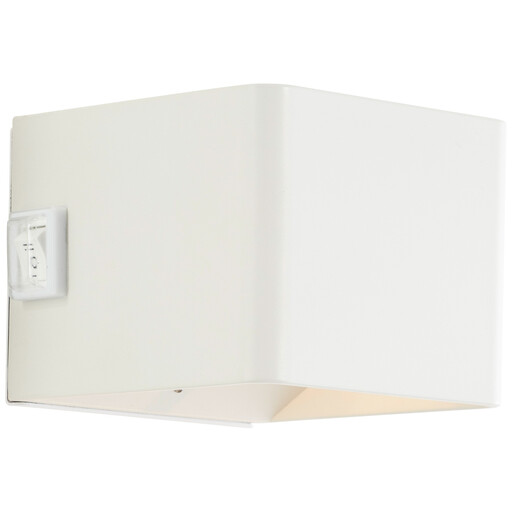
Why it suits this need: This portable wall light is ideal for smaller areas such as a patio, entrance or garden where there’s no fixed power connection. It has a rechargeable battery, USB charging, a magnet and a motion sensor.
The product details specify 300 lumens, IP44 and 3,000 Kelvin, making it easier to assess the brightness, protection rating and colour temperature before you buy.
Rechargeable battery, USB cable, magnetic mounting and built-in motion sensor; IP44 protection for the intended outdoor setting.
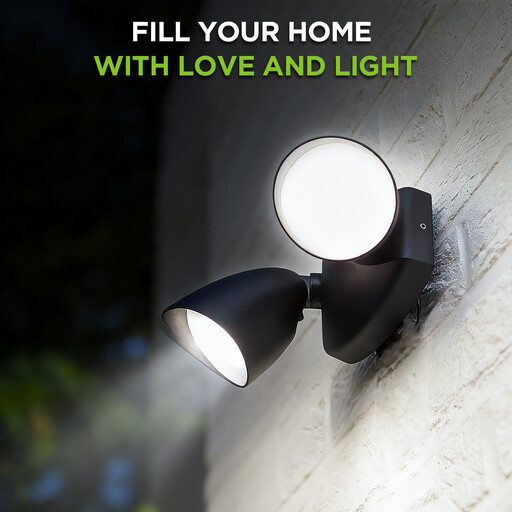
Why it suits this need: This mains-powered LED floodlight has two heads and is designed to illuminate larger areas such as a courtyard, garden, patio or garage.
The specifications state 1,800 lumens, 20 watts and 4,000 Kelvin. This lets you compare light output and energy use objectively, rather than relying on vague claims about brightness.
Two light heads, 1,800 lumens and neutral white light at 4,000 Kelvin; designed for outdoor wall mounting.
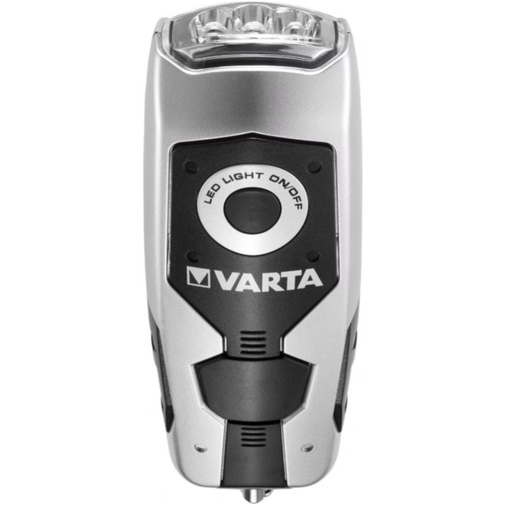
Why it suits this need: This portable lamp is aimed at campers, motorists and households looking to keep battery-free emergency lighting in the garage or car, or have it ready for a power cut.
It’s powered by a built-in hand crank, so you don’t need disposable batteries. You will, however, need to crank the lamp properly before use.
Dynamo-powered, so no batteries are required; LED light, impact-resistant ABS plastic housing and splash-resistant design according to the product description.
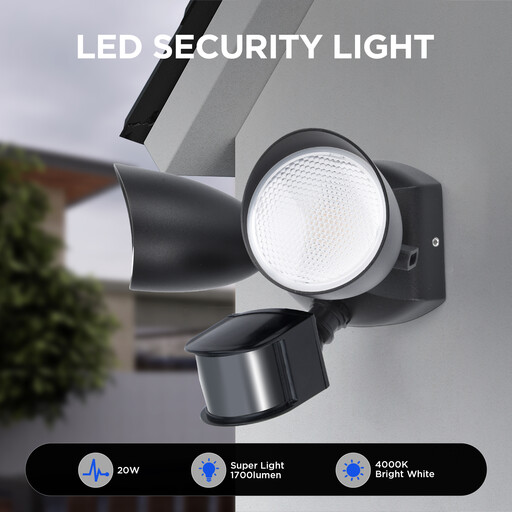
Why it suits this need: This outdoor light has a motion sensor and twin-head design, making it a good option if you want to illuminate a larger wall or courtyard with neutral white LED light.
The product name specifies 1,700 lumens, 20 watts and 4,000 Kelvin. Before installation, also check the full details of the sensor and IP rating.
Built-in LED technology, two light heads and 1,700 lumens of neutral white light at 4,000 Kelvin.
We’ve put together a complete, regularly updated list of products that meet these strict selection criteria and fully comply with the safety regulations in force in the EU.
The right height depends on the sensor angle, detection range and installation location. The light should illuminate the entrance or path without shining directly into people’s eyes. Always follow the manufacturer’s installation instructions, and make sure a fixed-wiring connection is carried out by a qualified professional.
Its lifespan depends on the LED module, power supply, housing, temperature, moisture and switching cycles. A specific figure from the manufacturer is more useful than a general marketing claim. With built-in LEDs, you often can’t replace the light source separately, so check this before you buy.
A mains-powered light incurs electricity costs for every hour it’s on, but doesn’t need regular charging. A rechargeable light doesn’t need a wall connection, but has a limited run time and needs to be recharged. A mains connection is often more practical for a permanent entrance light, while a portable model can be useful in rented accommodation, for camping or in an emergency.