For a regular tabletop setup featuring whole loaves or cut slices, an adjustable, dimmable bi-colour panel is a sensible starting point. If you shoot in different locations, a compact battery-powered panel may be more practical; RGB is most useful if you also want to create colourful moods in your images. Only compare light readings taken at the same distance, and check whether a diffuser, stand, power supply or battery is included with the version you choose.
Who is an LED panel suitable for?
Bakers with a tabletop setup
If you regularly photograph whole loaves and cut slices, positioning your light carefully helps you take the crust, shape and shadows into account in your composition. Adobe Lightroom Academy and Rollei both cover lighting as part of food photography.
Photographers who care about colour accuracy
If you photograph bread for product or recipe images, you’ll want to assess the colour temperature and colour rendering of the specific panel. Aputure and NEEWER provide technical specifications for individual models.
Mobile food creators
If you set up small bread scenes in different rooms, you’ll need to match the size, mounting and power supply to the framing you want. Godox and Ulanzi describe compact lights and models designed for product photography.
What should you look for when buying?
First, decide how you want the crust and crumb to look in your images. Then estimate how much light you’ll need based on the size of your subject and the distance from the camera. Finally, check that you can set up the complete kit in your chosen locations.
Larger bi-colour panel
Suitable if: you photograph whole loaves or several slices on a fixed tabletop and want to adjust the white light to suit your setup.
Consider: The panel needs space and a suitable mount. If you’re using battery power, you may also need to buy compatible batteries.
Compact bi-colour battery panel
Suitable if: you often change shooting locations and usually light a single loaf or a smaller area.
Consider: Check comparable light specifications or test it with your setup to make sure there’s enough light for a larger scene.
RGB panel
Suitable if: as well as white light, you want to light colourful backgrounds or other creative subjects.
Consider: The extra colour modes don’t replace directional white light or the use of light-shaping tools in your setup.
| What matters |
What to look for |
Who is it important to? |
| Crust and texture |
Consider side lighting, as well as suitable dimming and diffusion. |
If I want to show the crust and cut surface in detail, I look for lighting that doesn’t eliminate the shadows completely. Around 36% of consumers prioritise showing texture. |
| Bread colours |
Check the colour temperature range and model-specific colour rendering specifications; adjust the white balance to suit the light you’re using. |
If I want the crumb and crust to look as true to life as possible under artificial light, I want to be able to assess the colour of the light before buying. Around 29% of consumers prioritise how accurately bread colours are rendered. |
| Light output for your setup |
Only compare lux figures taken at the same distance, and take the light modifiers used into account. |
If I want to light a larger setup or shoot from a particular distance, the light output needs to suit my framing. Around 21% of consumers prioritise having enough light for the size of their setup. |
| Portability and accessories |
Check the power supply, mounting options and what’s included with the exact version you’re buying. |
If I move my light between the kitchen, shop and a small set, I want to be able to set it up appropriately wherever I am. Around 14% of consumers prioritise portability and having everything they need for a complete setup. |
Common buying mistakes
-
Comparing lux figures without checking the measurement distance
Manufacturer specifications may refer to different distances. Readings taken at 1 m and 0.5 m can’t be compared directly for brightness.
Only compare figures taken at the same distance, and take colour temperature and light modifiers into account.
-
Assuming a panel comes with a complete lighting kit
The NEEWER NL660 packages differ in whether they include a stand; according to the manufacturer, the NP-F batteries mentioned are not included.
Check what’s included with the specific version. Depending on your setup, you may need to buy a stand or compatible batteries separately.
-
Judging compact and larger panels by their features alone
A small battery-powered light and a larger panel for a tabletop setup are designed for different ways of working. Without comparable testing conditions, you can’t tell from the specifications alone whether a light will suit a larger bread scene.
Start by considering the size of your subject, shooting distance and the space available.
Brands and model ranges to consider
amaran
The P60 range includes the P60x bi-colour panel and the P60c RGBWW panel, offering different options for white light and colour.
- Aputure gives an average reading of 5,070 lx at 5,600 K from a distance of 1 m for the P60x.
- This figure applies under the manufacturer’s test conditions and, by itself, doesn’t tell you how a particular bread photo will turn out. Factor in active cooling and setup requirements when planning your shoot.
NEEWER
According to the manufacturer, the NL660 is a bi-colour panel that can run on mains power or optional NP-F batteries.
- NEEWER gives a colour temperature range of 3,200–5,600 K and CRI ≥96 for the NL660.
- According to the manufacturer, NP-F batteries are not included; a stand is only included with the package version specified as having one.
Godox
The manual for the LEDP260C describes a bi-colour panel suitable for still life and product photography, among other uses.
- Godox gives a range of 3,300–5,600 K and a CRI of over 95.
- The manual gives the illuminance at 0.5 m and lists the compatible NP-F970 battery as sold separately. Readings taken at other distances aren’t directly comparable.
Rollei
The LUMIS Panel 600 RGB combines adjustable white light with colour modes for more creative shots.
- For this model, Rollei gives a range of 2,500–9,000 K and says it can run on batteries.
- Batteries aren’t included. RGB features alone don’t guarantee more accurate bread colours.
Ulanzi
The VIJIM VL120 Bi-Color is a compact light for small setups in changing locations.
- For this bi-colour version, Ulanzi gives a range of 3,200–6,500 K, CRI 95+ and 3,100 mAh.
- This version is different from the separately available VL120 RGB. These specifications don’t tell you how much light is available for a larger bread scene.
LED lights for photography at Joybuy
The following Joybuy products are compact LED lights for photography and video, including RGB models for changing the mood of your lighting. For bread photography, consider your lighting direction and how you shape the light for your own setup.
 No image available
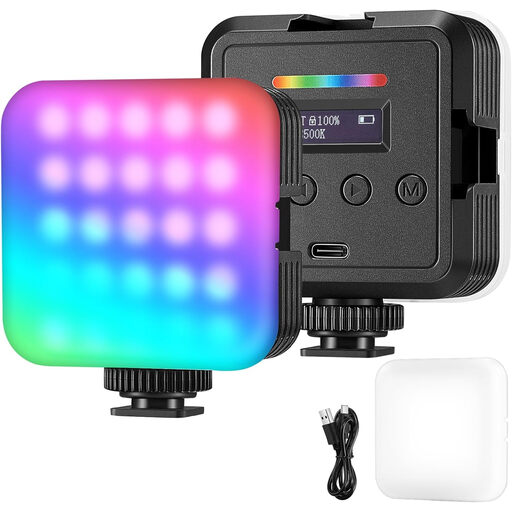
RGB LED camera light for photo and video
This compact light is worth considering for mobile bread photography if you want to change the mood of the lighting at your shooting location.
Features include RGB, white and warm light modes, adjustable brightness and colour temperature, and operation via the built-in battery or USB.
View at Joybuy
 No image available
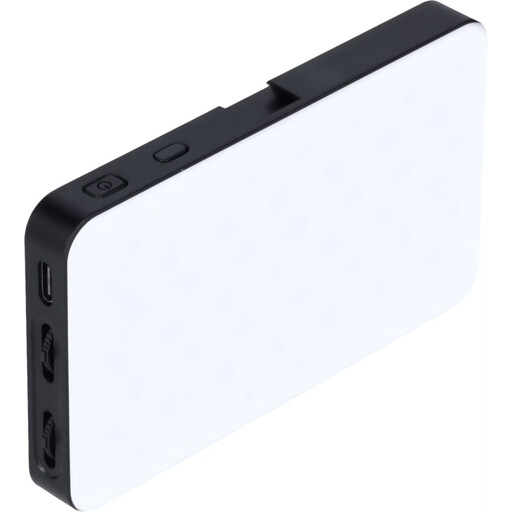
Rollei LUX Compact RGB LED Light 8W
This model is a compact option with a built-in battery, making it suitable for shooting in different locations.
Specifications include 8 W, 2,500–9,000 K, CRI/TLCI 98+ and a weight of 125 g. The details also mention adjustable brightness.
Protect it from moisture, direct sunlight and extreme temperatures; use a suitable USB power adapter for charging.
View at Joybuy
 No image available
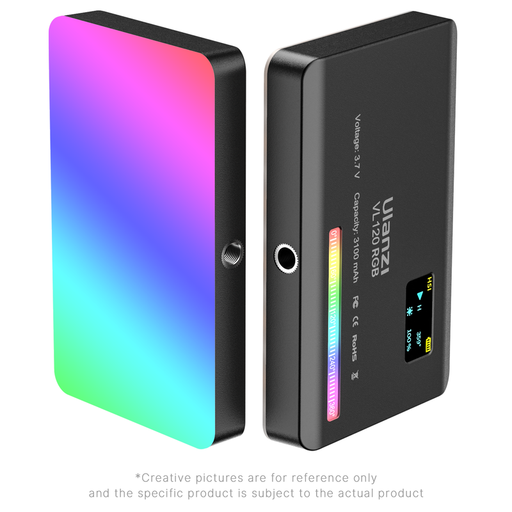
Ulanzi VL120RGB LED light, black
If you want to experiment with different light colours in your bread photography, this RGB model could be a compact addition to a mobile setup.
Features include adjustable brightness and colour temperature, RGB colours and a built-in battery. Product guides mention a silicone diffuser and a cold shoe adapter; check whether both are included with the version you choose.
Don’t use it in wet or very humid conditions, and don’t look directly at the LEDs when they’re at full brightness.
View at Joybuy
Frequently asked questions
Do I need RGB lighting for bread photography?
No. For a white-light setup, the direction, adjustability and shaping of the light are the key things to consider first. An RGB panel is an extra option if you want to create colourful moods in your images.
How do I get started with just one panel?
Start by shining the light from the side onto the bread and its cut surface, then look at the shadows. Adjust the distance, angle and, if needed, diffusion before deciding whether you need another light for your setup.
What should I know about power and care?
Check which adapter or battery type is compatible with the specific model, and keep cables out of walkways. Don’t use damaged cables, and follow the safety and cleaning instructions in the manual for the model you buy.
Are a stand and battery automatically included when I buy online?
No. For example, NEEWER offers the NL660 in packages with and without a stand; compatible NP-F batteries aren’t included. The details for the specific version you order are what matter.
What are my return rights when buying online in Germany?
In Germany, consumers generally have a 14-day right to cancel a contract made online. The Verbraucherzentrale notes that the period usually starts when the contract is concluded or the goods are received; possible exceptions and the circumstances of the specific purchase should also be taken into account.


