Photographers using window light
If you already photograph your bowls by a window, you may only want to brighten the shadow side while keeping the existing mood of the light.


If your window is already providing the main light, a gentle fill on the shadow side is often all you need. A panel is most useful when you want more control over brightness and consistency. Choose the light’s size, adjustability, power supply and accessories to suit your table and shooting routine. A mini light is easier to reposition, but won’t necessarily provide the same coverage as a larger panel.
If you already photograph your bowls by a window, you may only want to brighten the shadow side while keeping the existing mood of the light.
If you want food to look as consistent as possible across multiple shots, adjustability and the ability to manage changing daylight are important factors to consider.
When space is limited or you often rearrange your setup, the light’s size, mounting options and power supply all affect how easily you can position it.
Let the window remain your main light wherever possible, and choose an additional light to suit your space, the fill you want and the shots you take regularly.
| What you need | What to check before buying | Who will find this most important? |
|---|---|---|
| Gentle fill light | Light size, diffusion and dimming; check whether you can position the light beside your setup. | If I want to keep the natural pattern of the shadows and brighten only the darker side, I need an additional light that can be adjusted subtly. Around 40% of consumers put soft fill light first. |
| Colour temperature and colour rendering | Check the adjustable colour temperature range and the colour rendering values specified for that exact model. | If the daylight changes and I want food to look similar across several pictures, I look for a light colour that I can adjust to match. Around 30% of consumers prioritise colour matching. |
| Consistent brightness | Compare illuminance only at the same distance and setting. Also check whether the power adapter, stand and batteries you need are included. | If I regularly shoot using the same setup, I want to control the extra brightness as I compose the shot and be able to repeat my settings. Around 20% of consumers say this is their main concern. |
| Space and power supply | Check the dimensions and mounting options, as well as battery and mains operation, and confirm exactly what’s included. | If my table has limited space or I often move the light, a compact option is easier to fit in. Around 10% of consumers put space requirements and portability first. |
The Kelvin range alone doesn’t tell you how large the area lit on your subject will be. So, a small light can’t be considered equivalent to a larger panel just because their listed colour temperature ranges are similar.
Compare the light’s size, diffusion, mounting options and intended distance separately from its colour temperature.
Depending on your setup, you may need a suitable mount, a stand or extra batteries.
Different versions of the same panel may come with different stands and power supplies. NEEWER lists NL660 versions both with and without a stand; according to the manufacturer, NP-F batteries are not included.
Before buying, check the exact version name and the list of items in the box. Rollei also lists batteries for the LUMIS LED Panel Bi-Color as optional.
Ulanzi sells a VL49 RGB version with adjustable colour temperature, as well as a differently specified VL49 Mini LED light with a fixed colour temperature. The shortened name alone doesn’t reliably distinguish between these versions.
Check the full model name, light specifications and items included before comparing versions.
The LUMIS LED Panel Bi-Color provides a larger, adjustable light source for a permanent tabletop setup.
The NL660 is a bi-colour panel with a diffuser. The version you choose also matters.
The P260C Pro is a larger bi-colour panel with a diffuser and several power options.
The VL49 RGB is a small, battery-powered light for targeted fill in tight spaces.
The P60x is a larger bi-colour panel, and amaran lists a softbox as included.
This selection is for small setups that are often rearranged, where a compact light for targeted fill is a good fit.
 No image available
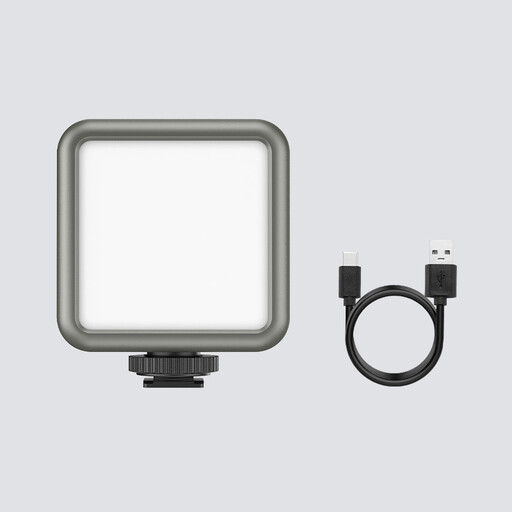
For a tight setup that’s often rearranged, this compact RGB light could work well as a targeted fill light.
Features listed in the product title: dimmable, 2.000-mAh battery and magnets on the back. Its small light source limits its use as a large, soft light source.
Before buying, check the exact version and the details in the specific product listing.
No, position it according to the window light and the fill you want. If the window is lighting your subject from the side, you can gently direct the additional light towards the darker side and check the effect before taking the picture. Diffusion can make the light appear softer.
No, what’s included depends on the model and version. NEEWER offers NL660 versions both with and without a stand, and lists NP-F batteries as not included; Rollei describes batteries for the LUMIS LED Panel Bi-Color as optional. So, check the list of items included with the version you’ve selected.
For products covered by relevant EU harmonisation rules that require CE marking, the manufacturer must meet the applicable requirements and mark the product accordingly. Electrical equipment is also subject to the applicable WEEE marking rules and German registration requirements for the responsible manufacturer or authorised representative. The European Union and stiftung elektro-altgeräte register explain these requirements; check what applies to the specific model and listing.
Your statutory rights to remedies from the seller are separate from any voluntary guarantee. If a product is faulty, the first step may be having it repaired or receiving a replacement. Online orders generally come with a 14-day right of withdrawal from the date you receive the goods, subject to legal exceptions. Verbraucherzentrale explains these rights. Withdrawing because you’ve changed your mind isn’t the same as making a complaint about a fault.
Electrical equipment must not go in unsorted waste; it should be taken to the appropriate separate collection point. Also follow the product-specific instructions for removing and disposing of the battery. The European Union explains the meaning of the crossed-out wheelie bin symbol.