What should you look for when buying?
You can control reflections on shiny surfaces by changing the light’s position and using diffusion, while side lighting can bring out the embossing. Makrofotografie-Anleitung.de and Nikon USA highlight these points in their guidance on photographing coins and jewellery, as well as on light diffusion.
| What matters |
What to check when buying |
Who it matters to |
| Controlling reflections |
Adjustable positioning and the option to use diffusion |
If I don’t want to see the window or camera as bright reflections on the shiny medal, I need to be able to position the light and diffuser precisely. Around 33% of consumers put controlling distracting reflections first. |
| Showing the embossing |
Tiltable angle and positioning separately from the camera |
If I want to show fine raised and recessed details, I need adjustable side lighting and the ability to assess the relief shadows. For around 27% of consumers, showing the embossing is the main priority. |
| Assessing the metal’s colour |
Adjustable colour temperature range and white balance at the shooting location |
If I want to take comparable photos of metal in changing window light, I pay attention to how the LED and daylight work together. Around 20% of consumers prioritise consistent colour reproduction. |
| Setting up on a small table |
Dimensions, mounting options and battery or mains power |
If there’s little room alongside the camera and medal, the light needs to be easy to mount and power for my setup. For around 20% of consumers, a space-saving setup is the most important consideration. |
Joybuy product selection
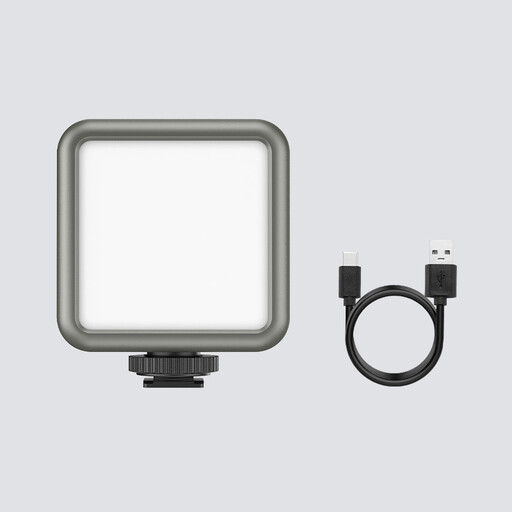
A Joybuy product option for macro and product photography, with adjustable light colour and a battery.
 No image available
Ulanzi VL49 RGB LED video light
The product title lists macro and product photography as suitable uses. For photographing medals by a window, check whether you can position the light to suit your subject and the side lighting you want.
The product title lists RGB, a dimmable setting, 2500–9500 K, a 2000-mAh battery and a magnet on the back.
Check the mounting and power options in the specific offer, as well as the applicable German conformity requirements, including CE marking where required by the relevant regulations.
Joybuy
Frequently asked questions
How do I get started with an LED panel by a window?
First, take a photo using only the window light. Then position the panel to the side of the medal and adjust the angle gradually, watching the relief shadows and reflections as you go. If you get harsh reflections, try adding diffusion.
What colour temperature should I use?
There’s no single Kelvin setting that suits every window, as daylight changes. Match the LED to the light at your shooting location and, where possible, use a white or grey reference to set the white balance for more consistent photos.
Does a photography panel need an EU energy label?
Not automatically as a complete light fitting: according to the European Commission, energy labelling requirements apply to covered light sources. You’ll need to check separately whether they apply to the light source in a particular panel.
What happens in Germany if the product develops a fault, and how should it be disposed of?
For a faulty product, your statutory rights are against the seller. The Verbraucherzentrale states that new goods are generally covered for two years and notes that additional rules apply to purchases made from 31 July 2026. Electrical waste must not go in household rubbish. The Umweltbundesamt recommends removing easily detachable batteries and handing them in separately when returning the product.
Is a CE mark in the product description enough to prove the product is safe?
No. CE marking isn’t an independent quality or safety mark, and whether it’s required depends on the relevant EU regulations. The Bundesnetzagentur also lists product identification and correct manufacturer details as points to check. For the specific offer, look for any required German instructions, including safety warnings.


