What should you look for when buying?
First, check how the panel will be mounted and positioned alongside your camera and hands. Then consider whether diffusion, colour control and power suit your paper size and planned recording time.
The percentages refer to consumers choosing an LED panel for paper-folding videos at a small desk. Each row represents the buyer’s main concern.
| Priority |
What to check when buying |
Who is this especially important to? |
| Fold lines and hand shadows |
Check for a diffuser or softbox and whether you can position the light to the side, above the work area; make a test recording with both hands in shot. |
When both my hands are in shot as I fold, I want to see the crease without a hard shadow obscuring the next step. Consumers who care most about fold lines and hand shadows are likely to account for around 29%. |
| Space and mounting |
Check the desk edge, available surface area, mount and cable route. If you’re using a clamp, also check that it fits the edge and leaves room for the camera to move. |
When there’s hardly any space beside my overhead camera, I need a secure mount that keeps the folding area clear. Consumers whose main concern is space and mounting are likely to account for around 29%. |
| Paper colours and banding |
Compare the white-light settings and model-specific colour-rendering information; film with your own camera using the planned brightness, frame rate and shutter settings. |
If I want the paper to look consistently white in my recordings, I also want to rule out visible banding in the finished video. Consumers who prioritise colour and a band-free image are likely to account for around 24%. |
| Power for your recording time |
Check whether it runs on battery or mains power, the USB-C power required, what’s included and the conditions attached to any stated runtime. |
If I record for a long time or often change locations, the power supply needs to suit my recording time and setup. Consumers whose main concern is power and recording time are likely to account for around 18%. |
Joybuy products for mobile video recording
The following models are compact video lights for mobile recording and close-ups. Before using one at your folding workspace, check that the light source, mount and camera setup suit your paper size.
 No image available
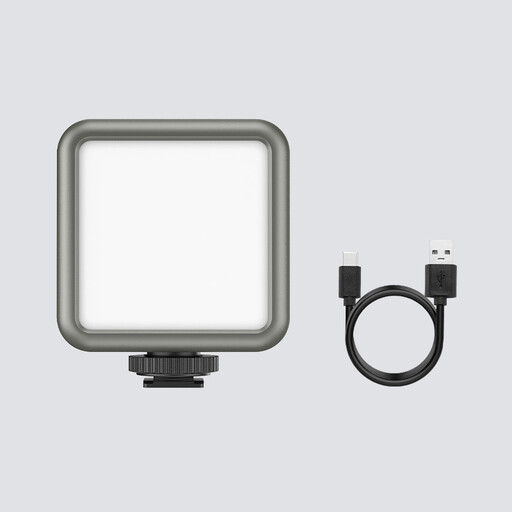
Ulanzi VL49 LED video light, 2000 mAh
This compact light could work for mobile close-ups; check whether it’s powerful enough to be your main light for your paper size.
The title specifies a 2000 mAh battery and 2500–9500 K. The description says the light is dimmable.
The magnets on the back are designed for metal surfaces.
View at Joybuy
 No image available
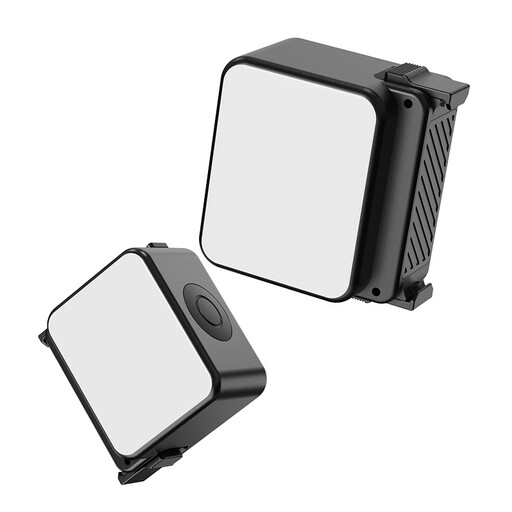
Ulanzi LM18 mini video light, 500 mAh
This compact light is described as suitable for mobile recording with the listed DJI Osmo Action cameras. Check that it’s compatible with your camera model.
The title specifies a 500 mAh battery and compatibility with DJI Osmo Action 3/4/5/5 Pro.
For a larger sheet of paper, test in advance whether the light source is large enough for your framing.
View at Joybuy
Frequently asked questions
How should I position the light and camera for a folding tutorial?
Keep the camera steady above the paper and check the entire frame first. Angle the panel towards the work surface from the side, then try folding with both hands in shot. The fold line should be visible without a hard shadow from your hands obscuring the next step.
Is a high CRI enough to make white paper look right and prevent flicker in the video?
No. A CRI rating tells you about colour rendering; it doesn’t prove that the light won’t cause banding. Match your light and white balance, then check a short test clip using the camera and dimmer settings you actually plan to use.
What should I know about USB-C power and battery life?
Check the required power supply output and what’s included with the specific model. According to Elgato’s technical specifications, the brightness you can achieve with the Elgato Key Light Air MK.2 depends on the USB-C power source. SmallRig says the P96’s runtime varies with use and surroundings; use and charge the battery according to the instructions.
What should I know about faults and disposal in Germany?
When you buy from a business seller, the statutory guarantee lasts at least two years from the date you receive the goods. Your Europe, the European Union’s consumer portal, explains this minimum period. Waste electrical equipment should be taken to authorised collection points, such as municipal recycling centres. Retailers’ take-back obligations depend, among other things, on the retailer and the size of the equipment.
How can I check that a product has the information required in Germany?
For market surveillance, the Bundesnetzagentur (Federal Network Agency) lists CE marking, clear product and manufacturer details, and instructions in German among the points to check. The European Union says that by applying the CE marking, the manufacturer declares that the product meets the relevant EU requirements. The mark isn’t an independent quality seal or proof that the video light is flicker-free.


