Photographers dealing with deep shadows
If you photograph tableware near a window, first check whether a reflector can bounce enough of the existing light onto the shadow side. Canon Europe recommends indirect window light for food photography.


If soft window light is already giving you the look you want and only the opposite side is too dark, try a white reflector first. A dimmable LED panel is a better choice if you need controllable extra light or consistent results in changing daylight. For larger tabletop scenes, consider the light’s size, how you can shape it and its power supply: a small camera light won’t necessarily replace a larger panel.
If you photograph tableware near a window, first check whether a reflector can bounce enough of the existing light onto the shadow side. Canon Europe recommends indirect window light for food photography.
If you want to photograph glazes, whites and food in changing window light, compare the adjustable colour temperature and documented colour rendering of the specific model. Nikon USA explains that the colour and intensity of daylight change throughout the day.
For several place settings or repeatable shots, the size of the light, light modifiers, mounting options and power supply are important factors. Manufacturer specifications for models such as the Neewer NL660, amaran P60x and Godox LEDP260C show the different features available.
First decide whether you want to bounce existing window light back onto your subject or add a separate, adjustable light source.
| What you need | What to check before buying | Who should pay particular attention |
|---|---|---|
| Control shadows | Dimming and positioning options; a diffuser if needed. You can try placing a white reflector opposite the window first. | If I only want to brighten the side facing away from the window, I want to retain contrast without overpowering the window light. Shoppers whose main priority is controlling shadows are likely to account for around 40%. |
| Match the colour of the light | Check the adjustable Kelvin range and colour rendering of the exact model; test the white balance with your own setup. | In changing daylight, I want to be able to photograph glazes and whites with a matching light colour, without assuming the lights will automatically match. Shoppers prioritising colour accuracy are likely to account for around 30%. |
| Light a larger tabletop scene | Check the light’s size, mounting options, power supply and included light modifiers. Consider lux figures only alongside the measuring distance and colour temperature setting. | If I photograph several place settings or the same tabletop scene repeatedly, I need a setup I can position appropriately and recreate. Shoppers whose main priority is a larger, repeatable setup are likely to account for around 20%. |
| Add light on the go | Check the battery type, charging port and compatible mount; also make sure the illuminated area is large enough for your scene. | On a small table, I want to be able to move the light around without having to plan for a permanent mains-powered setup. Shoppers whose main priority is portability are likely to account for around 10%. |
Manufacturer figures for the amaran P60x and Godox LEDP260C are based on different measuring distances, so they don’t provide a direct comparison of brightness.
Only compare figures taken under similar measuring conditions, and check whether the panel will light your tabletop area.
With the Neewer NL660, whether a stand is included depends on the variant; according to the manufacturer, NP-F batteries are not included.
Before buying, check the exact variant on offer and the listed contents.
Depending on the variant, you may need to buy a stand or batteries separately. Check whether the parts included are enough to get your planned setup ready to use.
The compact design of the Ulanzi VL81 and SmallRig P96 doesn’t prove that either light can adequately illuminate a larger group of tableware.
Check that the light’s coverage and mounting options suit your actual tabletop scene.
The NL660 is a larger bi-colour panel supplied with a diffuser and barn doors.
The P60x is a bi-colour panel supplied with a softbox and grid, according to the listed contents.
According to the manufacturer’s manual, the LEDP260C is also designed for still-life and product photography.
The VL81 is a small, battery-powered light for a portable tabletop setup.
The P96 is a compact option for attaching a light to your camera or a compatible mount.
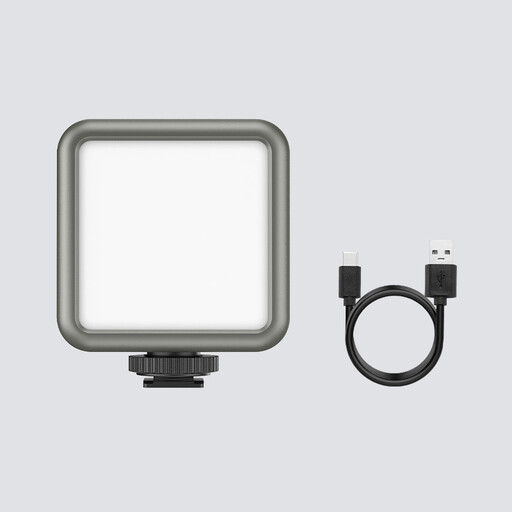
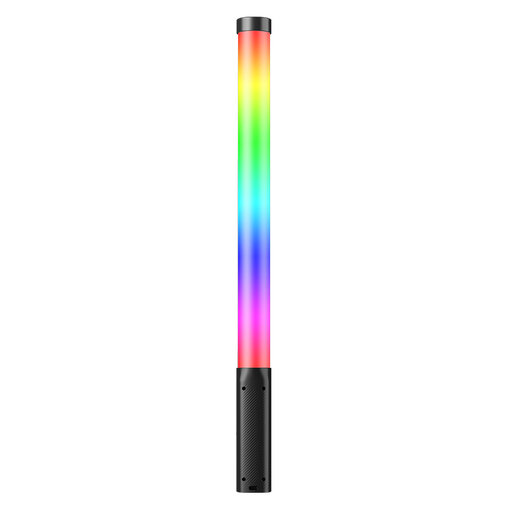
This selection features compact, portable fill lights for targeted illumination. The Ulanzi VL119 is a handheld light wand, not a panel.
 No image available
This compact light is an option if you want to illuminate a small area precisely for macro or product photography.
Listed in the product title: 2500–9500 K, built-in 2000-mAh battery and magnetic back.
 No image available
This light wand is worth considering if you need a portable light source for a limited area and don’t need a panel.
Listed in the product title: 2500–9000 K, 360 lux at 0.5 m and a built-in 3300-mAh battery. The product is described as a handheld light wand, not a panel.
No. In soft window light, a white reflector placed opposite the window can help brighten the shadows. A dimmable panel is an option if you need extra, adjustable light or want consistent results when photographing in changing daylight.
Start with indirect window light, then place a reflector or dimmed panel on the darker side of the tableware. Adjust its position and brightness until you get the shadow detail you want. If the extra light looks too harsh, try using a diffuser.
It depends on the model and variant. For the Neewer NL660, the manufacturer lists a power supply but no NP-F batteries; a stand is listed only for the relevant variant. The Godox manual specifies NP-F970 batteries, which you’ll need to buy separately for battery-powered use.
The statutory rights you have against the seller are different from a voluntary guarantee, as explained by the Verbraucherzentrale. Many online purchases are generally covered by a 14-day right to cancel; when the period starts and which exceptions apply depend on the circumstances. Your statutory rights for faulty goods should be considered separately.
No. A CE mark is required only when the harmonised EU rules applicable to that specific product require it; it isn’t an independent test. The Bundesnetzagentur lists labelling and manufacturer information among the aspects covered by market surveillance of electrical and electronic products.