If window light is already bringing out the shape of your sculpture, a reflector is often all you need to lift the shadows slightly. A dimmable LED panel is useful when you want more precise, repeatable control. Position the extra light to one side and adjust it until surface details are visible without losing the sense of form. Shopify Germany and Orbitvu explain how the direction of light and the resulting shadows affect the impression of depth and texture.
Who is this lighting suitable for?
Photographing sculptures with deep shadows
If you’re using a window as your main light source, you can use a reflector or carefully adjusted extra light to brighten the shadow side while keeping the shape visible. Shopify Germany and Orbitvu explain how window light and the direction of the light affect the result.
Recording colour and surface detail
For painted or textured pieces, it’s worth considering light colour, white balance and reflections together. Nikon USA explains how to set the white balance using a neutral reference; Orbitvu highlights how the direction of light affects texture and depth.
Photographing on a small table
If there’s little room around your subject and camera, plan the panel’s dimensions, mounting and power supply alongside where you want the light to go. Shopify Germany recommends setting up close to a large window.
What should you look for when buying?
Window light with a reflector
A good fit if: You only want to lift the shadows slightly on a stationary sculpture and the window light is sufficient.
The trade-off: A reflector needs no power and won’t add a second artificial light colour, but its effect depends on the direction and strength of the existing light.
Compact bi-colour panel
A good fit if: You’re short on table space and want to lift the shadows on a small sculpture precisely.
The trade-off: Check the mounting and power source; diffused fill light can make fine surface details look less three-dimensional.
Larger panel with diffuser
A good fit if: You want to position the fill light consistently for different views. NEEWER lists a diffuser and a rotating bracket for the NL660.
The trade-off: Allow room for the panel and mount. With the NL660, whether a stand is included depends on the version you choose, and the NP-F battery must be purchased separately.
Panel with softbox and grid
A good fit if: You want more control over the light alongside your window set-up; the manufacturer lists a softbox and grid as included with the amaran P60x.
The trade-off: The panel and light modifiers take up more space; suitability depends on the distance and size of the sculpture.
| What you need |
What to check when buying |
Who may find it most important |
| Lift the shadows |
Dimming and side positioning; try a reflector first. |
If I want to lift the shadows without losing the three-dimensional effect, I’ll check the brightness control and light angle. Around 36% of consumers put shadow control first. |
| Record colour and surface detail |
Check the adjustable colour temperature range and colour rendering index; check the white balance against a neutral reference. |
If I want the paint, material and reflections to remain true to life, I’ll assess the light on the actual subject. Around 29% of consumers put colour and surface rendering first. |
| Set up in a small space |
Check the dimensions, thread or mount, required power source and what’s included. |
If there’s little space beside the camera and sculpture, I’ll need to fit the panel and mount into my set-up. Around 21% of consumers first consider the space available. |
| Repeat your shots |
Check that the panel can be positioned securely and that the brightness and colour temperature controls are easy to access; check which light modifiers are included. |
If I want consistent lighting across several views, I’ll need to be able to recreate the position and settings. Around 14% of consumers prioritise a repeatable set-up. |
Common buying and set-up mistakes
-
Comparing lux figures without checking the measuring distance
Illuminance is measured at different distances, so a figure at 0.3 m cannot be compared directly with one at 1 m.
Only compare figures measured at the same distance and with comparable settings, and check the light on the actual subject. SmallRig gives a distance of 0.3 m for the P200; amaran provides photometric figures for specified distances.
-
Assuming brighter fill light is always better
Fill light that’s too strong or coming from the front can weaken the shadows that give a sculpture depth. Orbitvu explains how the direction of light affects texture and depth.
Start with window light and a reflector. Add a panel on the shadow side, then adjust its brightness and angle to achieve the look you want.
-
Assuming a panel listing includes everything you need
Models and what’s included can vary. Before buying, check the exact version, mounting options and power supply.
Depending on the version, you may need to buy a stand, a compatible NP-F battery or a suitable power source separately.
Brands and models to help you choose
NEEWER
The NL660 is a larger bi-colour panel for adjustable fill light. The EU product page lists one version without a stand and another with a stand.
- NEEWER lists a diffuser, rotating bracket, 3,200–5,600 K and CRI ≥96.
- The NP-F battery isn’t included; check which stand comes with the version you choose.
Godox
The Godox manual describes the LEDP260C as suitable for uses including macro and product photography.
- The manual lists 3,300–5,600 K, a colour rendering index above 95, and mains or NP-F970 battery power.
- According to the manual, at intermediate colour temperature settings the dimming range starts at 25% rather than 10%; check that you’re looking at the same model version and what’s included.
SmallRig
The P200 Beauty Panel Universal is a compact option for still-life photography in tight spaces.
- For the Universal version 4066, SmallRig lists dimensions of 254 × 174 × 16 mm, a 1/4-inch-20 thread, USB-C input, an NP-F connection and 2,500–6,500 K.
- The published illuminance figure is measured at 0.3 m. Don’t assume figures for other versions apply to the Universal version without checking.
amaran
The P60x is a bi-colour panel for set-ups where you want to shape the light using a softbox and grid.
- The manufacturer lists 3,200–6,500 K, with a softbox and grid included.
- The photometric figures apply to the specified distances and settings, so they can’t be compared directly with figures for other models.
Joybuy products
The Joybuy products below cover different types of adjustable extra lighting, including COB lights, ring lights and compact video lights. They aren’t all LED panels, so check the design, how the light is directed and the mounting options for your window set-up.
 No image available
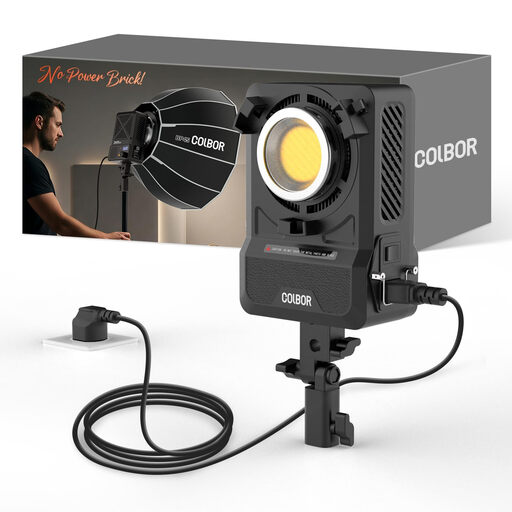
COLBOR 200W bi-colour COB studio light with Bowens mount
An option if you want to add a COB light to a studio set-up; it isn’t an LED panel.
The product title lists 200 W, a built-in mains adapter, 2,700–7,000 K and a Bowens mount.
View at Joybuy
 No image available
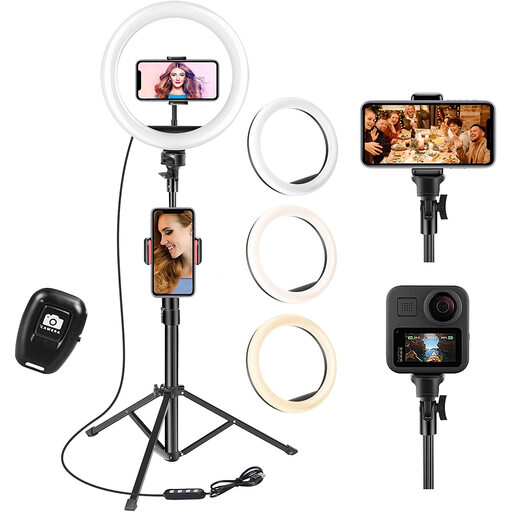
10-inch ring light with tripod and remote control
If you’re considering a ring light for your set-up, check that the circular light source and tripod suit your subject and camera position.
The product title lists a 63-inch tripod, a remote control, three colour temperatures and ten brightness levels.
View at Joybuy
 No image available
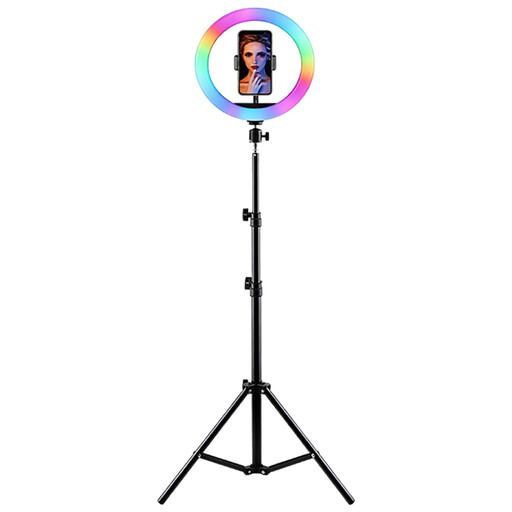
LED ring light with RGB colours and height-adjustable tripod
This ring light could be worth considering if you want to vary the colour and position of the light; check that the tripod and ring design suit your sculpture photography.
The product title lists adjustable brightness and colour temperature, RGB colours, a tilting ring and a smartphone holder.
View at Joybuy
 No image available
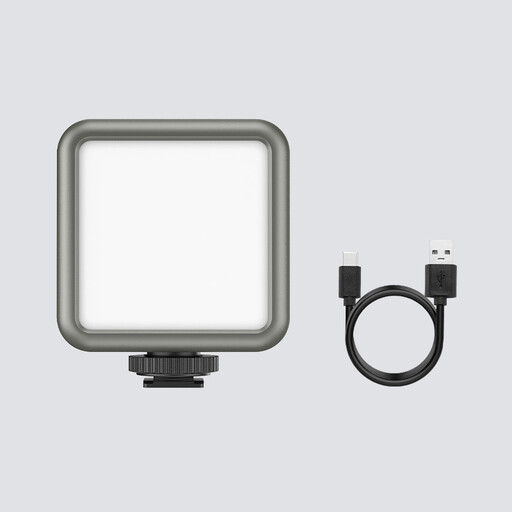
ULANZI VL49 RGB video light
This compact video light is one possible extra light source for macro and product photography, but it isn’t an LED panel.
The product title lists a built-in 2000-mAh battery, a magnetic back, dimmable RGB light and 2,500–9,500 K.
View at Joybuy
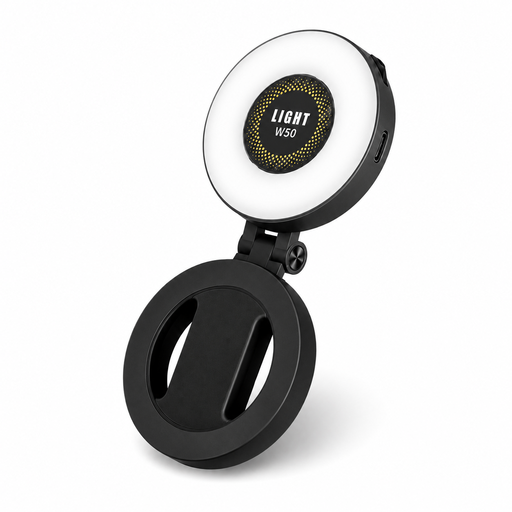 No image available
VoxorAI M28 light and mirror with magnetic attachment
This smartphone accessory is only suitable if you specifically want an integrated light with a mirror rather than a standalone light.
The product title lists a 360° LED light strip, CRI 95+, a magnetic attachment and compatibility with iPhone and Android.
View at Joybuy
Frequently asked questions
How do I get started with an LED panel by a window?
First set up the window and sculpture, then assess the shadow side; a reflector may be enough to lift it slightly. If you add a panel, start with low brightness on the shadow side and adjust the angle and distance until details remain visible without flattening the shape.
How should I deal with different light colours?
Set the panel’s adjustable colour temperature to suit your shooting set-up, and check the white balance against a neutral reference. A Kelvin reading alone won’t guarantee identical colour reproduction across every surface when you’re using mixed light.
Do I need to buy a stand, battery or power adapter separately?
It depends on the model and version. Only the specified stand version of the NEEWER NL660 includes a stand, and the manufacturer says compatible NP-F batteries aren’t included. SmallRig lists a USB-C cable as included with the P200 Universal; check what else you’ll need for your power source and mounting.
What are my rights if a panel bought from a retailer is faulty?
For a consumer purchase from a retailer, the statutory guarantee is generally at least two years from the date you receive the goods; the European Commission describes this minimum period for purchases in the EU. Online purchases also generally come with a 14-day right to cancel, subject to statutory exceptions. The right to cancel because you’ve changed your mind is separate from your rights concerning faulty goods.
What should I consider for electrical safety and disposal?
The Bundesnetzagentur lists CE marking as one aspect of market surveillance; also check the information provided by the manufacturer, the instructions and the declaration of conformity for the specific product. A CE mark is not a general quality rating. A discarded LED panel is electrical waste and must be disposed of separately, not put in household rubbish, as explained by the Umweltbundesamt.


