Photographing whole soup bowls
If you want to show the bowl, soup and white surface together, directional side or backlighting helps keep the bowl’s shape defined. Nikon USA recommends this approach to lighting for food photography.


For photographing soup bowls against a white background, side lighting — diffused when needed — matters more than a high wattage alone. If you have window light, a compact fill light may be enough; for repeat shoots without reliable daylight, a larger bi-colour panel could be a good choice, provided you have room for the panel and its mount. Nikon USA recommends directional side or backlighting for food photography. Bi-colour makes it easier to match the ambient light, but it doesn’t replace setting the camera’s white balance correctly.
If you want to show the bowl, soup and white surface together, directional side or backlighting helps keep the bowl’s shape defined. Nikon USA recommends this approach to lighting for food photography.
When photographing several dishes or shooting over multiple sessions, it’s important to match the light colour and camera white balance consistently. Canon Europe explains that white surfaces can take on a colour cast depending on the lighting.
If space is tight for your panel, camera and bowl, check the dimensions, mounting options and power supply of the specific version against your setup. Bresser and NEEWER offer compact panel models in a range of sizes and configurations.
A good choice if: window light is already illuminating the bowl and you only need to brighten the darker side on a small table.
The trade-off: A small light takes up less space, but that doesn’t mean it will light the bowl and white background evenly across the whole frame.
A good choice if: you want to photograph the bowl and its surroundings repeatedly without relying on window light, and have room for the panel and its mount.
The trade-off: It needs more room to set up. Adjustable colour temperature doesn’t guarantee neutral colours or a particular shadow shape.
A good choice if: you’re getting harsh-edged shadows or distracting highlights and have room for a light modifier.
The trade-off: The modifier makes your setup larger. Check how it affects the subject and brightness in your own setup.
Canon Europe points out that white surfaces can take on a colour cast under different lighting. So compare the panel light and camera white balance in a test shot, using the conditions you’ll actually be photographing in.
| Priority | What to check before buying | Who it matters most to |
|---|---|---|
| Shape and shadows | Check side positioning, brightness control and whether you can diffuse the light. | If I want to define the shape of the bowl and soften harsh shadows when needed, I’ll compare side lighting with diffusion or a reflector. Around 36% of consumers prioritise lighting direction. |
| Matching colours | Consider the specific model’s bi-colour range alongside the camera’s white balance. | For repeat shoots, I want the white background and soup to look consistent under comparable lighting. Around 29% of consumers prioritise colour matching. |
| Light coverage | Check the panel size and distance against the bowl and visible background in your planned frame. | If I want the bowl and white background in the same shot, I’ll check whether the light covers both areas in my setup. Around 21% of consumers focus first on getting the right light coverage. |
| Space and power | Check the dimensions, mount and power supply, and whether batteries need to be bought separately. | With a cramped or frequently changing table setup, I want to fit the panel, camera and bowl in safely and power the light appropriately. Around 14% of consumers prioritise setup and power. |
A light-output figure measured at a particular distance doesn’t tell you how evenly the bowl and background will be lit in your planned frame.
Position the light at the intended distance and assess the bowl and background together in a test shot, rather than judging the result from wattage or lux figures alone.
The panel’s light colour and your camera’s white balance also affect how white looks in the photo. Canon Europe explains that white surfaces can take on a colour cast under different lighting.
Take a test shot with a neutral reference under your planned lighting and adjust the white balance.
Mounts and power options can differ between models and what’s included in the box. The NEEWER NL-116AI is available with or without a mini tripod; Rollei lists optional batteries for the LUMIS LED Panel Bi-Color.
Check the full model name and what’s included with the specific version before planning for a mount or battery.
The BR-12B Bi-Color is a compact option for targeted fill light in a small setup.
The LUMIS LED Panel Bi-Color is designed for a setup with room for a 35 × 24 cm panel.
The P60x suits a setup where you can make room for the panel and light modifier.
The P260C Pro offers adjustable white light and several power and control options described by the manufacturer.
The PavoSlim 60B is a slim bi-colour panel for a setup using the supplied light modifiers.
The compact NL-116AI and larger NL660 offer different panel sizes for different table setups.
This selection includes a compact RGB and bi-colour light, plus a foldable tabletop photography light. They suit different small setups and shouldn’t be taken to mean that every bowl and its background will be evenly lit across a large area.
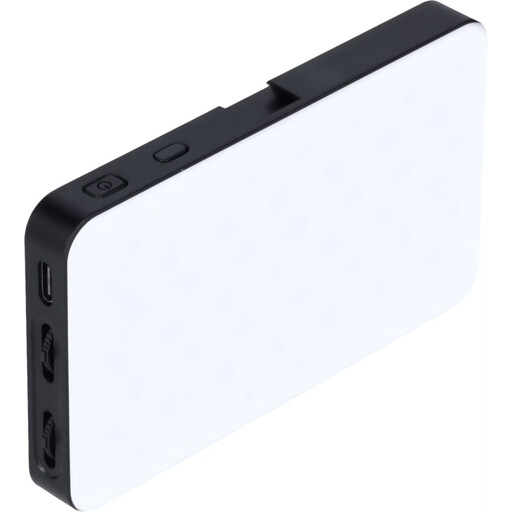 No image available
A useful compact fill light if you want to adjust the colour of the light to suit your setup.
8 W; RGB with 360 colours; bi-colour; app control.
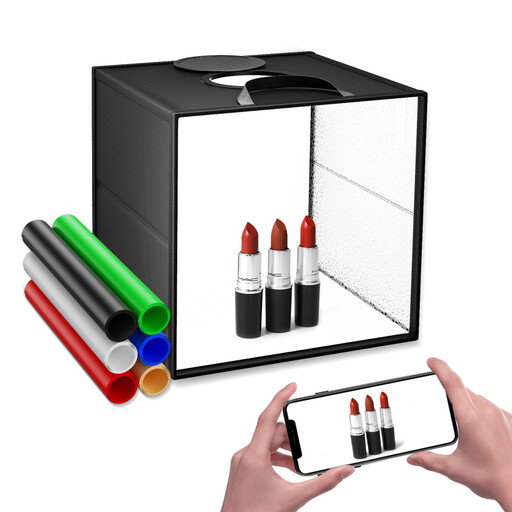 No image available
A different setup from a freely positioned panel. It’s a good fit if you want to style small still-life scenes on a table with background paper.
30 cm; 120 LEDs; 3 colour temperatures; 9 dimming levels; 6-colour background paper.
Match the panel to the other light sources and check the camera’s white balance with a neutral reference in your actual setup. Canon Europe points out that white surfaces can take on a colour cast under different lighting; the panel’s Kelvin rating alone won’t correct the photo.
Start with filtered light from the side or slightly behind. If the opposite side looks too dark, try using a white card as a reflector first, then compare the shadows in a test shot. Nikon USA recommends directional side or backlighting for food photography.
Keep liquids away from the light, power supply and connectors, and follow the instructions for the specific model. The Nanlite manual requires the PavoSlim 60B to be used in a dry, well-ventilated place with its vents unobstructed. The amaran P60x manual says to unplug it before cleaning.
CE marking is required when the harmonised EU rules applicable to a specific product call for it; it isn’t an independent quality seal. The German Federal Network Agency lists marking and manufacturer details among the aspects of market surveillance. Under section 10 of the German Electrical and Electronic Equipment Act (ElektroG), end-of-life electrical equipment must be collected separately from unsorted municipal waste.
In Germany, consumers who buy online generally have a 14-day right to cancel, starting from receipt of the goods; you need to notify the retailer that you’re cancelling. The Verbraucherzentrale recommends checking the specific contract and any applicable legal exceptions.