For photographing shiny tableware
If glazes and cutlery are reflecting light, adjustable positioning and diffusion can help you control reflections and harsh shadows. Canon Europe recommends indirect window light for soft lighting.


When you’re photographing shiny tableware, what matters most is whether you can position and diffuse the light from the side. This gives you more control over reflections and shadows, rather than relying on wattage or lux figures alone. Choose the size, mount and power supply to suit the space beside your table. If there’s enough indirect light from a window, try using it with diffusion or a reflector first.
If glazes and cutlery are reflecting light, adjustable positioning and diffusion can help you control reflections and harsh shadows. Canon Europe recommends indirect window light for soft lighting.
If you need to fit a light and mount beside a small table, or put them away regularly, check the space needed for the entire setup—not just the dimensions of the panel.
If you take photos at different times of day, adjustable colour temperature can help you match the light to your surroundings. How well it works in your images also depends on your specific setup.
A good choice if: you regularly photograph full place settings and have room beside the table for a stable mount.
The trade-off: the panel, stand and cables all take up space, so check the dimensions of the complete setup.
A good choice if: you often change your setup or want to brighten specific details and shadowed areas.
The trade-off: a small light source won’t necessarily provide the larger area of light needed for a full place setting; battery life depends on the settings you use.
A good choice if: you take photos during the day and can use suitable indirect light by the table.
The trade-off: the light depends on the daylight and time of your shoot. Canon Europe recommends positioning yourself beside a window with indirect light for softer lighting.
| Priority | What to check when buying | Who it matters most to |
|---|---|---|
| Reflections and shadows | Side positioning and diffusion; enough room for an additional diffuser. | If I want to control reflections on glaze and cutlery, managing reflections is my top priority. Around 36% of consumers say reflections and shadows matter most to them. |
| Space and mounting | The space needed for the light, stand or mount, and cables; stability in the shooting area. | If there’s very little room beside the table, I need a setup that can be positioned securely there and put away afterwards. Around 29% of consumers prioritise space and mounting. |
| Colour temperature and brightness | The adjustment range and controls for the specific model; check the white balance in your own lighting conditions. | If I take photos at different times of day, I want to be able to match the light to my surroundings. Around 21% of consumers put colour temperature and brightness first. |
| Power supply and portability | Which batteries and power supplies are included, and the runtime at the brightness you need. | If I often move the light or want to work without a mains cable, the power supply and ease of changing my shooting location matter to me. Around 14% of consumers prioritise portability and power supply. |
A brightness figure doesn’t tell you how large or soft the reflection will look on a glazed plate.
Check the diffusion and positioning options first. Only compare lux figures when the measurement distance and settings are comparable.
On a small table, your subject and lighting setup have to share limited space. The mount, stand and cables all add to the space required.
Measure the available area and check that your chosen mount can be used safely there.
Depending on the model, you may need to buy a suitable mount or stand separately.
A battery connection doesn’t automatically mean a battery comes in the box.
Check which batteries and power supplies are included with the exact model, and which connections it requires. NEEWER states that compatible NP-F batteries are not included with the NL660.
If you want to work without a mains cable, you may need to buy a compatible battery separately.
Ulanzi distinguishes the VL49 RGB from the standard VL49, which has a fixed daylight setting. On one Joybuy product page, the light’s title also conflicts with the product specifications.
Before ordering, check that the full model name matches the technical details on the product page.
The P260C Pro is a larger bi-colour panel for setups with space beside the table.
The NL660 is a bi-colour panel. A version with a stand is also available for a permanent table setup.
The P60x is a bi-colour panel you can consider when comparing colour temperature and this model’s technical specifications.
The P96 is a small, battery-powered option for mobile setups and targeted fill lighting.
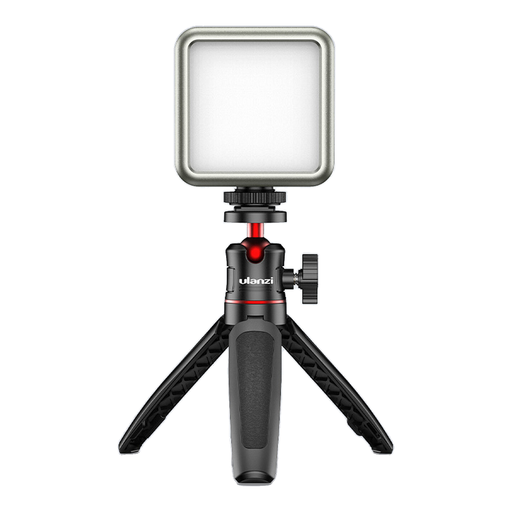
The VL49 RGB is a compact mini panel for targeted accents or portable fill lighting.
Compact LED lights for flexible fill lighting and product photography on a small table.
 No image available
This compact model is designed for flexible setups and product photography at the table. Before buying, check that the full model name matches the technical details on the product page.
Not necessarily. First, try positioning yourself beside the window and, if needed, using a thin diffuser or reflector. Canon Europe recommends indirect window light for soft lighting. A panel may be useful if you want to rely less on the daylight available.
Start with indirect light from the side, then adjust its position or add diffusion until the reflections look right in your camera. Wattage and lux figures alone don’t tell you how a reflection will look on your glaze.
Place the mount securely outside your working area, and route cables so they don’t create a trip hazard. For the amaran P60x, the instructions recommend unplugging the light and allowing it to cool before cleaning. Always follow the instructions for your specific light.
For most online purchases of goods, you generally have 14 days from delivery to cancel, subject to legal exceptions. EU consumer information states that faulty goods come with a minimum two-year legal claim against the seller; a voluntary manufacturer’s guarantee does not replace this.
No. According to the European Commission, the CE mark is the manufacturer’s declaration that the relevant EU requirements have been met; it is not a general, independent product test. The requirements that apply to a particular light and its power supply depend on its design.