Crafters working with fine relief
If you photograph embossed, carved or textile pieces, adjusting the light position lets you see how shadows can reveal small details. broncolor explains how lighting affects visible texture contrast.


Choose a panel based on whether you want to bring out fine relief, glossy surfaces or a consistent series of photos. For relief, look for adjustable light positioning; for glossy surfaces, the position and controllable diffusion are key. For a series, adjustable white light and consistent lighting and camera settings can help. Also check that the mount and power supply suit your shooting table. Manufacturer specifications describe features and test conditions, but don’t automatically tell you how the light will look on your ornament.
If you photograph embossed, carved or textile pieces, adjusting the light position lets you see how shadows can reveal small details. broncolor explains how lighting affects visible texture contrast.
With painted, metallic or glass surfaces, the challenge is to control distracting reflections without losing the shape and detail. broncolor explains the role reflections play when photographing glossy subjects.
If you photograph several handmade pieces for consistent product images, try to keep the lighting, white balance and framing as consistent as possible. Canon Europe highlights consistent framing as a useful aspect of product photography.
First, check how you can light texture and reflections on your own ornament. Then make sure the white light, mounting options and power supply suit your photo series and workspace.
| What matters | What to look for | Who is it most relevant to? |
|---|---|---|
| Fine surface texture | Vary the angle, distance and brightness; test diffusion on a sample piece. | If I want to show small indentations without completely filling in their shadows, adjustable lighting is important. Around 36% of consumers put the visibility of fine details first. |
| Reflections on glossy decorations | Check the diffuser and adjustable light positioning; test it on your glossiest piece. | With paint, glass or metal, I want to move or soften distracting reflections without losing the shape of the decoration. Around 29% of consumers prioritise controlling these reflections. |
| Consistent colours across a photo series | Compare the white-light range of the specific models; keep the light position and white balance consistent. | When I photograph several ornaments, I want to see the differences between materials and avoid changing settings. Around 21% of consumers place particular importance on consistent colours across a series. |
| Space, mounting and power supply | Check the contents of the specific version; plan for the space, mount and power supply you’ll need. | At a cramped shooting table, I want to position the light securely and know what else I’ll need for my setup. Around 14% of consumers prioritise a suitable, complete setup. |
Strong diffusion can soften harsh reflections, but it can also reduce the contrast of small details. broncolor explains this relationship between softer light and visible texture.
Compare different light angles and levels of diffusion on your own ornament, rather than trying to eliminate every shadow.
For the amaran P60x, the manufacturer’s figure of 5070 lx applies at a distance of 1 m and 5600 K. This measurement doesn’t directly tell you how your subject will be lit with a light modifier.
Only compare figures measured at the same distances and with the same configurations, and judge the lighting on your ornament.
The contents vary between versions of the NEEWER NL660; according to the manufacturer, NP-F batteries are not included.
Check the contents of the specific version against the mount and power supply you have.
Depending on the NL660 version, you may need to buy a stand separately. If you plan to run it on battery power, you’ll also need to buy NP-F batteries separately.
The P260C Pro is a bi-colour panel with an integrated diffuser and several power options listed by the manufacturer. It may be worth considering if you want to adjust the light position for glossy subjects.
According to the manufacturer, the P60x is a directional bi-colour panel supplied with a softbox and grid, giving you options for shaping the light.
The NL660 is a larger bi-colour panel with a diffuser cloth. The manufacturer offers versions with and without a stand.
The Vibe P96 Pro is a mini panel for compact setups where you need flexibility over positioning.
The PavoSlim 60B manual describes a slim bi-colour panel supplied with a softbox, diffuser and grid, for setups with more room to shape the light.
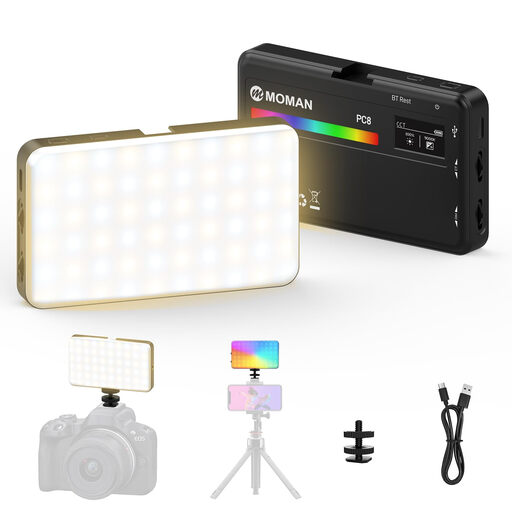
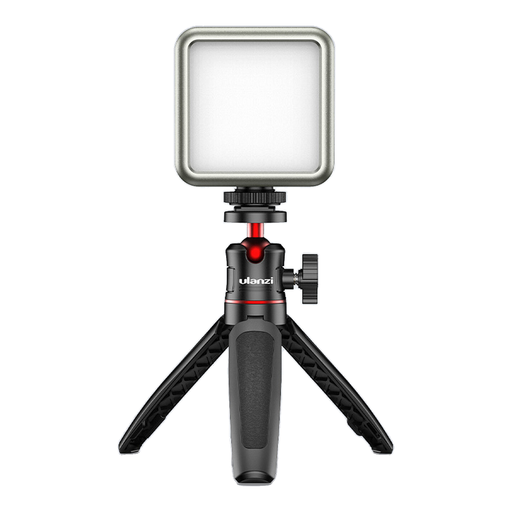
This Joybuy selection features compact LED camera lights with adjustable white light for product and macro photography.
 No image available
A portable light for product photography when you want to adjust the colour temperature and brightness.
According to the product description: 2500–9000 K, 0–100% brightness, 1/4-inch thread and cold shoe.
 No image available
A compact light for macro and product photography if you’re looking for dimmable light with adjustable colour temperature.
The product title lists 2500–9500 K, a 2000-mAh battery and magnets on the back.
Start with an adjustable light source and try different angles on your own decoration. Use diffusion where reflections are distracting, and check whether it reduces the contrast in the indentations; adding more fill light isn’t always helpful.
No, an LED panel isn’t essential: Canon Europe also describes window light as an option for product photography. A panel may be useful if you want to repeat the light position and settings independently of changing daylight.
Check the contents of the specific version. For the NEEWER NL660, the manufacturer lists a power adapter but no NP-F batteries; a stand is only included with the version that comes with one. Secure the light according to its instructions and keep liquids away from electrical components.
In Germany, consumers generally have a 14-day right to cancel an online purchase from the date they receive the goods, as explained by the Verbraucherzentrale. Your statutory rights against the seller and a voluntary manufacturer’s warranty are separate entitlements; check the terms of the specific offer.
Depending on the applicable EU rules, electrical equipment must meet CE marking requirements. The European Union notes that CE marking is not a blanket official quality check of a specific offer. In Germany, waste electrical equipment is collected separately and must not be put in household rubbish. Check the documents and markings for the specific light.