For antique brooches, choose an LED panel whose light you can control using a diffuser, distance and positioning; more power alone won’t prevent reflections. For consistent results across a series of photos, use the same white balance and repeatable settings, while RGB is mainly intended for adding colour effects. If the brooch may include light-sensitive materials, limit the duration and intensity of the lighting.
Which setup is right for you?
Collectors with shiny brooches
If bright reflections obscure details in the metal, stones or settings, a controlled light source and diffusion can help you plan your setup. Nikon USA and Lazi Akademie explain why you need to account for reflections when photographing jewellery.
Sellers taking repeat product shots
For consistent images of several brooches, use the same white balance and repeatable lighting settings. Canon Europe explains how light colour affects recorded colours, while Godox lists saveable settings for the LDX50Bi model.
Photographers documenting delicate heirlooms
If a brooch may contain light-sensitive textiles, take care to limit the intensity and duration of the lighting. The Canadian Conservation Institute explains how these factors affect textiles.
What should you look for when buying?
Start by considering how to control reflections and shape the light. Then check colour consistency, the sensitivity of any materials, and the space and power supply needed for your setup.
| Priority |
What to check before buying |
Who it matters most to |
| Reflections and details |
Check for a diffuser and options for positioning the light to the side. Make room for a light tent or reflector cards. Lazi Akademie and Nikon USA cover reflection control and diffused light when photographing jewellery. |
When I photograph polished metal or stones, I want to manage bright reflections so the settings and details remain visible. For around 36% of consumers, controlling reflections is the top priority. |
| Consistent colours |
Use the same white balance throughout a series. Canon Europe explains that the colour temperature of the incoming light affects the colours recorded; manufacturers’ specifications can’t replace checking how your own brooch looks. |
If you want to compare the colours of metal, stones and patina across several shots, keep your process consistent. Around 29% of consumers put colour consistency first. |
| Light exposure |
Set up your camera and lights before switching them on, and keep the lighting time to a minimum. According to the Canadian Conservation Institute, potential damage to textiles also depends on the intensity and duration of the light. |
If my brooch may include delicate materials, I want to limit the lighting carefully. For around 21% of consumers, protecting the object comes first. |
| Space and power supply |
Check the dimensions, light modifiers, mounting options, what’s included and the power supply for the exact variant. The Nanlite manual lists light modifiers for the PavoSlim 60B; NEEWER notes that a stand and NP-F batteries aren’t included with the RGB660 PRO II. |
If my shooting space is small or changes regularly, I need to be able to fit the panel, stand and power supply. Around 14% of consumers rank space and power supply as their main buying priority. |
Common buying mistakes
-
Choosing based on maximum brightness alone
Bright light in the wrong position can hide details on reflective metal. The total light exposure also matters if the brooch includes delicate materials.
Plan your diffusion and light positioning first. Illuminate an object that may be light-sensitive only for as long and as brightly as necessary to take the photo.
-
Assuming CRI or Kelvin figures guarantee accurate colours
Manufacturers’ colour-rendering specifications aren’t an independent test of your brooch. The surrounding light and white balance also affect the image.
Use these specifications to narrow down your options, then check the colours with your own consistent setup.
-
Assuming batteries, a stand or space for light modifiers are included
What’s included and the power options vary by panel and variant; missing accessories could change your planned setup.
Before buying, compare what’s included with the exact variant against your stand and intended power supply.
Key brands at a glance
Godox
The LDX50Bi bi-colour panel is an option for repeat tabletop photography.
- Godox says the LDX50Bi has a removable diffuser, saveable settings and a colour temperature range of 2800–6500 K.
- NP-F batteries need to be bought separately for this model. The manufacturer’s colour-rendering specifications aren’t an independent measurement of how brooches will look.
amaran
The P60x is an adjustable bi-colour panel for setups using controlled white light.
- The manufacturer’s manual gives the P60x a colour temperature range of 3200–6500 K, 60 W output and CRI 95+.
- Maximum illuminance is specified at 1 m and 5600 K. It doesn’t indicate independently measured, diffused light at a photo table or the colour rendering of a particular brooch.
Nanlite
The PavoSlim 60B is designed for setups where a slim panel and light modifiers are useful.
- The manual lists a softbox, diffuser and eggcrate for this model, along with a colour temperature range of 2700–6500 K.
- Check that you have enough room for the complete setup and your chosen power supply. The published CRI and TLCI figures are manufacturer specifications.
NEEWER
The RGB660 PRO II is worth considering if you want to create colourful effects as well as take documentary-style photos.
- The EU product page lists a white diffuser, a colour temperature range of 3200–5600 K in bi-colour mode and RGB modes.
- The product page says that a stand and NP-F batteries aren’t included. RGB modes don’t replace controlled colour rendering for documentary photography.
Suitable products at Joybuy
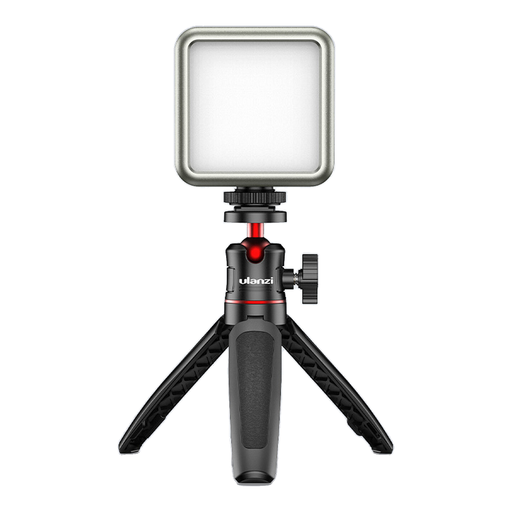
This selection includes a compact RGB video light for macro and product photography, if you’d like to add colourful effects.
 No image available
ULANZI VL49 RGB LED video light
For macro and product photography, if its compact design and adjustable brightness and colour temperature suit your setup.
As stated in the product name: dimmable, 2500–9500 K and equipped with a 2000-mAh battery.
View at Joybuy
Frequently asked questions
Do I need two LED panels for shiny brooches?
No, a second panel isn’t always necessary. Nikon USA often describes photographing jewellery in a light tent using just one light source. Try a test shot with your planned lighting setup to see whether your brooch needs additional light.
How can I keep colours consistent across several photos?
Keep your lighting and white balance consistent throughout the series. Canon Europe explains that the colour temperature of the incoming light affects the colours recorded, so setting a Kelvin value on the panel alone isn’t enough.
What should I bear in mind when setting up and cleaning the light?
Follow the instructions for the model you have. The Nanlite PavoSlim 60B manual requires a dry, well-ventilated location with the vents unobstructed; the amaran manual says to disconnect the light from the mains before cleaning or maintenance.
What do warranty rights and cancellation rights mean when buying online?
For consumer purchases in Germany, statutory rights against the seller are separate from a voluntary guarantee. According to the Verbraucherzentrale, online contracts generally come with a 14-day right to cancel; the terms of the specific purchase still apply.
What labelling and disposal rules apply in Germany?
According to the European Union, CE marking is required only if the harmonised rules that apply to the product require it; it isn’t an independent EU approval. The Umweltbundesamt notes that end-of-life electrical appliances must not be put in household waste and can instead be taken to designated collection points.


