Sellers with coloured beads
If you photograph several bracelets for product listings, consistent lighting helps you keep your shots comparable. Nikon recommends setting the white balance before a series of shots.


For consistent bead colours, a dimmable white-light or bi-colour panel with a fixed setting is a sensible starting point. Nikon recommends setting the white balance before a series of shots. Diffusion and an adjustable light angle are important considerations when photographing glossy beads and metal findings. Whether a compact desktop panel will do or you need a panel that can be positioned separately depends on how much space you have on your photo table.
If you photograph several bracelets for product listings, consistent lighting helps you keep your shots comparable. Nikon recommends setting the white balance before a series of shots.
When photographing glossy beads or metal findings, diffusion and an adjustable light angle are important for assessing reflections in the image. Adobe describes diffused light as suitable for still-life and product photography.
If you need to fit your camera, bracelet and light into a small space, plan the mounting, footprint and power supply together with the rest of your setup.
For comparable product photos, Nikon recommends setting the white balance before a series of shots. Adobe identifies diffused light as a relevant lighting technique for product photography.
| Buying consideration | What to check | Who should pay particular attention? |
|---|---|---|
| Reflections and shadows | Check for a diffuser or suitable light modifier, as well as a mount that lets you adjust the angle. | If you photograph glossy beads or clasps, you’ll want to be able to assess unwanted reflections precisely. Around 36% of consumers are likely to put reflection control at the top of their buying priorities. |
| Colour consistency | Look for adjustable, repeatable colour settings, and keep the lighting and white balance consistent across comparison shots. | If you want several bracelets to show as similar a colour as possible under artificial light, repeatable settings are important. Around 29% of consumers are likely to prioritise colour consistency. |
| Space and mounting | Measure the available space and check the stand or clamp and its adjustment range. | If your photo table also needs to hold your camera and subject, you’ll need a light that fits into your existing setup. Around 21% of consumers are likely to make space their main priority. |
| Power supply | Compare the package contents with the power adapters, batteries and mounts you already have. If you’re using batteries, check the runtime for your settings. | If you want to work plugged in or wirelessly, depending on the available socket and duration of your shoot, the power supply should suit your workflow. Around 14% of consumers are likely to consider it their top buying priority. |
A CRI rating in a product description is a manufacturer’s claim. The camera’s white balance and consistent lighting also affect the image.
Take a short series of test shots with your planned lighting and check the colours with the white balance fixed.
You may need to take extra test shots and make colour corrections afterwards to compare the results.
With glossy parts, the actual angle of the light affects the visible reflections. A diffuser also changes how the contours appear.
Plan the camera, bracelet, light and mount together within the space available.
Depending on your setup, you may need an additional suitable stand or light modifier.
NP-F batteries are not included with the NEEWER NL480 twin set described here; according to the manufacturer, the Rollei LUMIS Key Light Pro does not come with a USB power adapter.
Check the package contents for the specific version and make sure the power connections are suitable before buying.
You may need to add a separate battery or suitable power adapter to complete your setup.
According to Rollei, the LUMIS Key Light Pro is a desktop panel for small setups, supplied with a diffuser, table stand and remote control.
According to Aputure, the P60x is a bi-colour panel that can be positioned separately, giving you more flexibility over where the light sits.
According to Nanlite, the PavoSlim 60B is a slim bi-colour panel supplied with light-shaping accessories and offering several control and power options.
According to NEEWER, the NL480 twin set is designed for product photography when you need two separately positioned light sources.
According to SmallRig, the P96 is a small, battery-powered auxiliary panel for mobile setups or those that need to be changed frequently.
According to Godox, the P260C Pro is a larger bi-colour panel with several power and control options.
The lighting options below are suitable for small product and macro photography. They include compact photo and video lights as well as conventional LED panels.
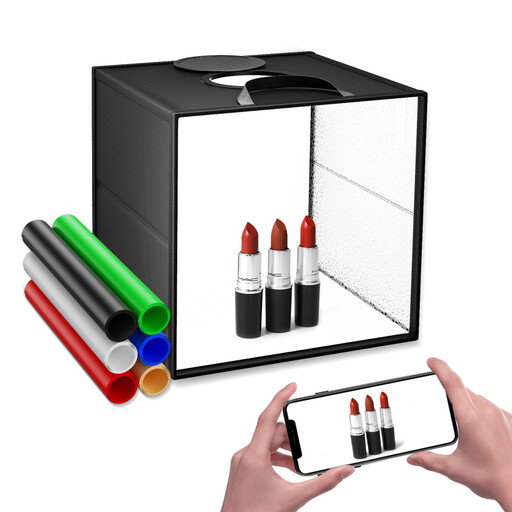 No image available
Described as suitable for small product shots, with adjustable colour and brightness.
Three colour temperatures, nine dimming levels and six coloured background sheets.
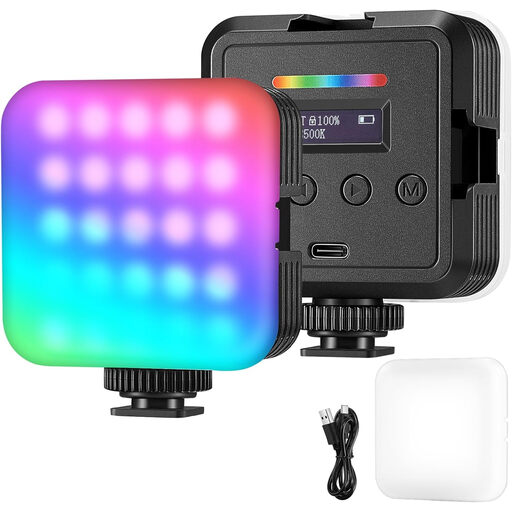 No image available
Described as a portable photo light for photography, video and streaming.
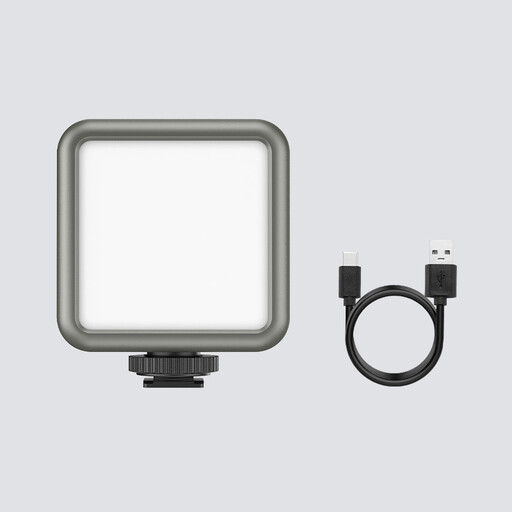 No image available
Compact video light for macro and product photography.
RGB; 2.000 mAh; 2.500–9.500 K.
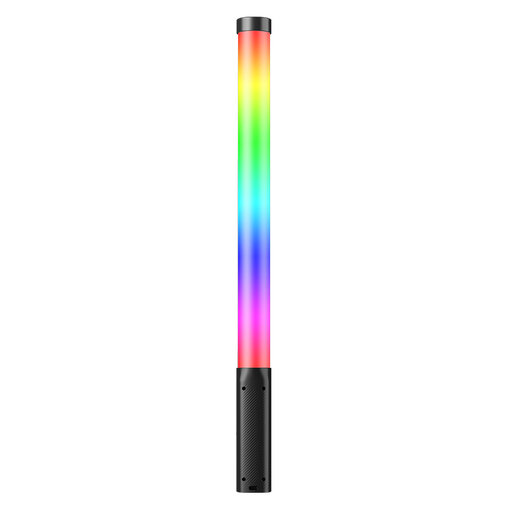 No image available
Handheld light stick for product photography.
RGB; 360 lx at 0,5 m; 3.300-mAh battery; 2.500–9.000 K.
Start with diffused light and adjust the angle while checking the beads and clasp on your camera screen. Keep the lighting settings consistent for comparison shots and set the white balance before your series of shots.
Compare the package contents for the specific version with the power adapters, batteries and stands you have. Rollei explicitly states that the LUMIS Key Light Pro does not come with a USB power adapter; Nanlite lists light-shaping accessories and several power options for the PavoSlim 60B.
Test the panel, dimming level and camera settings together. Sony explains that flickering light sources can cause banding with certain shutter settings, and points to anti-flicker or variable shutter functions on supported cameras. So a setting that works for one camera may not work for every camera.
The German Federal Network Agency describes the CE marking as a declaration by the manufacturer under the applicable EU regulations, not as an independent quality mark. For the specific product, also check the applicable requirements and any documentation that must be provided in German.
No. The German Environment Agency explains that discarded electrical and electronic equipment must be disposed of separately from household waste in Germany.