For comparable photos of glaze samples by a window, the key is to keep the light in a consistent position and use a consistent white balance; a high CRI rating alone cannot guarantee that every glaze colour will be reproduced accurately. With glossy samples, diffusion and changing the angle of the light often help more than adding extra lighting effects. If you regularly change where you take photos, size, mounting and power supply also matter. Before buying, check that the specific offer has the required labelling and German product documentation; the Bundesnetzagentur (Federal Network Agency) highlights these points in its market surveillance.
Who is an LED panel suitable for?
If you want to compare glaze colours
If you photograph samples repeatedly, you want to assess differences in colour, not just create atmospheric images. Adobe points out that different lighting conditions produce different colour temperatures. The NIST explains that CRI ratings for white LEDs do not necessarily correspond to visual assessments.
If you photograph glossy samples
If bright reflections obscure the glaze or surface details, position the light source and sample carefully in relation to one another. Adobe explains that direct, hard light can create sharp highlights, so diffusion and an adjustable light position are important factors to consider when setting up.
If you photograph in a small or changing workspace
If you have limited room or move between shooting locations, choose a panel size, mounting option and power supply that suit your set-up. A compact light may be easier to reposition; also check that you can position and, if needed, diffuse its illuminated surface sufficiently for your glossy samples.
What should you look for when buying?
First, decide what matters most for your photos: comparing colours, controlling reflections, a flexible set-up or adjustable fill light. Manufacturer specifications can help you compare products, but they cannot replace consistent shooting conditions.
| What matters |
What to look for when buying |
Who is it most relevant to? |
| Comparable glaze colours |
Use colour temperature and CRI as a guide; use a reference and keep white balance consistent throughout the photo series. |
If I want to compare glaze colours, I keep the light position and white balance as consistent as possible and check a neutral reference. Around 36% of consumers put colour comparison first. |
| Controlling highlights |
A diffuser and adjustable mount; enough room to position the light to one side. |
With glossy glaze, I want to move bright reflections away from the key part of the image, so I check for diffusion and an adjustable light angle. Around 29% of consumers prioritise controlling these reflections. |
| Flexible set-up |
Dimensions and mounting; power supply and the accessories actually included. |
If my window-side table has limited space or I move my set-up often, I look at size, mounting and power supply. Around 21% of consumers prioritise a flexible set-up. |
| Adjustable fill light |
Dimming; compare lux figures only when the measurement distance is the same. |
When the light from the window changes, I want to adjust the additional brightness, so I check the dimming function and lux figures along with the measurement distance. Around 14% of consumers prioritise adjustable fill light. |
Adobe recommends adjusting white balance to suit the lighting conditions. The NIST notes that CRI ratings for white LEDs do not always correspond to visual assessments. Use manufacturers’ specifications to narrow down your options, then check a reference photo taken in the actual combination of window and panel light.
Common buying and set-up mistakes
-
Assuming CRI guarantees accurate glaze colours
A CRI rating does not reliably predict every possible colour result from a white LED. If white balance changes, it also becomes harder to compare glaze samples.
Use the manufacturer’s specifications only to narrow down your options, and photograph a neutral reference in the actual combination of window and panel light. Keep the light position and white balance as consistent as possible throughout the series.
-
Pointing light directly at a glossy sample
Direct light can create sharp highlights and obscure detail. More brightness will not necessarily fix an unwanted reflection.
Adjust the angle between the sample, camera and light, and check that the diffuser and mount suit your set-up.
-
Assuming a power adapter, battery and stand are included
What’s included varies by model and version. According to the EU product page, the NEEWER RGB660 PRO II comes with a mains adapter, but NP-F batteries are not included.
Before buying, check the power supply, connections and accessories included with the specific version on offer.
Brands and models to consider
Godox
The Bi-Color P260C Pro panel is an example of a larger, adjustable fill light for a fixed sample table.
- Godox lists a colour temperature of 2800–6500 K for the P260C Pro, with average CRI and TLCI ratings of at least 98. Power options are listed as DC, battery and USB-C.
- Manufacturer specifications do not constitute independent colour measurements of glaze samples. For the specific offer, also check the mount, accessories and required product documentation.
amaran
The P60x is a Bi-Color panel that, according to Aputure, comes with a softbox and grid.
- Aputure lists a colour temperature of 3200–6500 K and a CRI of at least 95 for the P60x. The included softbox can help create a diffused set-up.
- These specifications do not guarantee accurate glaze colours when window and panel light are used together.
NEEWER
The RGB660 PRO II is a panel option if you want RGB features as well as neutral fill light.
- The EU product page lists a colour temperature of 3200–5600 K in Bi-Color mode, as well as a diffuser and mains adapter.
- NP-F batteries and a light stand are not included, according to the EU product page. For neutral glaze comparisons, RGB effects are no substitute for controlled white balance.
Ulanzi
The VL81 is an example of a compact, rechargeable panel for taking flexible shots of individual small samples.
- Ulanzi lists a built-in 3000-mAh battery, dimming and a colour temperature range of 3200–5500 K.
- With glossy samples, check whether the compact illuminated surface can be diffused sufficiently and positioned so that reflections do not obscure the key part of the image.
Rollei
The LUMIS Key Light Pro is an example of a solution with a desk stand for a fixed workspace.
- Rollei lists a diffuser, desk stand, USB power and adjustable colour temperature.
- The manufacturer mainly promotes this model for video calls and streaming. That does not confirm its suitability for assessing subtle glaze colours.
LED lights at Joybuy
This Joybuy selection includes LED camera lights for product and macro photography with adjustable fill light. For the specific offer, check the required labelling and German operating instructions and safety information; the Bundesnetzagentur (Federal Network Agency) highlights these points in its market surveillance.
 No image available
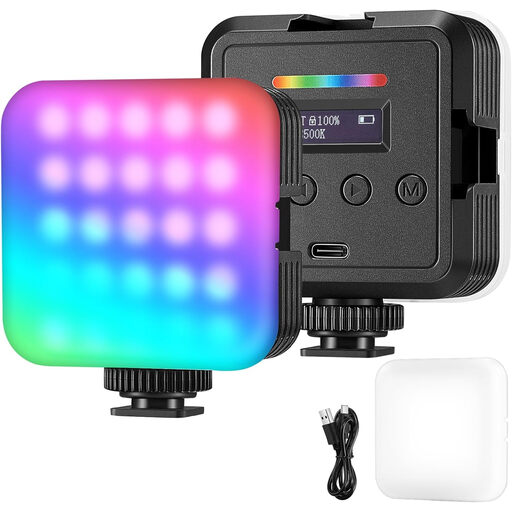
RGB LED camera light with adjustable lighting
According to the product description, this portable light is designed for product photography and flexible set-ups.
The description lists adjustable brightness and colour temperature, RGB, white and warm light, as well as a built-in battery and USB operation.
Joybuy
 No image available
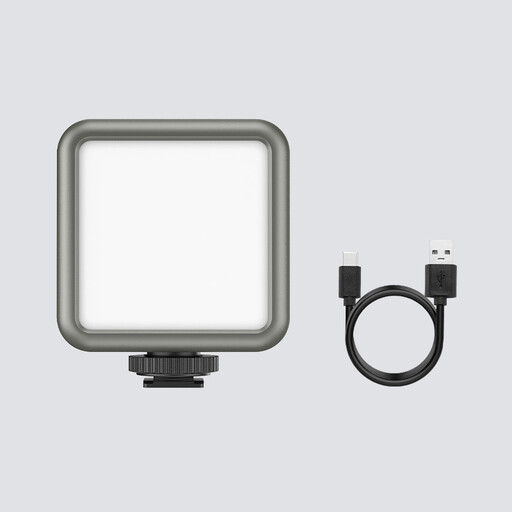
ULANZI VL49 LED video light with 2000-mAh battery
According to the product title, this compact, battery-powered light is designed for macro and product photography.
The title lists RGB, dimming, 2500–9500 K, a 2000-mAh battery and rear magnets.
Joybuy
Frequently asked questions
How can I compare the colours of different glaze tests?
Photograph a neutral reference in the lighting you’re using, and keep the light position and white balance as consistent as possible throughout the series. A high CRI rating alone does not confirm that every glaze will be reproduced exactly.
How can I get rid of a white spot of light on glossy glaze?
First, adjust the angle between the sample, camera and light, and try diffused lighting. If you’re using a panel, check that the diffuser and mount suit your set-up.
Do I need to buy extra batteries for a panel?
It depends on the model: according to the EU product page, the NEEWER RGB660 PRO II comes with a mains adapter, but NP-F batteries are not included. The Ulanzi VL81 has a built-in battery, according to the manufacturer; check what’s included with the specific version on offer.
What safety information should I check for an LED light in Germany?
For a product that must carry CE marking, check that the marking is correct and that the required accompanying documents are provided. The Bundesnetzagentur (Federal Network Agency) also refers to the need for operating instructions and safety information in German; the requirements depend on the specific product.


