Overhead folding videos
If you film the paper and both hands from above, the light should show the crease lines without shadows obscuring the steps.


For overhead folding videos, a larger panel with diffusion that you can position to the side is a good choice if it can light the whole area and you have room for a light stand. A table clamp saves space, provided it fits your desk edge and power supply. A small camera panel is better suited to targeted fill light than automatically lighting the whole table. NEEWER, Elgato and SmallRig’s manufacturer specifications describe different set-ups, but don’t provide directly comparable lighting performance. Check for shadows, paper colours and possible banding using your camera and the settings you’ll actually use.
If you film the paper and both hands from above, the light should show the crease lines without shadows obscuring the steps.
When working with different paper colours, adjustable white light with settings you can reproduce makes it easier to get consistent shots.
You need a light with a mounting option and cable that suit your existing table, and that you can put away again after filming.
First, decide whether you want to light the whole folding area or just part of it. Then consider the space on your table, the mounting option and the power supply to find a practical set-up.
If you’re setting up temporarily in a guest room, it helps to decide what matters most before choosing a model.
| What matters | What to check before buying | Who it matters most to |
|---|---|---|
| Crease lines and shadows | Check whether a diffuser is included and try positioning the light to the side while making a test fold. | When I film from above, I don’t want my hands to hide the crease lines. That’s why around 28% of consumers put clearly visible fold lines and controllable shadows first. |
| Paper colours | Check the adjustable white-light range of the specific model; film several sheets with the camera’s white balance fixed. | When using sheets in different colours, I want to keep the light settings consistent across clips. Around 22% of consumers therefore prioritise consistent paper colours. |
| Space and mounting | Measure the desk edge and clamp opening, or the space available for a light stand. Also check the height and cable routing. | In a guest room, I need a mount that fits the table I have and can be removed after filming. Around 22% of consumers place particular importance on space and mounting. |
| Banding in video | Test at the brightness level you plan to use, and take your camera’s frame rate and shutter settings into account. | If I want to avoid distracting bands in the finished clip, I test the light and camera together. Around 17% of consumers put video with minimal banding first. |
| Power supply and accessories | Check whether a power adapter, battery and mount are included; for USB-C, check the required input power. | Before filming, I want to know whether a power adapter, battery or mount is included. Around 11% of consumers prioritise a complete set-up with a suitable power supply. |
Diffusion can soften harsh shadows, but the position of the light and the camera angle still affect whether a fold is visible in shot. Nikon explains how diffusion makes the effective light source larger.
Film a test fold with both hands in shot, then adjust the angle, distance and diffusion based on the video.
Manufacturers’ figures are based on different sizes and measurement conditions. They don’t show how brightly the entire folding area will appear in your set-up.
Only compare measurements taken using the same unit and at the same distance; also assess the whole work surface in a test shot.
NEEWER, Godox and Elgato give different information about the accessories included and power requirements. Depending on the model and version, you may also need a light stand, NP-F batteries or a USB-C power adapter with sufficient output.
Check what’s included with the exact version you’re buying, and make sure it suits your mounting option, socket and planned filming time.
The NL660 is a larger bi-colour panel designed to be positioned on a light stand.
The LEDP260C is a bi-colour panel with a light-stand mount, designed for small video and product set-ups.
The Key Light Air MK.2 combines a panel with a desk clamp for a permanent filming spot at your desk.
The P60x is a 60 W bi-colour panel for a freely positioned lighting set-up.
The P96 is a small, battery-powered light that mounts on a camera or cage.
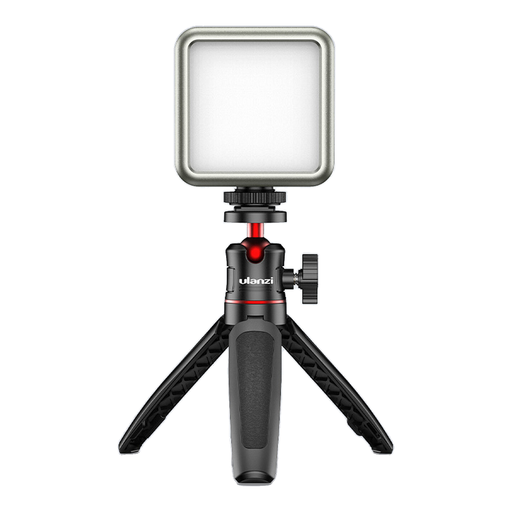
The Joybuy light listed here is a compact, dimmable LED video light for filming and product photography. Check your test shot to see whether its position and coverage suit your entire folding area.
 No image available
If you’re looking for a compact light for filming or product photography, try a test fold to see whether it covers your entire work surface.
Dimmable colour temperature: 2500 K–9500 K.
Battery: 2000 mAh.
Magnets on the back.
Before buying, check the details of the applicable CE conformity and marking for the specific listing.
Start by angling it slightly to the side of the folding area, then film a test fold with both hands in shot. Adjust the position and diffusion until shadows don’t obscure the steps and the crease line remains visible on camera.
Test the brightness level and camera settings you’ll actually use. Sony describes anti-flicker or variable shutter settings for supported camera models; the right setting depends on the light source and camera.
No. A CE mark doesn’t show how the light will look in video. According to the European Commission, CE marking is only required for products covered by relevant EU rules. For applicable electrical products, Germany’s Federal Network Agency lists marking, traceability and manufacturer information among the points to check. Check the details for the specific listing.
In Germany, consumers generally have 14 days from receiving the goods to withdraw from a distance purchase. Exceptions and the terms of the specific purchase may apply. You must notify the seller that you’re withdrawing, as the Verbraucherzentrale explains.
The seller, not the manufacturer, is generally responsible for statutory warranty rights. This is separate from a voluntary manufacturer’s guarantee, as the Verbraucherzentrale explains.