What should you look for when buying?
Window light with a reflector
A good choice if: The window already provides enough soft light and you mainly want to brighten the shadow side of the stone.
Bear in mind: You need less equipment, but the brightness and colour of the light will still depend on the daylight.
Compact, dimmable bi-colour panel
A good choice if: You want to position an additional light source precisely at a small window space and adjust its brightness or colour temperature.
Bear in mind: A small panel in direct view can create a strong reflection in a polished stone; you may need to add diffusion.
Larger panel with diffusion
A good choice if: You have more room for a light and diffuser, or you’re photographing several stones in a larger set-up.
Bear in mind: You’ll need more space, and extra light output alone won’t eliminate reflections.
First, check whether you can position the light and diffuser at the distance you need. Then look at colour temperature, brightness control and power options.
| What you need |
What to check when buying |
Who is it important to? |
| Reflections and shadows |
Side positioning and a suitable mount; check whether a diffuser is included or can be fitted. |
If I want to show the shine while reducing distracting reflections and obscured surface details, I look at the light angle and diffusion first. Around 36 % of consumers prioritise control over reflections and shadows. |
| Colour matching |
Adjustable colour temperature and brightness; check colours against a neutral reference in your actual lighting set-up. |
If the window light changes and I want the stone colour to look true to life in my photos, matching the light source and white balance matters. Around 29 % of consumers prioritise colour control. |
| Setting up by a window |
Check the height, tilt and mounting options; compare what’s included and whether it runs on a battery or mains power. |
If space is limited, I want to be able to mount the panel so it lights the stone from the angle I need. A flexible set-up is the top priority for around 21 % of consumers. |
| Extra light output |
Only compare illuminance figures when the stated measurement distance is the same; test your own set-up with a diffuser in place. |
If the window light is weak or there’s a diffuser between the light and the subject, I may need more adjustable fill light. For around 14 % of consumers, extra light output comes first. |
LED photography lights at Joybuy
This selection features compact photo and video lights for a flexible set-up by a window.
 No image available
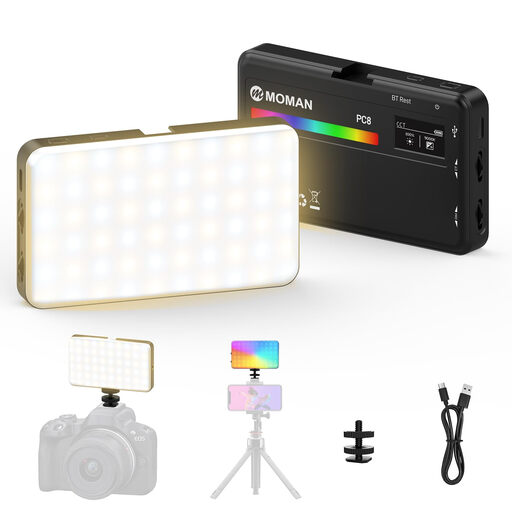
MOMAN PC8 RGB camera light
For product photography where you want to adjust the light colour and brightness to suit your set-up.
RGB modes; 2.500–9.000 K; brightness adjustable from 0 to 100 %. Described as a portable light that can be attached to a camera, tripod or smartphone.
View at Joybuy
 No image available
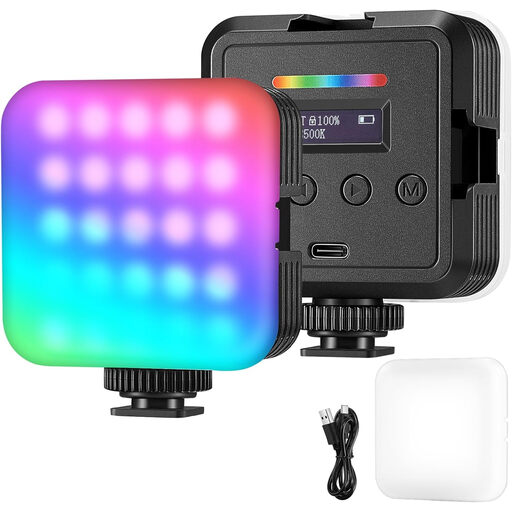
RGB LED camera light
For photography and video when you want to adjust the light modes, brightness and colour temperature.
RGB, white and warm light modes; battery or USB powered. Described as a portable photography light.
View at Joybuy
 No image available
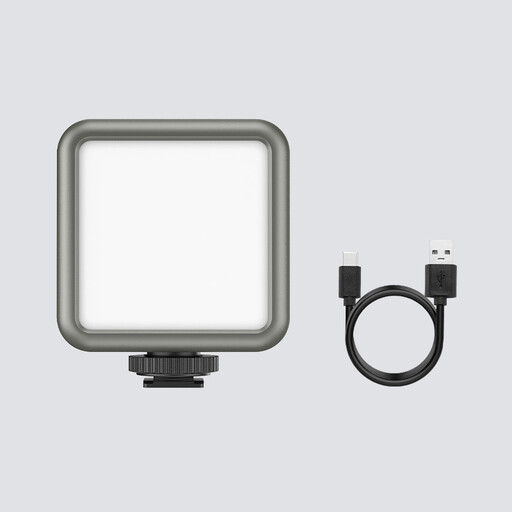
ULANZI VL49 RGB LED video light
For macro and product photography where you need a dimmable light with adjustable colour temperature.
2.500–9.500 K; dimmable; 2.000 mAh battery; rear magnets.
View at Joybuy
Frequently asked questions
Do I really need an LED panel if I have a window?
Not necessarily. If you only need to brighten the shadow side of the stone, try using a reflector first. A panel is an option if you want to position and adjust the extra light independently. Canon Europe describes light from a large window as a possible soft light source for product photography.
How should I position the panel and stone?
Start by using the window as your main light, then move the panel while checking how the reflection looks from the camera’s point of view. If the light source is too clearly reflected in the stone, try a diffuser or light tent. Nikon USA describes diffusion as a way to soften light for jewellery photography.
How can I keep stone colours consistent as the daylight changes?
Adjust the panel to suit your set-up and check the white balance against a neutral reference. Canon Europe notes that daylight can look warmer or cooler depending on the conditions, so a Kelvin figure on the panel alone can’t guarantee accurate colours in the finished photo.
What extra costs or service options should I check?
Check what’s included with the exact version: the NP-F970 batteries specified for the Godox LEDP260C are sold separately, and NP-F batteries aren’t included with the Jinbei P80Bi. If there’s a fault, remember that your statutory rights against the seller are separate from any voluntary guarantee. Verbraucherzentrale explains that a guarantee may be subject to its own terms and conditions.
What should I look for in an LED panel for use in Germany?
The relevant requirements depend on the specific product. CE marking is required if harmonised EU rules apply to that type of product; it isn’t an endorsement from a central EU testing body. In its market surveillance checks, the Bundesnetzagentur lists product labelling, manufacturer details and German-language instructions among the points it examines.


