Who is this lighting suitable for?

Collectors with shiny badges

If bright reflections make it difficult to see the metal, enamel or embossed details, adjustable light positioning and diffusion can help you direct the light more effectively. B&H eXplora covers reflections and lighting techniques for shiny subjects.

Sellers taking product photos regularly

If you’re photographing several badges against a white background, try to keep the light position, framing and white balance as consistent as possible. Adobe explains how product photos can show detail, shape and colour, while Canon Europe describes white balance as part of colour adjustment.

Photographers working at a small table

When space is limited or you often set up and pack away, panel size, mounting and power supply matter just as much as the quality of the light. Small lights can make setting up easier, but they don’t automatically replace a larger diffusion surface.

What should you look for when buying?

Compact single panel

A good fit if: you’re photographing a single subject in a tight space and want to reposition the light.

The trade-off: A small light source won’t necessarily create a reflection that’s large and soft enough; the mounting and power supply also need to suit your setup.

A larger single panel with diffusion

A good fit if: you want to position the light source and angle independently of the camera, and adjust the colour of the light.

The trade-off: A rectangular reflection may still show on shiny metal; the stand, diffuser and power supply vary by model and version.

Two separate lights

A good fit if: you want to light the subject and background separately, or repeat the same lighting setup for a series of photos.

The trade-off: Two lights need more space and can create additional reflections; there’s no need for both sides to be equally bright.

Priority What to check when buying Who is it important to?
Reflections and detail Check whether you can position the panel and diffusion independently of the camera angle. Test the lighting angle with a sample photo. If I want to keep lettering or embossing visible, I need to be able to adjust distracting reflections. Around 36% of consumers put control over reflections first.
Consistent colour Compare the documented colour temperature range of the exact model. Keep the settings consistent and check the white balance in your own setup. When photographing several badges, I want the colours and white background to look comparable. Around 29% of consumers prioritise consistent colours.
Repeatable lighting Check the dimming options and stability of the stand. Consider whether the background and subject need to be lit separately. When I’m photographing a series, I want to be able to keep the light position and framing the same for subsequent shots. Around 21% of consumers put repeatable lighting first.
Space and power supply Compare the dimensions, mounting, power adapter and whether a battery is included with the specific version. Allow for the camera and any light modifiers on the table, too. If my table is short on space or I often pack away my setup, I need a suitable size and mounting option. Around 14% of consumers prioritise a compact setup.

Common buying misconceptions

  • Assuming maximum brightness means fewer reflections in photos

    Shiny badges reflect the shape and position of the light source. More power won’t make a distracting reflection disappear by itself.

    Consider the angle and diffusion before choosing a brightness rating, then check the embossed details in a sample photo. B&H eXplora explains how light position and reflections interact when photographing shiny subjects.

  • Taking a CRI rating as a guarantee of a neutral white background

    The colour rendering index is a measure of the light source; white balance and the light you actually use also affect the colours in your image.

    Set your white balance and lighting consistently for a series, then check the results with your own subject. Canon Europe explains the role of white balance.

  • Buying panel versions without checking what’s included

    The stand and power supply can vary between versions. NEEWER says that compatible NP-F batteries are not included with the NL660; whether a stand is included depends on the version. Rollei also says that batteries are not included with the single LUMIS panel.

    Before buying, compare the parts list and power connection for the specific version on offer.

    Depending on the version, you may need an additional stand, compatible batteries or a light modifier for your planned setup.

Key brands at a glance

Godox

The P260C Pro is an adjustable Bi-Color panel for a setup where the light can be positioned separately.

  • For the P260C Pro, Godox lists 2.800–6.500 K, a diffuser, several power options, an average CRI of at least 98 and a maximum input power of 45 W.
  • The softer light described by the manufacturer has not been independently tested on shiny badges. This model should not be confused with the differently named LEDP260C.

NEEWER

The NL660 is a Bi-Color panel with a white diffuser and barn doors for shaping the light; one version is sold with a stand.

  • NEEWER lists 3.200–5.600 K and a CRI of at least 96 for the NL660.
  • The manufacturer says compatible NP-F batteries are not included. Whether a stand is included depends on the version; check the power connection and what’s included with the specific offer, too.

Rollei

According to the manufacturer, the LUMIS LED Panel Bi-Color measures 35 × 24 cm; a two-panel set with stands is also available in the range.

  • Rollei lists 3.200–5.600 K and a CRI of over 96 for the single panel. It can also run on batteries.
  • Batteries are not included with the single panel. Statements about the quality of the light are from the manufacturer and are not based on tests with badges.

amaran

The P60x is a Bi-Color panel supplied with a softbox and grid, according to the manufacturer.

  • amaran lists 3.200–6.500 K and a CRI of at least 95 for the P60x.
  • An illuminance figure measured at 1 m and 5.600 K doesn’t, by itself, tell you how the background will be lit or how the light will look on shiny metal. Check the power connection and what’s included with the specific offer.

SmallRig

The Vibe P96, manufacturer SKU 3286, is a small battery-powered LED for a space-saving single-subject setup or as an extra light.

  • SmallRig lists a weight of 103 g, a colour temperature range of 2.700–6.500 K and a CRI of over 95.
  • Its compact design doesn’t prove that the light will create a reflection that’s large and soft enough on every badge. Check that the mounting and size of the light source suit your subject.

Joybuy products for product photography

This selection from Joybuy includes a compact LED light and a lightbox with integrated lighting for product photography on a small table.
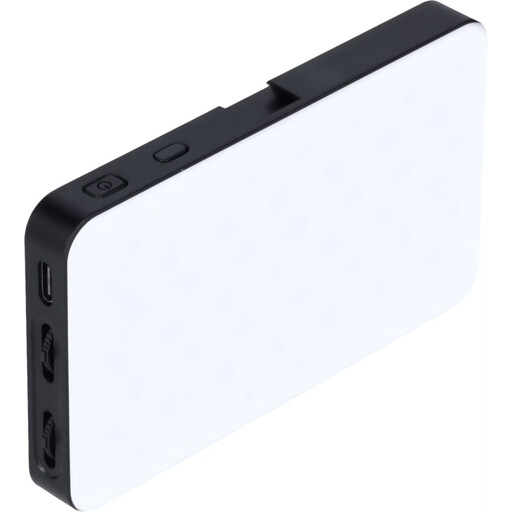
Rollei LUX Compact RGB LED Light, 8 W

Rollei LUX Compact RGB LED Light, 8 W, Bi-Color

A space-saving, flexible option when a compact LED light suits your subject and mounting setup.

Specifications include 2.500–9.000 K, CRI 98+, brightness adjustment in 1% increments, a built-in battery, and Cold-Shoe and 1/4-inch connections. Dimensions: 11,5 × 6,8 × 1,6 cm; weight: 125 g.

Joybuy
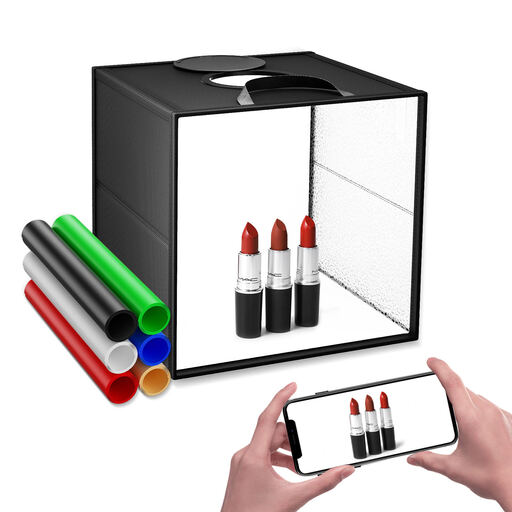
Foldable 40 cm lightbox with dimmable LEDs and diffusion cloth

40 cm lightbox with 120 dimmable LEDs

An option for small product photos against a white background, if a lightbox suits your setup better than a separately positioned LED panel.

Specifications include 120 dimmable LEDs at 5.600 K, CRI >95, a diffusion cloth, six coloured backgrounds and a foldable box with front and top openings.

Joybuy

Frequently asked questions

Is a high CRI rating enough to ensure accurate colours in photos of my badges?

No. CRI describes one characteristic of a light source, but it doesn’t replace the need for the right white balance. Set the white balance to match the light in your shot, and keep the lighting as consistent as possible for comparable images.

How should I start positioning the light for shiny metal?

Start with diffused light positioned to one side, then check in your camera view that the lettering and embossed details are still visible. If the panel shows up as a distracting reflection, adjust the angle or diffusion; more directional light can make textures stand out more. B&H eXplora covers light positioning and reflections when photographing shiny subjects.

Will I need a stand or batteries as well as a panel?

It depends on the model and version on offer. The manufacturer says NP-F batteries are not included with the NEEWER NL660, and versions with a stand are listed separately. Rollei also says batteries are not included with the single LUMIS panel. Before buying, check the parts list and power connection for the specific version.

What should I look for on the labelling of an LED panel in Germany?

According to information from the European Union, CE marking is only required for products covered by relevant harmonised rules; electrical and electronic equipment may fall into this category. Electrical and electronic equipment should also generally carry the crossed-out wheeled bin symbol. The presence of a label alone doesn’t prove that a specific offer meets all applicable requirements.

Can I put a disused LED panel in my household waste?

No. Germany’s Federal Ministry for the Environment says that waste electrical equipment should be handed in at authorised collection points, or returned to manufacturers or retailers. Whether a retailer is required to take back a device depends on the legal requirements; for some types of return, the device’s size and whether you’re buying a new one also matter.