Detail photographers
If you’re photographing carved faces, ornaments or surfaces individually, look for a light that can be positioned to one side so the shape remains clear.


First, choose an LED panel that suits the size of your carving and the space available for your setup. To bring out the details, you’ll want to position the light to one side and choose the right diffusion. To keep the wood colours looking true to life, check the colour temperature and white balance too. A larger panel may take up more room, while with a compact setup, mounting and power supply are particularly important.
If you’re photographing carved faces, ornaments or surfaces individually, look for a light that can be positioned to one side so the shape remains clear.
If you’re photographing several pieces for comparison, consistent lighting conditions and white balance are important both when choosing your equipment and when shooting.
For a small table or a setup you put away after a shoot, check the dimensions, mounting options and what’s included with the specific version.
Start with the size of your subject and the space available. Then check how easily you can position the panel to one side and whether its light diffusion suits your carvings.
| What matters | What to check before buying | Who is it important to? |
|---|---|---|
| Shadows and reflections on details | Check whether you can position the panel to one side, and whether a diffuser is included with your chosen version or can be attached. A test shot will show how the light falls on your carving. | If I want to bring out individual faces or ornaments with side lighting, I pay particular attention to shadows and reflections. Around 36% of consumers name this control as their most important buying consideration. |
| Natural-looking wood colours under artificial light | Compare the colour temperature range and CRI rating of the specific model. Set the white balance consistently for comparable shots rather than relying on the CRI value alone. | If I want to document several carvings so their colours can be compared, consistent colour reproduction is essential. Around 29% of consumers put this consideration first. |
| Light coverage for figures or groups | Measure your subject and the available distance, then compare the panel’s actual dimensions. Light levels are only meaningfully comparable at the same distance and colour temperature; Aputure gives an average of 5070 lx at 1 m and 5600 K for the amaran P60x. | If I’m photographing larger pieces or several figures together, I need a light source that suits both my subject and the space available at the shooting location. Around 21% of consumers prioritise lighting their subjects. |
| Setup, power supply and accessories | Compare the dimensions, mounting options and what’s included with the exact version. Check whether mains power is sufficient or which batteries you’ll need; with some models, a stand depends on the package. | If I’m shooting on a small table or putting the light away after use, I want to be able to store everything without needing unexpected extra parts. Around 14% of consumers focus above all on space, mounting and power supply. |
A light level measured at a particular distance and colour temperature doesn’t tell you how evenly the whole carving will be lit.
Only compare figures measured under the same conditions, and also consider your subject’s size, the distance and how the light performs in your setup.
Even with a high CRI rating from the manufacturer, the light colour and white balance can affect how wood colours appear in an image.
Use CRI as one of the product’s specifications, and check the light colour and white balance when you take your photos.
Some versions don’t include a stand, and you may also need to buy batteries separately.
Before buying, check the exact version, its connections and the list of items included.
Depending on the package you choose, you may need additional batteries or a stand.
The details below refer to the models named and are based on manufacturer information or a manual. They are not independent measurements or recommendations for a brand’s entire range.
The bi-colour P260C Pro is an option if you’re looking for a built-in diffuser and a wide, adjustable colour temperature range.
The NL660 is a bi-colour panel with an adjustable beam angle. It’s available as a single panel and in a version with a stand.
The P60x is a bi-colour panel for photographers who want to compare manufacturer light output figures measured at a specified distance.
According to the manual, the PavoSlim 60B is designed for setups with a softbox and offers various power and control options.
The LUMIS LED Panel Bi-Color has a stated surface area of 35 × 24 cm, which is worth considering when planning a permanent shooting space.
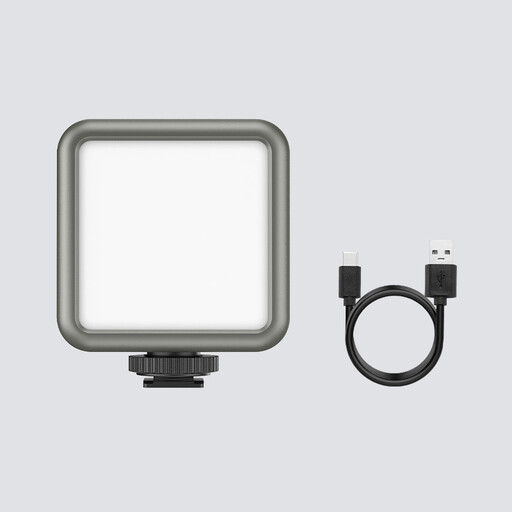
This Joybuy selection is suited to compact macro and product photography, where you need a movable light with adjustable settings.
 No image available
This compact light is an option for macro and product photography if you want to adjust the colour and brightness.
RGB; colour temperature 2500–9500 K; dimmable; 2000-mAh battery; rear magnet.
Set your subject and background up securely, then start with the panel positioned slightly to one side. Check the preview to see whether the carved recesses remain visible. If you notice distracting shadows or reflections, adjust the angle or diffusion. The right position depends on the surface and the look you want to achieve.
No. A high CRI on its own doesn’t guarantee an accurate final image. Under artificial light, the colour of the light and the white balance also affect the result. Check your white balance if you want to take product photos that are easy to compare.
It depends on the model and package. With the NEEWER NL660, whether a stand is included depends on the version you choose, and NP-F batteries aren’t included. Rollei also states that batteries aren’t included with the LUMIS LED Panel Bi-Color. Check the details for the specific version.
If the relevant EU harmonisation rules require a product to carry a CE marking, the manufacturer uses it to declare, under their own responsibility, that the product complies with the applicable requirements. The European Union and the Bundesnetzagentur point out that the mark isn’t a general independent quality seal.
Don’t put a used electrical photo panel in your household waste. According to stiftung ear, old electrical equipment from private households can be taken to local collection points.