
Lieferung heute & morgen

Qualitätsgarantie

Willkommens-Angebote freischalten: KOSTENLOSE Lieferung | Bis zu 80 % RABATT | Kostenlose 30-Tage-JoyPlus-Testphase
App herunterladen
An LED rear light should work reliably day to day, make you clearly visible and suit the way you use it. Yet some common assumptions when buying one can lead to unnecessary expense: a light that appears particularly bright is not automatically approved for road use, a stated long battery life often applies only to a specific lighting mode, and a casing advertised as “waterproof” may only be protected against splashing water.
The mounting system is also often underestimated. If the bracket is not suitable for the seat post, the bicycle rear light may sit at an angle or come loose when exposed to vibrations, reducing its practical visibility. Vehicle parts also require the exact model and year of manufacture to be matched. The following criteria will help you assess marketing claims and choose a suitable rear light.
For bicycles in Germany, StVZO compliance is a key selection criterion. An LED bicycle rear light for StVZO use should be explicitly described as approved for German road traffic. High light output alone says nothing about whether the light distribution, mounting and operating mode meet the applicable requirements.
Protection ratings such as IP54 or IPX4 describe specific test conditions. IP54 includes protection against limited dust ingress and splashing water. IPX4 refers to protection against splashing water, not prolonged immersion. A waterproof bicycle rear light should therefore not be assumed to be suitable for heavy exposure to water or cleaning with a high-pressure jet without checking first.
Claims such as “up to 13 hours” are maximum values under specific conditions. Automatic mode, the brake light function, temperature and battery condition can all affect actual operating time. A rear light with a battery indicator or charging indicator reduces the risk of overlooking when the battery needs charging or replacing.
Anyone who regularly travels on public roads should look for an explicitly stated StVZO approval. With a bicycle rear light with brake light, it is also important to understand how the function is activated. According to the product information, the OSRAM LEDSBIKE RACE REAR uses an integrated sensor to detect braking. The brake light function remains active in both stated modes.
Important: A brake light function does not replace correct installation. The light must point backwards and be securely attached. A quick function check before every ride is recommended.
A USB-C rear light is suitable for users who can regularly charge the light on their bicycle, at work or at home. The OSRAM model is stated to have a charging time of three hours and a battery life of up to 13 hours. A charging indicator provides information about a low battery level.
A battery-powered bicycle light, on the other hand, is practical when regular charging facilities are not available. Batteries can be replaced quickly, but you will need suitable spares. If the bicycle will not be used for an extended period, the batteries should be removed in accordance with the manufacturer’s instructions to prevent leakage.
Tool-free installation is particularly useful for commuters who want to remove the rear light or move it between several bicycles. What matters most is whether the bracket fits the diameter of the seat post and can be securely locked in place.
When choosing a product, you should also check:
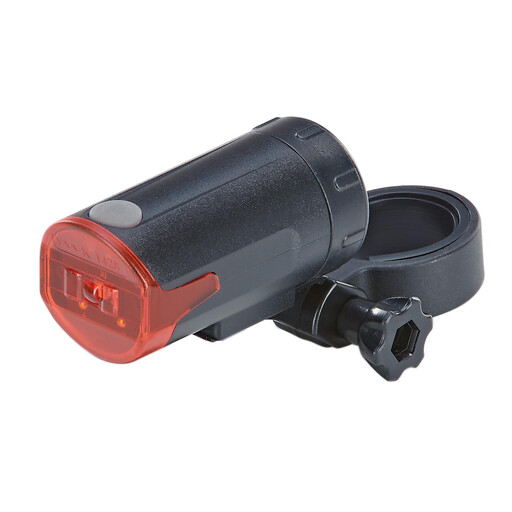
Why this product suits this profile: The battery-powered design is suitable for everyday cyclists who want to avoid relying on USB-C chargers and need simple installation on the seat tube.
The stated battery indicator makes the remaining charge visible. At the same time, the IPX4 classification should realistically be understood as protection against splashing water and rain, not as approval for immersion.
StVZO approved, tool-free installation for seat posts with a diameter of 25,4–31,8 mm, and a stated weight of 42 g.
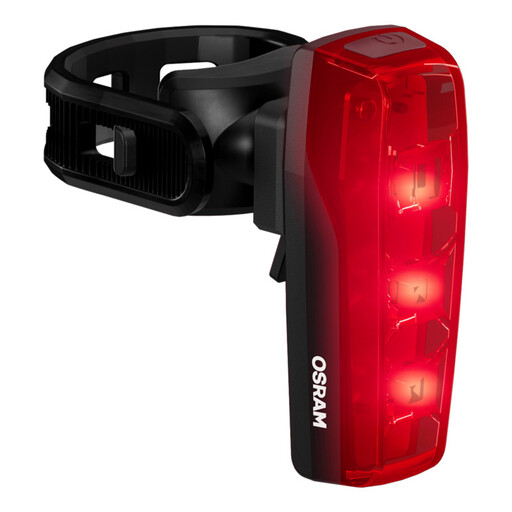
Why this product suits this profile: For commuters who ride regularly, this model offers a rechargeable lithium-ion battery, two lighting modes and an integrated brake light function.
The stated USB-C charging time and charging indicator make planning easier. The IP54 rating clearly defines the level of protection against dust and splashing water.
StVZO approved, USB-C charging, stated battery life of up to 13 hours, automatic and constant operating modes, plus a tool-free bracket.
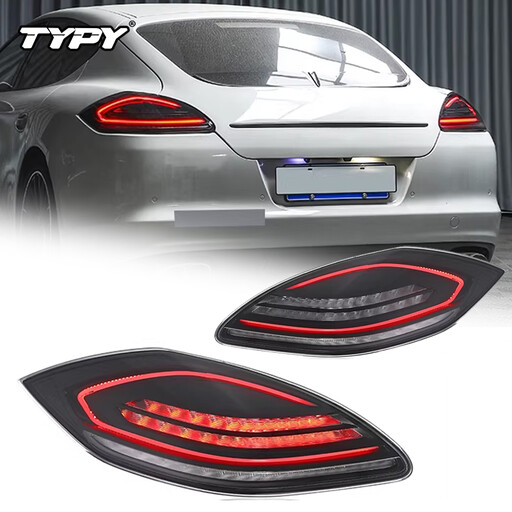
Why this product suits this profile: This set is aimed at Porsche Panamera 970.1 owners and workshops looking for a suitable LED Porsche rear light based on the stated vehicle compatibility.
The vehicle compatibility stated in the product title makes it easier to narrow down your options. Before buying, however, you should still compare the body style, installation position, connections and existing part number.
Two LED rear lights in the set and a stated sequential indicator. Approval details and compatibility should be checked before installation.
We have put together a complete, regularly updated list of products that fully meet these strict selection criteria and the safety regulations applicable in the EU.
No. For a bicycle rear light used on public roads, StVZO approval should be explicitly stated in the product information. General CE marking or a high brightness rating does not mean that the product has StVZO approval.
Battery life depends on the battery, lighting mode, temperature and use of the brake light function. The OSRAM LEDSBIKE RACE REAR is stated to last for up to 13 hours. This should be understood as a maximum value. For daily use, the rear light should be charged regularly and the charging indicator monitored.
The casing should be cleaned with a soft, dry cloth. Batteries must be inserted in accordance with the manufacturer’s instructions and may need to be removed during longer periods when the light is not used. A rear light with a battery indicator should be checked before every ride to ensure it has sufficient power and is securely fitted. A protection rating such as IPX4 must not be confused with complete waterproofing or protection against immersion.